Adoniran Barbosa
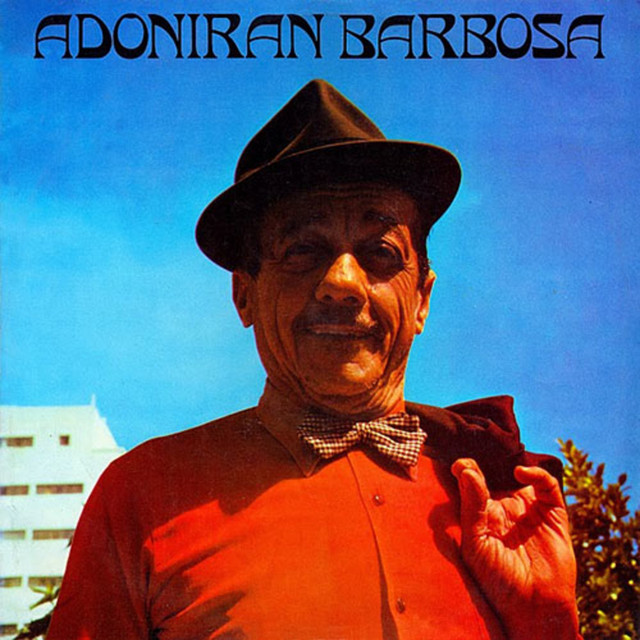
Adoniran Barbosa
1974

Rankings
Why This Album Matters
The album Adoniran Barbosa, released in 1974, is a seminal work that encapsulates the soul of São Paulo samba and the genius of its creator. Far from the limelight of Rio de Janeiro samba, Adoniran forged a unique style, becoming the musical chronicler of the life and characters of the city of São Paulo. His music stands out for the authentic way it transforms the speech of the people, with their slang and accents, into poetry and melody. This record is a testament to Adoniran's ability to portray São Paulo's urban reality, blending Brazilian culture with the influence of Italian immigration that marked the capital. The album is a deep dive into everyday stories, often tragicomic, told with a peculiar humour and unparalleled sensitivity. It is an essential listen for understanding the richness and diversity of samba in Brazil, presenting an artist who, with his husky voice and captivating interpretation, immortalised the metropolis in colloquial verses full of affection.
Context
Before the recording of this album, Adoniran Barbosa had already carved out a long and fruitful career in radio, a medium that was decisive for his artistic development. João Rubinato, his birth name, adopted the stage name Adoniran Barbosa and established himself as a composer, singer, comedian, and actor, becoming a central figure in São Paulo samba. In the 1930s and 1940s, radio stations played a crucial role in the Brazilian cultural scene, and Adoniran knew how to make the most of this space to develop his comic characters and his first compositions. He was already known for classics like "Saudosa Maloca" and "Trem das Onze", songs that had already endured and were interpreted by different generations even before his first solo album.
Recording
Adoniran Barbosa, the 1974 album, marked the release of the artist's first solo LP, a production by the Odeon record label. The production team included Alfredo Corleto for coordination, Milton Miranda as executive producer, Flavio Faria responsible for the layout, and musical direction was handled by maestros José Briamonte and Lindolfo Gaya. Musical assistance was provided by J.C. Botezelli, known as Pelão. This work was a landmark for Adoniran, who, at the age of 64, finally recorded his work with more elaborate arrangements in a complete album under his own name.
Songs
The 1974 album Adoniran Barbosa is a parade of sambas that became anthems, alongside songs that reveal other nuances of the sambista. It includes immortal classics such as "Trem das Onze", "Saudosa Maloca" and "Iracema", which narrate stories of daily life in São Paulo with a touch of melancholy and humour. "Saudosa Maloca" is a lyrical example of Adoniran's ability to transform the tragedy of losing a home into one of the most striking passages in Brazilian music. In "Iracema", the loss of a great love is told in an almost comical way, with the beloved dying twenty days before the wedding for having crossed Rua São João against traffic. The track "As Mariposas" displays Adoniran's good-humoured mischief, blending the figure of a Don Juan with that of a Mazzaropi in his vocal interpretation, and includes an introduction and a spoken "breque". Other notable tracks include "Bom Dia Tristeza", a partnership with Vinicius de Moraes, where Adoniran invites sadness to share a bar table, and "Prova de Carinho", a composition with Hervé Cordovil, which recounts the sacrifice of a bohemian to present a gift to his beloved.

Composer and the greatest icon of São Paulo samba, born in the inland city of Valinhos in 1912, João Rubinato was the son of Italian immigrants. Before becoming a radio singer and comedian, he was a lunchbox delivery man, metalworker, plumber, weaver, street vendor and shop assistant.
Carlos Calado · 300 Discos Importantes
Legacy
Considered a sensational album by many, Adoniran Barbosa's 1974 work solidified his position as the "father of São Paulo samba". The songs on the record, many of them already known to the public, gained new layers and perpetuated the artist's legacy beyond his radio performances. His work, which transformed colloquial speech into musical expression, influenced generations of artists and continues to be interpreted by various MPB names, evidencing the timelessness of his compositions. The album is frequently cited as a favourite in the samba genre, and listening to it in its entirety is an experience that captivates from beginning to end, reinforcing Adoniran Barbosa's lasting relevance in the history of Brazilian music.
Tracks
Credits
Milton Miranda
José Briamonte, Lindolfo Gaya
José Briamonte
Zilmar De Araujo
J.C. Botezelli
Z. J. Merky
Reny R. Lippi
Alfredo Corleto
Flavio Faria
Rita de Cássia Trindade
Podcasts
Antigas Novidades - podcast de heavy metal, rock progressivo, jazz, blues, MPB e rock classico · Antigas Novidades do Rock
João Rubinato é o nome verdadeiro do grande Adoniran Barbosa. A imagem é a de um malandro quase às avessas, o sambista que cantou São Paulo, a capital, como ninguém. Primeiro porque a música de Adoniran tem é cheiro de interior (bem, ele nasceu em Jundiaí, viveu tempos em Sto. André...). Segundo porque Adoniran é de um lirismo único, simples e inocente, até mesmo nos momentos em que é mais malandr
Lado A Sempre em nome do “pogressio”. Douglas o boemio e Jairo, o holandês sambista. Adoniran apresentado por Vadinho. O som mágico de Adoniran. Patrono do samba paulistano. João Rubinato e a mudança do nome. Família Italiana. A expulsão familiar. Os testes do Ary Barroso. As medicações eficazes de Nivaldo. A abertura do espaço social pelo Adoniran. O beliscão de Cris. A verdadeira “Saudosa Maloca

Músicas e suas Histórias · Músicas e Suas Histórias
Gostou? Para saber mais acesse o blog https://musicasesuashistorias.com.br/!
Films


Books
Os 500 Maiores Álbuns Brasileiros de Todos os Tempos
Ricardo Alexandre · 2022
The largest Brazilian music election ever conducted: 162 specialists, spanning journalists, critics, musicians, producers and podcasters, each nominated 50 essential albums, supported by a masterlist of more than 2,000 works. Led by Ricardo Alexandre with tabulation by Sérgio Jomori, it was published in December 2022 as a 200-page hardcover book with graphic design by Fernando Pires.
300 Discos Importantes da Música Brasileira
Charles Gavin, Tárik de Souza, Carlos Calado, Arthur Dapieve · 2008
Conceived by Titãs drummer and musical researcher Charles Gavin, the 434-page book brings together covers and reviews of albums released between 1929 and 2007. The texts were written by journalists Tárik de Souza, Arthur Dapieve and Carlos Calado.
Adoniran Barbosa
Francisco Rocha · 2002
This dissertation investigates the trajectory and work of radio actor and songwriter Adoniran Barbosa, with the city of São Paulo, particularly the 1950s, as its context. We consider the artist and this period emblematic, as they are representative of a whole significant theme in our recent history.
Analyses
Adoniran Barbosa Adoniran Barbosa (1974) | hoopla
hoopladigital.com
Stream Adoniran Barbosa album by Adoniran Barbosa online for free with your library card on Hoopla's website or library app.
Aquela Musica Apresenta "Adoniran Barbosa - 1974"
aquelamusica.com
This fantastic album, released in 1974, is the first LP by the singer-songwriter from São Paulo, Adoniran Barbosa. An artist with a long career, Adoniran had already recorded several 78 rpm singles before this album, such as:

Nostalgia 12 | Adoniran Barbosa (1974 e 1975) - Blogger
devoltaparaovinilcolecao.blogspot.com
I found it interesting how the author addressed the insertion of Adoniran's samba personality among the giants of Carioca samba, in addition to discussing the challenges in the master's life and career, highlighting the release of the two LPs recorded by Odeon in 1973 and 1974, which I recently acquired.

Blog do Brenno: Analisando Discografias - Adoniran Barbosa
obrenno.blogspot.com
In 1974, the timeless debut album by the legend Adoniran Barbosa was released. The singer, born in 1910 in the city of Valinhos, São Paulo, already had an interest in music, but after much rejection, it was only in 1935 that he began composing his songs for 'marchinhas' and radio.
Adoniran Barbosa (1974) | Toque Musical
toque-musicall.com
There's nothing new on this LP, a career album released in 1974, a definite classic that is a must-have in our record collection. Here we have Adoniran definitively re-recording some of his work.