Dscos draws on a cross-section of data that brings together the history of music criticism, the rigour of documentary research and the collective ear of global listening communities.
Six distinct sources were chosen, each mapping the finest albums of Brazilian music from a different angle. The core includes the country's three most iconic lists: MTV Brasil magazine (2003), with its youthful, visual curation directed by Mônica Figueiredo; Rolling Stone Brasil (2007), the critical benchmark coordinated by Pablo Miyazawa via a spontaneous poll of 60 professionals; and Discoteca Básica (2022), the most ambitious election ever conducted in the country, with 162 specialists mapping 500 albums under the leadership of Ricardo Alexandre. For a scholarly counterweight, we add Charles Gavin's book of 300 essential albums. And to open the conversation to a broader, international audience, we bring in the two largest public ranking platforms: Rate Your Music and Best Ever Albums.
By triangulating these six sources, we iron out individual biases and arrive at something solid: the meeting point between the authority of the critic, the depth of the researcher and the passion of the everyday listener.
Expert Criticism
Lists curated by journalists, critics and music industry professionals

MTV Brasil: The 100 Best Brazilian Albums
2003
100 albums
1954–2001
52 journalists, artists and experts
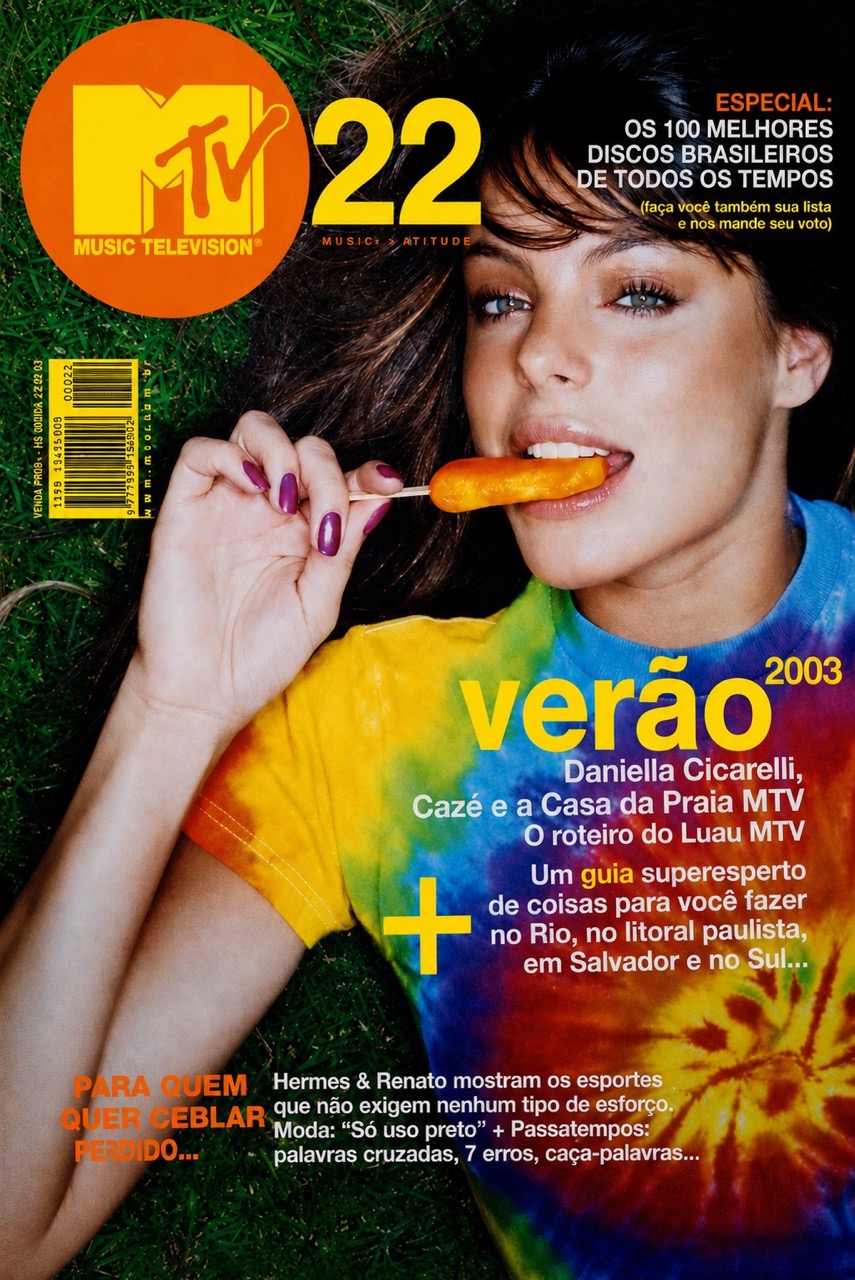
In February 2003, issue 22 of MTV Brasil magazine (with Daniela Cicarelli on the cover) published its list of the 100 greatest Brazilian albums of all time. The magazine was a custom-branded publication by Editora Abril, its editorial team based physically close to the network and led by Mônica Figueiredo, one of Brazil's most important journalists for young audiences, formerly editor of Pop magazine and the driving force behind Capricho's editorial reinvention in the 1980s.
Defined as "music with attitude", MTV invited 52 journalists, artists and notable figures, who cited 552 works in total. Its editorial signature: the top ten came with exclusive commentaries written by the artists themselves, including Caetano Veloso on Tropicália.
The magazine reached a print run of one million copies in 2005 and was discontinued in November 2007. The MTV generation's curation brought a youthful, visual perspective that complements the more traditional lists compiled by specialist critics.
Put the legendary Tropicália ou Panis et Circenses (1968) at number one, reaffirming the Tropicália movement as a founding moment of modern Brazilian music.
See more details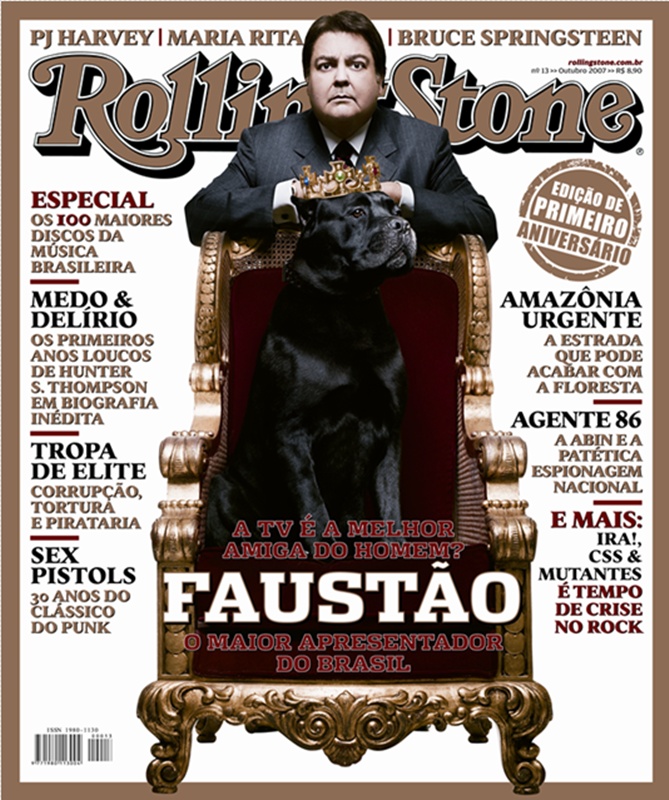

Rolling Stone Brasil: The 100 Greatest Albums of Brazilian Music
2007
100 albums
1950–2003
60 professionals
Launched in October 2006 by São Paulo publisher Spring, Rolling Stone Brasil was directed by Ricardo França Cruz (previously at MTV magazine), with Pablo Miyazawa as editor. The greatest Brazilian albums poll was a centerpiece of the first-anniversary issue (issue 13, October 2007, with Fausto Silva on the cover), coordinated by Pablo Miyazawa and journalist Marcus Preto (artistic producer for the likes of Gal Costa and Erasmo Carlos).
The 60 voters, spanning journalists, critics, producers, authors and scholars from generations stretching from the 1960s to the 1980s, were invited to spontaneously list their twenty favorite Brazilian albums with no guiding masterlist. The 1,200 mentions were tallied into a list of 100 essential records, with Acabou Chorare standing out among veterans and younger voters alike.
Placed Acabou Chorare (1972), by Novos Baianos, at the summit of the Brazilian canon, reflecting the critical consensus on the golden era of the country's popular music.
See more details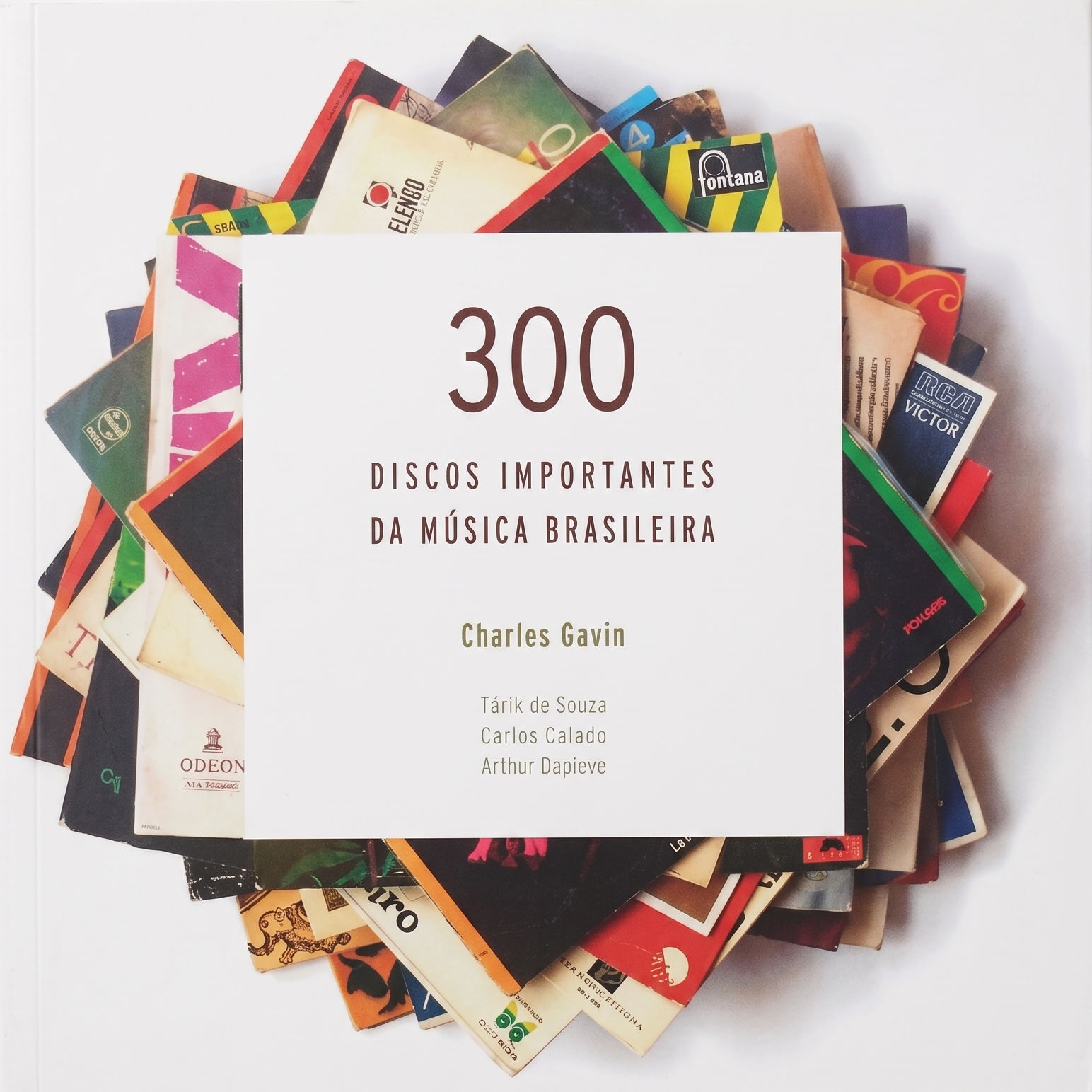

Charles Gavin: 300 Important Albums of Brazilian Music
2008
300 albums
1929–2007
Charles Gavin + Tárik de Souza, Carlos Calado and Arthur Dapieve
Conceived by Titãs drummer and music researcher Charles Gavin as a natural follow-up to his previous project on bossa nova, the book grew from a declared mission: preserving Brazil's cultural memory. Gavin is explicit about the choice of "important" over "best", considering "best" too subjective a judgment to be asserted with any certainty.
He invited three fellow journalists to write the entries: Tárik de Souza (Jornal do Brasil, also his co-host on the TV show O Som do Vinil), Arthur Dapieve (O Globo columnist and PUC professor) and Carlos Calado (Folha de S.Paulo). The team was rounded out by three consultants who "know Brazilian music like no one else": Caetano Rodrigues (leading bossa nova authority), Valdir Siqueira (LP collector and consultant) and Zeca Loro (creator of Loronix, one of the finest blogs on Brazilian music).
The book runs to 434 pages in the physical size of an LP, spans records released between 1929 and 2007, includes two historic enclosed CDs (Moreira da Silva's O Último Malandro, 1959, and Elza Soares's Baterista: Wilson das Neves, 1968) and donated part of its revenue to Instituto Sou da Paz.
Not a numbered ranking but a curation of excellence. In our algorithm it acts as a quality seal: any album in Gavin's selection earns an authority bonus for its proven historical significance.
See more details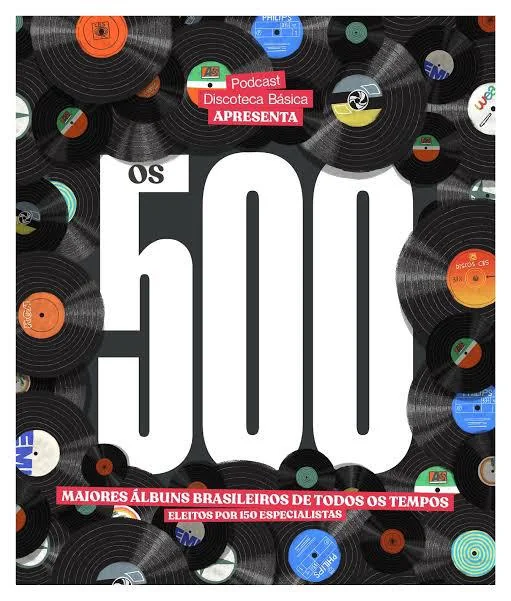
Discoteca Básica: The 500 Greatest Brazilian Albums of All Time
2022
500 albums
1954–2020
162 specialists
The project's spark was a historical gap: between Rolling Stone Brasil's 2007 poll and 2022, no major new Brazilian album election had appeared, and the three previous ones each carried specific editorial cuts that left important works out. To fill that void, journalist Ricardo Alexandre, creator and host of the Discoteca Básica podcast (at the time Brazil's biggest music podcast, with nearly 1.5 million downloads), brought together 162 specialists spanning journalists, critics, YouTubers, podcasters, musicians, producers, sound engineers, radio hosts and record-shop owners, among them Nelson Motta, Jotabê Medeiros, Mauro Ferreira, Pupillo, Kassin, Leoni and André Abujamra.
Each voter nominated 50 albums, more than double the standard of previous polls, supported by a masterlist of over 2,000 records cited in historical elections. Tabulation and tie-breaking were handled by editorial writer Sérgio Jomori, with production by Guga Mafra and the studios Parasol Storytelling and Tudo Certo Conteúdo Editorial.
Crowdfunded on Catarse and published by Jambô in December 2022, the book runs to 200 hardcover pages with graphic design by Fernando Pires (who worked on the art team of Bizz magazine between 2005 and 2007, when Ricardo Alexandre led the publication). Beyond the ranking, the book delivers behind-the-scenes stories, rare photographs and curiosities, functioning as a guide both for seasoned collectors and for anyone just starting to build a record collection.
Crowned Clube da Esquina (1972) as number one, cementing it as the cornerstone of Brazil's musical identity. It remains the largest and most comprehensive album election ever conducted in the country.
See more detailsGlobal Community
Collaborative platforms reflecting the perception of listeners around the world

Rate Your Music (RYM)
2026
live
Top 300 albums*
1954–2026
Global community of listeners
* The full RYM chart includes thousands of Brazilian albums; Dscos tracks the top 300.
Founded in December 2000 by Hossein Sharifi (the platform is also known as Sonemic), Rate Your Music is the world's largest collaborative music database. Users catalogue and rate albums from every genre and country, generating rankings based on millions of individual ratings.
The platform stands out for its taxonomic depth, with thousands of genres and subgenres mapped, and for a highly engaged community that celebrates records outside the mainstream. For Brazilian music, RYM works as a global barometer: it reveals which albums have earned international cult status and which continue to be discovered by new generations of listeners around the world.
A living ranking that reflects what people genuinely listen to and value right now, surfacing classics that have earned international cult status.
See more details

Best Ever Albums (BEA)
2026
live
Top 300 albums*
1950–2025
Aggregation of 60,000+ lists
* The full BEA chart goes far beyond 300 Brazilian albums; Dscos tracks the top 300.
Founded in 2005, BestEverAlbums.com aggregates more than 60,000 best-album lists, drawn from specialized publications, critics and users, to calculate a unified ranking. Its community brings together over 50,000 members, 10 million ratings and 300,000 catalogued albums.
The platform uses a rank-score system that weights each album's position on each list without penalising smaller lists. Points decay linearly over ten years, ensuring older lists have reduced impact and that the ranking reflects current perception.
For Dscos, BEA delivers the widest possible cross-section of global sources, surfacing consensuses that transcend borders.
Pulls together charts and critical lists spanning multiple decades to deliver the widest international perspective on how each record is perceived.
See more details