A Fábrica do Poema
Adriana Calcanhotto
1994
Rankings
Why This Album Matters
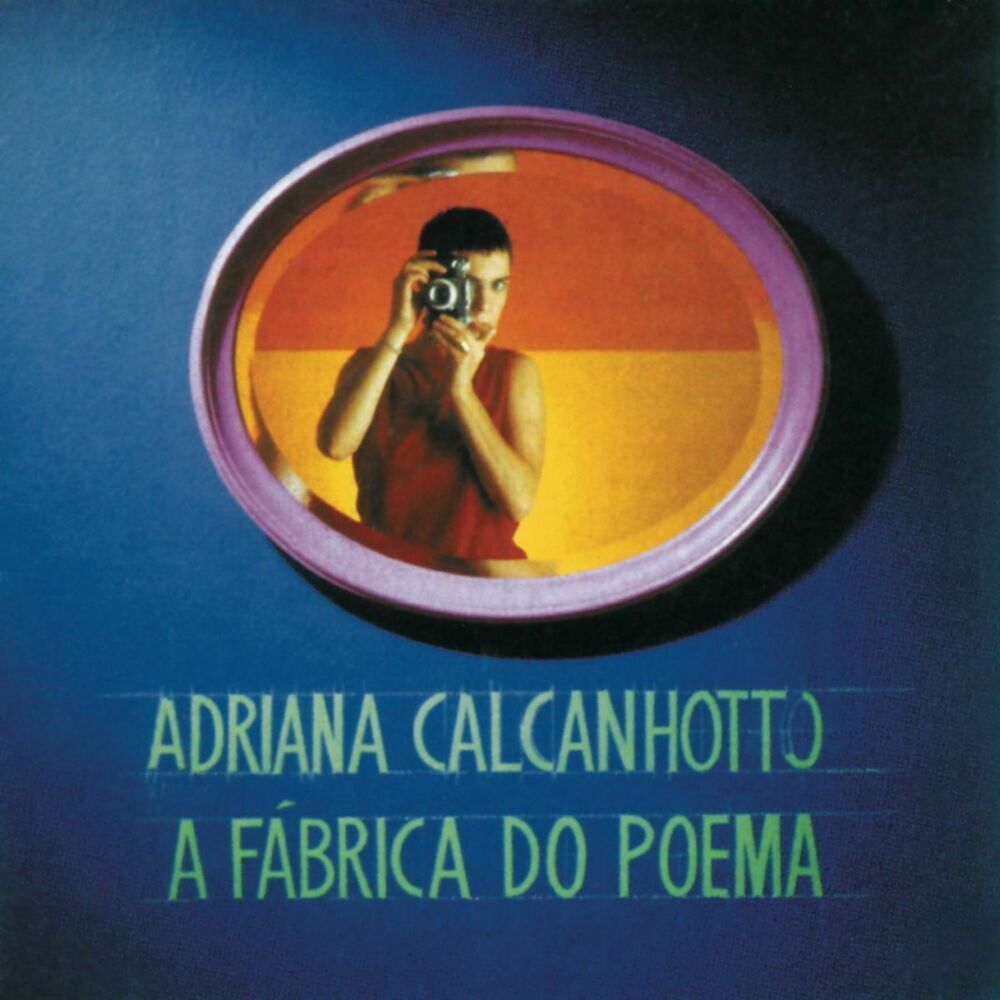
A Fábrica do Poema, released in 1994, represents a crucial turning point in Adriana Calcanhotto's discography and in contemporary Brazilian Popular Music. As the singer-songwriter's third album, it crystallised her artistic identity, functioning as a sonic manifesto that fuses poetry and song into refined pop experimentations. The work is recognised for questioning the limits of musical form, expanding the relationship between verse and melody and deepening the reflection on the artist's own creative process. This album is a true statement of intent, an experimental laboratory of languages and rhythms that solidified Calcanhotto's relationship with modernist literature. Its originality lies in the intertextuality that permeates each track, building bridges between different artistic expressions, such as poetry, music and cinema. Critics described it as her "most sincere effort" in seeking self-expression within the music market, demonstrating a strong desire for artistic independence.
Context
Adriana Calcanhotto began her artistic career in the mid-1980s, performing in bars and nightclubs in Porto Alegre. After success in São Paulo's avant-garde circuit, she was invited to sing in Rio de Janeiro in 1989. Her phonographic debut, Enguiço (1990), featuring her own compositions and reinterpretations, earned her the Sharp Award for Female Revelation and significant sales. The album Senhas (1992) consolidated her national prominence, bringing hits like "Mentiras" and "Esquadros" and selling over 150,000 copies. Senhas already showed a more personal imprint from Adriana, with introspection, lyricism, and aesthetic sophistication. A Fábrica do Poema, from 1994, arrived as the maturation of this quest, with the artist presenting a new look and deepening collaborations with important names in Brazilian poetry and music.
Recording
Released in 1994 by Sony Music/Epic, A Fábrica do Poema was produced by Mayrton Bahia, a significant name in Brazilian music production. Recordings took place at Discover Digital Studio, with mastering carried out at Radical Mastering. The album featured a team of talented musicians, including Sacha Amback on keyboards, sampler, piano and cello, Marcelo Costa on percussion and drums, Dunga on electric bass, and Ricardo Rente on saxophones, flute and keyboards. Toni Costa and João Alfredo Cantiber contributed guitars, while Zeca Assumpção played acoustic bass. Adriana Calcanhotto not only sang and played acoustic guitar, but also acted as creative and art director for the project. A notable contribution came from the poet Augusto de Campos, who lent his voice to the track "O Verme e a Estrela", and Adriana's father, Carlos Calcanhotto, a jazz drummer, who also played on the record.
Songs
With 15 tracks, A Fábrica do Poema is a mosaic of original compositions and partnerships with notable poets and composers, such as Waly Salomão, Antônio Cícero, Roberto Frejat, Jorge Salomão, Pedro Kilkerry, Arnaldo Antunes and Chico Buarque, as well as references to Joaquim Pedro de Andrade and Gertrude Stein. Hits like "Metade", "Cariocas" and "Inverno" emerged from this work, solidifying Adriana's presence in the popular imagination. The title track, "A Fábrica do Poema", set to music by Adriana from a poem by Waly Salomão, pays homage to the architect Lina Bo Bardi, comparing poetic construction to architectural construction, but highlighting the ephemerality and fragility of creation. Experimentalism is a constant theme, evident in "Sudoeste", which incorporates the sound of glasses being broken by the poet Jorge Salomão, and in "Portrait Of Gertrude", the album's most experimental song, which features a reading of Gertrude Stein's poem with overlaid sounds and unusual elements. There is also a celebration of Rio de Janeiro in "Cariocas", a detailed observation of the city and its inhabitants, followed by a re-recording of Chico Buarque's "Morro Dois Irmãos". "Inverno", a partnership with Antônio Cícero, evokes the landscape of Leblon. The album concludes with "Minha Música", a metalinguistic reflection dedicated to Adriana's father, where she defines her art with the iconic phrase: "Minha música não quer ser útil, não quer ser moda, não quer estar certa" (My music doesn't want to be useful, doesn't want to be fashion, doesn't want to be right), reaffirming the authenticity and independence of her work.
Legacy
A Fábrica do Poema was a critical and commercial success, achieving sales of over 150,000 copies and earning a gold record. The press at the time even considered it "the album of the year". The album spawned hits that became classics of Adriana Calcanhotto's career, such as "Metade", "Cariocas" and "Inverno", which continue to be widely recognised and performed. The work is seen as a landmark that solidified the artist's position in the MPB scene, demonstrating her ability to innovate and engage with poetry and visual arts without losing popular appeal. The 4.5 out of 5-star rating from Allmusic underscored the album as one of her most authentic efforts. "Cariocas", one of the most successful tracks, even received a remix in the singer's subsequent work, Maritmo, from 1998, demonstrating the lasting relevance of the compositions.
Tracks
Credits
Jorge Davidson
Mayrton Bahia
Ricardo Rente
Adriana Calcanhotto
Andréa Alves
Clauber Reis, Julian Dornellas, Liu
Armisa Montenegro, Fred Frank, Jorge Barbosa
Claudia Montenegro
Ilma Costa Santos
Ana Maria Morais, Marcelo Pies
Adriana Calcanhotto
Gerê Fontes Jr.
Adriana Calcanhotto, Mayrton Bahia, Ricardo Rente
Fábio Henriques
Alexandre Ribeiro, Márcio Tavares
Adriana Calcanhotto, Marcus Wagner
Mauro Benzaquem
Carlos Nunes
Milton Montenegro
Felipe Reinheimer, Jaime Acioli
Marta Luz
Podcasts
“A Fábrica do Poema” é o terceiro disco de Adriana Calcanhotto e funciona como um resumo de seu estilo: a poesia e a canção enquanto experimentos pops. Com parcerias com importantes poetas, o disco foi um sucesso popular e vendeu mais de 150 mil cópias na época. Dele saíram singles clássicos como “Metade”, “Cariocas” e “Inverno”. Nesse episódio Renan Guerra recebe o cantor e compositor Arthur Nogu
Books
Analyses
A Fábrica do Poema – Wikipedia
Wikipedia, the free encyclopaedia
"A Fábrica do Poema" (1994), Adriana Calcanhotto - A música de
amusicade.com
On the album A Fábrica do Poema, released in 1994, we see the composer's first approach to the independent and experimental union between poem and melody. Adriana, by questioning the limits of song, and even what constitutes it, ends up expanding poetry and music, and reflecting on her own production.

Adriana Calcanhotto - A Fábrica do Poema | BCritics
criticosbc.blogspot.com
"A Fábrica do Poema" is the third album by the Brazilian singer and songwriter, released in 1994 through Sony Music. It received positive reviews from specialised media. 15 tracks complete the sound compilation. The album received a gold disc for sales exceeding 150,000 copies in the country. - NOTES - PseudoLuc: 98 Vinda: 78 Igor: 70 Mikee: 70 Chuck: 70 Marcelo: 67 Loann: 63 ...
A Fábrica do Poema: Poesia e Música de Adriana Calcanhotto
scribd.com
1) The 1994 album A Fábrica do Poema is considered the great work of singer and songwriter Adriana Calcanhotto, in which she experimented extensively with textures, instruments, noises, and experimentalism, bringing poetry into her music.
A fábrica do poema, de Adriana Calcanhotto
marcioadrianomoraes.com
The album A Fábrica do Poema (1994), by the Gaúcha Adriana Calcanhotto, is a work that explores the fusion between poetry, music, and other artistic expressions, building compositions in which intertextuality permeates the aesthetics and sound.