Alceu Valença e Geraldo Azevedo
Alceu Valença e Geraldo Azevedo
1972
Rankings
Why This Album Matters
The debut album by Alceu Valença and Geraldo Azevedo, released in 1972, is a unique gem in Brazilian music, marking the simultaneous revelation of two prominent figures of MPB. This inaugural work is the genesis of what would become the prolific careers of both as great composers and performers. Distinguished by its psychedelic texture and sophisticated arrangements by maestro Rogério Duprat, the record inventively blends the unique rhythms of Brazil's Northeast, such as baião and frevo, with elements of rock and MPB. It is a work that presents a skilful balance between the wild and the restrained, offering melodic acoustic folk with a distinctive regional touch, and is considered a timeless classic. Although still unknown to a portion of the public today, its importance lies in the innovative fusion of styles and the profound originality that establishes it as a hidden gem of excellent Brazilian music, worthy of attention for its audacity and beauty.
Context
Before the recording of this album, Alceu Valença and Geraldo Azevedo, both from Pernambuco, had already been working together for some years, participating in popular music festivals that served as a springboard for many artists at the time. Geraldo Azevedo, in particular, had been part of Quarteto Livre, a backing group for singer Geraldo Vandré, before the ensemble was disbanded under political pressure, which led to Azevedo's brief imprisonment. In the early 70s, the musical scene in Pernambuco was buzzing with artists exploring the connection between rock and Brazilian traditions. It was in this context that the duo moved to Rio de Janeiro in 1972 and signed with the Copacabana record label, starting the project that would result in this iconic album.
Recording
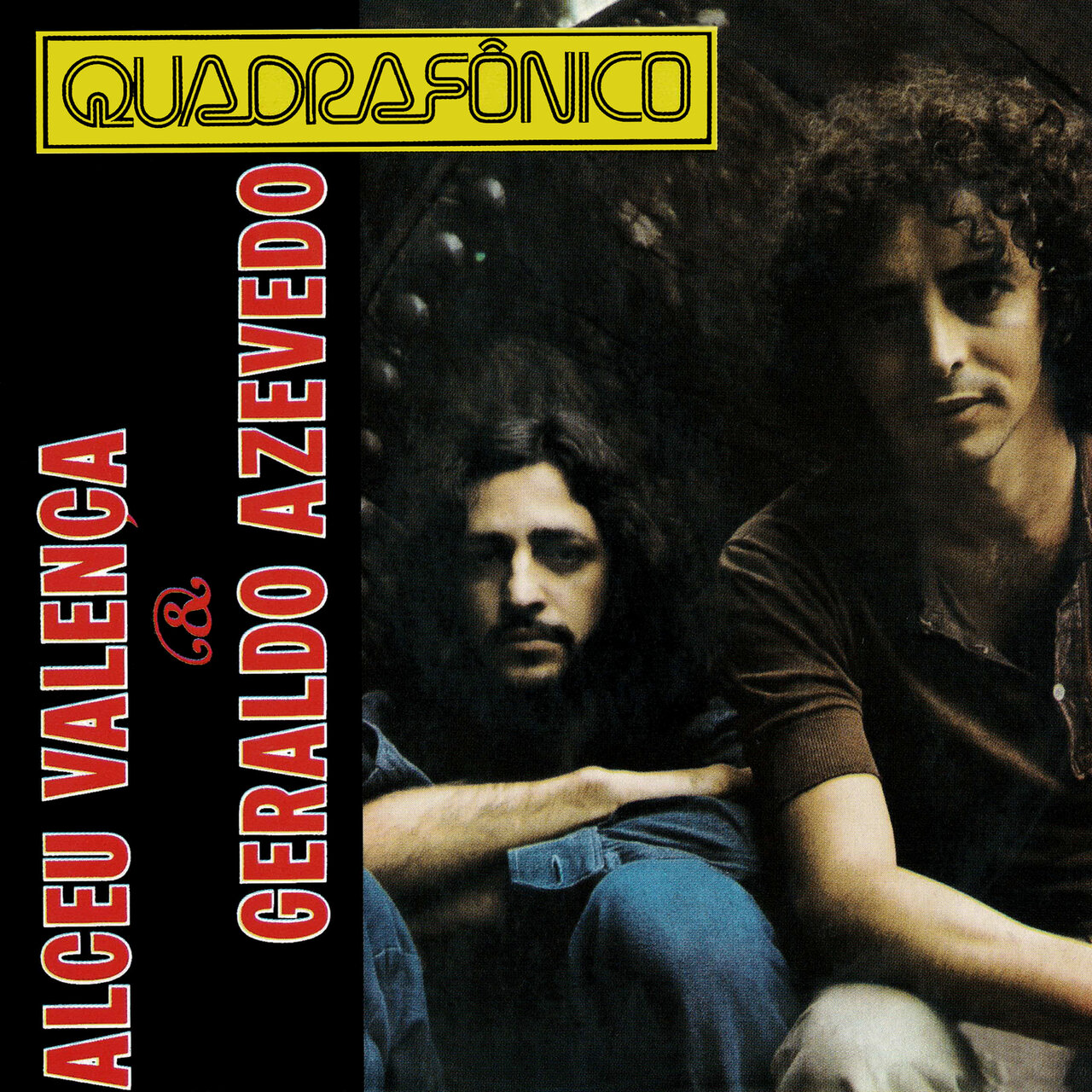
The album's recording in 1972 was marked by a modest budget and peculiar conditions. The Copacabana record label sent the duo to São Paulo for the sessions, and Alceu and Geraldo stayed at producer Cesare Benvenuti's apartment. The few studio hours allocated to the project took place in the early hours of the morning, when the space was unoccupied. Originally, the arrangements were to be by Hermeto Pascoal, but they ended up under the direction of tropicalista maestro Rogério Duprat, who brought his experimental signature to the record. The production utilised the Quadraphonic system, a four-channel sound technology that was new at the time. The prominence of the inscription "Quadrafônico" on the cover led many to believe this was the album's title, although the official name is Alceu Valença e Geraldo Azevedo. In addition to Cesare Benvenuti, Carlos Fernando and Daniel Taubkin acted as co-producers.
Songs
The album features twelve tracks over its 34-minute duration, with a repertoire that alternates between solo compositions by Alceu, by Geraldo, and collaborations between the two. The opening track, "Me Dá Um Beijo", exemplifies the characteristic fusion of baião and rock, setting the tone of diversity and creativity for the record. "Virgem Virgínia" is a ballad enriched by Duprat's notable orchestrations, which add a tropicalista nuance. "Novena", by Geraldo Azevedo and Marcus Vinicius, is one of the album's highlights, masterfully evoking the atmosphere of the sertão and faith. "Cordão do Rio Preto" stands out for its fusion of frevo and psychedelia, while "Planetário" captivates with an addictive and frenetic lyric about a woman who visits an analyst and does not return. Alceu Valença is the main author, signing songs such as "Erosão", "Seis Horas" and "Ciranda de Mãe Nina", and together with Geraldo Azevedo, they created tracks such as "Talismã".
Legacy
Despite the innovative use of the Quadraphonic system in the recording, this format did not prosper commercially due to market uncertainty regarding the standard and the high cost of playback equipment. Nevertheless, the album Alceu Valença e Geraldo Azevedo is widely recognised as a fundamental milestone, serving as the embryo for the highly significant careers both artists would develop in the following decades. Critics and fans consider it one of the strongest "lost psychedelic classics" to be rediscovered, possessing a magic and a skilful balance that surpassed even the solo debut albums Alceu and Geraldo would later release. Although for a long time it remained an obscure record for the general public, reissues such as those by Microservice and others over the years have contributed to its rediscovery, despite many of these reissues lacking detailed information about its fascinating genesis.
Tracks
Credits
Rogério Duprat
Carlos Fernando, Daniel Taubkin
Cesare Benvenuti
Léo Peracchi
Alceu Valença, Geraldo Azevedo
Gabriel Bahlis
Zequinha
Alexandre Pascoal Geto
Messias
Ariovaldo Dos Santos, Milton Rodrigues
Rogerio Gauss
Ciro Ney
Books
Analyses
Review: Alceu Valença & Geraldo Azevedo - Alceu Valença & Geraldo ...
collectorsroom.com.br
The first work by Alceu Valença and Geraldo Azevedo is a hidden gem of great Brazilian music that combines various Northeastern styles with psychedelic rock.

Review: Alceu Valença & Geraldo Azevedo - Alceu Valença & Geraldo ...
tabernanovostempos.blogspot.com
Review: Alceu Valença & Geraldo Azevedo - Alceu Valença & Geraldo Azevedo (1972) The first work by Alceu Valença and Geraldo Azevedo is a hidden gem of great Brazilian music that combines various Northeastern styles with psychedelic rock.
Alceu Valença & Geraldo Azevedo - Quadrafônico (1972) | cenaindie
cenaindie.com
Listening to Alceu Valença's discography is like wandering through a range of rhythms. A journey that goes from the frevo slopes and idleness of old Marin dos Caetés (Olinda) to the whole world. In 1972, Alceu released his first LP, with musician and friend Geraldo Azevedo.
[7/1000] Alceu Valença & Geraldo Azevedo - Quadrafônico
umcatalogo.substack.com
Alceu's and Geraldo Azevedo's first album, released in 1972. The former would only record something again two years later, "Molhado de Suor", and Geraldo, five years later.

Brazilian Nuggets: Quadrafônico
braziliannuggets.blogspot.com
Quadrafônico is a timeless album that continues to inspire musicians and fans of Brazilian music to this day. It is a masterpiece that showcases the genius and creativity of Alceu Valença and Geraldo Azevedo, two of the greatest Northeastern artists of all time.