Espelho Cristalino
Alceu Valença
1978

Rankings
Why This Album Matters
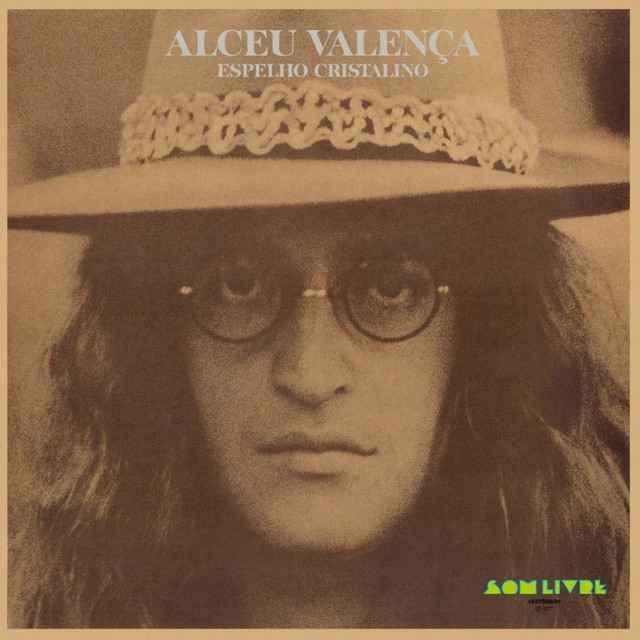
Released in 1977, Espelho Cristalino is the fourth album by the prolific Pernambuco singer and songwriter Alceu Valença, consolidating his quest for a sound that transcends the boundaries of regionalism. The record is a landmark in the inventive fusion between traditional Northeastern rhythms, such as baião, coco, and frevo, with the energy and experimentation of rock and psychedelia, creating what some critics call 'folk-rock' or 'forróck'. This sonic amalgamation, rich in arrangements and instrumentation, defines a particular style that would become one of Alceu's trademarks. The album stands out for its thematic depth, exploring the complex dialogue between the countryside and the city, modernity and ancestral traditions, as well as incorporating an ecological concern that was innovative for its time. With poetic lyrics replete with metaphors, Alceu Valença reaffirms his artistic identity, blending literary erudition with popular culture. The work, which includes emblematic songs such as "Agalopado", "A Dança das Borboletas", and the title track, is a testament to Alceu's genius in building a bridge between different musical and conceptual universes.
Context
By the late 1970s, Alceu Valença had already established his solo career with the release of Molhado de Suor (1974) and Vivo! (1976), following an initial collaboration with Geraldo Azevedo on the album Quadrafônico (1972). Espelho Cristalino marks the conclusion of his first phase of albums with the Som Livre record label, before a hiatus that would take him to other places and record companies. During this period, Alceu was already recognised for his audacity in electrifying and renewing the foundations of Northeastern music, using electric guitars and other rock elements to breathe new life into regional rhythms. The Brazilian musical scene of the 70s was effervescent, with MPB absorbing diverse influences and many artists seeking new forms of expression in a context of political repression. Alceu Valença, with his inventive poetry and Pernambuco accent, was consolidating his position as one of the main exponents of the generation that promoted the union of Northeastern hinterland sounds with the electric guitar. Zé Ramalho's departure from his band to pursue a solo career, mentioned by Alceu himself, also contextualises a moment of reconfiguration and artistic autonomy among Northeastern music talents.
Recording
Espelho Cristalino was recorded on 16 channels at Sigla studios in Rio de Janeiro, between May and October 1977. Production, studio, and mixing direction was initially handled by Guto Graça Mello, a prominent figure in music production at the time. However, the recording process did not proceed without challenges. Alceu Valença recounts a disagreement with Guto Graça Mello regarding the use of a vocal effect, which led him to personally take charge of the mixing until its completion. The album's arrangements were developed in partnership by Alceu Valença and Paulo Rafael, with Alceu also leading the conducting and vocal arrangements. The technical sheet reveals a talented band, with Paulo Rafael on guitars and viola, the virtuoso Ivinho also on viola, Dicinho on bass, and Israel Semente Proibida on drums. The presence of percussionists such as Agrício Noya, Louro, and Sérgio Mello, using instruments like maracas, zabumba, agogôs, and triangles, alongside flutes and pífanos by Beto Saroldi, underscores Alceu's intention to integrate regional elements into the electric and progressive sound, creating a rich and complex musical texture.
Songs
The album Espelho Cristalino comprises eight tracks that reflect Alceu Valença's lyrical and melodic mastery. Among them, the vibrant "Agalopado" stands out, a contagious anthem embodying the strength of Northeastern rhythms, as does "A Dança das Borboletas", a collaboration with Zé Ramalho that offers a delicate reflection on change and the beauty of everyday life. The title track, "Espelho Cristalino", is particularly significant. Inspired by Alagoas folklore, the song goes beyond its captivating melody to deliver a profound social and ecological critique. Alceu uses vivid imagery to contrast the purity of nature with urban dehumanisation, criticising the 'jungle of steel and antennae' and the 'senselessness of asphalt'. The 'espelho cristalino' (crystal mirror) of the title becomes a symbol of resistance, hope, and the preservation of cultural roots and memory as ways to confront modern alienation. The album's lyrics, in general, are marked by Alceu's inventive poetry, replete with powerful metaphors and references to themes such as nature, modernity, and the capacity to dream.
Legacy
Despite not achieving phenomenal sales success upon its release, partly due to its sound being closer to rock and progressive music, which might have alienated Alceu's usual audience, Espelho Cristalino has, over time, cemented its status as a work of great importance in the artist's discography. Critics consider it one of the most accomplished examples of Alceu's proposed fusion of rock and Northeastern rhythms, an album that 'achieved important results for the advancement of tradition' and was 'at the forefront of innovation in Northeastern regional music'. The album was first released on CD in 1999, and in 2016, it received a special vinyl reissue, as part of a box set that revisited Alceu Valença's 1970s phase, including albums such as Molhado de Suor and Vivo!, alongside previously unreleased material. Its relevance is attested by its inclusion in specialised lists: in a survey conducted by the podcast Discoteca Básica with 162 music specialists, Espelho Cristalino was ranked 157th among the best Brazilian albums, an acknowledgement of its lasting influence and artistic value.
Tracks
Credits
Alceu Valença, Paulo Rafael
Alceu Valença
Carlos Fernando
Guto Graça Mello
Alceu Valença, Don Tronxo, Rodolfo Aureliano, Zé Ramalho
Célio Martins, João Maria
Guto Graça Mello
Célio Martins
Vera Roesler
Joel Cocchiararo
Cafi
Podcasts
PodCália · Gigola
No oitavo episódio do “especial anos 70” do PodCália, o ano é “1977”.O disco é: "Espelho Cristalino", de Alceu Valença.
Videos
O lado ROCK de ALCEU VALENÇA – conheça o disco Espelho Cristalino
Lara Aufranc
Films


Books
Pelas ruas que andei : uma biografia de Alceu Valença
Julio Moura · 2023
The life and artistic trajectory of Alceu Valença, one of Brazil's most important singer-songwriters, is reconstructed by journalist and writer Júlio Moura, who has worked alongside his biographee for over a decade. With sensitivity and insight, the result of meticulous research, the author narrates the phases of Alceu's career, from his childhood in São Bento do Una to his consecration as one of MPB's great names.
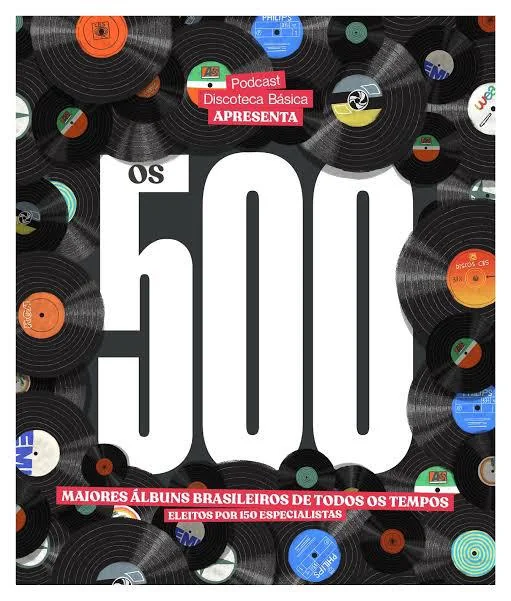
Os 500 Maiores Álbuns Brasileiros de Todos os Tempos
Ricardo Alexandre · 2022
The largest Brazilian music election ever conducted: 162 specialists, spanning journalists, critics, musicians, producers and podcasters, each nominated 50 essential albums, supported by a masterlist of more than 2,000 works. Led by Ricardo Alexandre with tabulation by Sérgio Jomori, it was published in December 2022 as a 200-page hardcover book with graphic design by Fernando Pires.
MPB - Compositores Pernambucanos
Renato Phaelante · 2015
The work lists, in alphabetical order and without discriminating genres, 200 personalities who made the Pernambucan music scene one of the most fascinating and eclectic in the country, tracing their respective lives and artistic trajectories. The entries prioritise authors who gained prominence from 1920 onwards. Alceu Valença, being one of the most prominent Pernambucan composers, will have a dedicated entry detailing his trajectory and musical contributions, including his period of greatest production.
Analyses
Espelho Cristalino – Wikipedia
Wikipedia, the free encyclopaedia
Disco Nota 11: "Espelho Cristalino" - Alceu Valença - Rockontro
rockontro.org
"Espelho Cristalino", I would say, is the most accomplished example of this fusion of rock and Northeastern rhythms. Woven with Alceu's metaphor-filled lyrics, it criticises modernity and the destruction of nature. These are songs marked by the counterpoint between the rural and the urban.

MUSICA&SOM: Alceu Valença - Espelho Cristalino (1977)
tabernanovostempos.blogspot.com
And we're back with the best of Brazil, and in this section we present more from the discography of Alceu Valença, who mixed elements of rock and psychedelia with pure Brazilian folk music, enriching his sound with indigenous instruments and sounds, in addition to those typical of rock.
Disco Nota 11: "Espelho Cristalino" - Alceu Valença | Rockontro
rockontro.org
"Espelho Cristalino", I would say, is the most accomplished example of this fusion of rock and Northeastern rhythms. Woven with Alceu's metaphor-filled lyrics, it criticises modernity and the destruction of nature. These are songs marked by the counterpoint between the rural and the urban.
"Espelho Cristalino", Alceu Valença (1977)
lucasbonetti.com.br
Expanding our repertoire of musical recommendations, we present Augusto Carvalho's article on the iconic album Espelho Cristalino (1977) by Alceu Valença, part of the UFBA students' recommendation series: