Frevo Mulher
Amelinha
1979
Rankings
Why This Album Matters
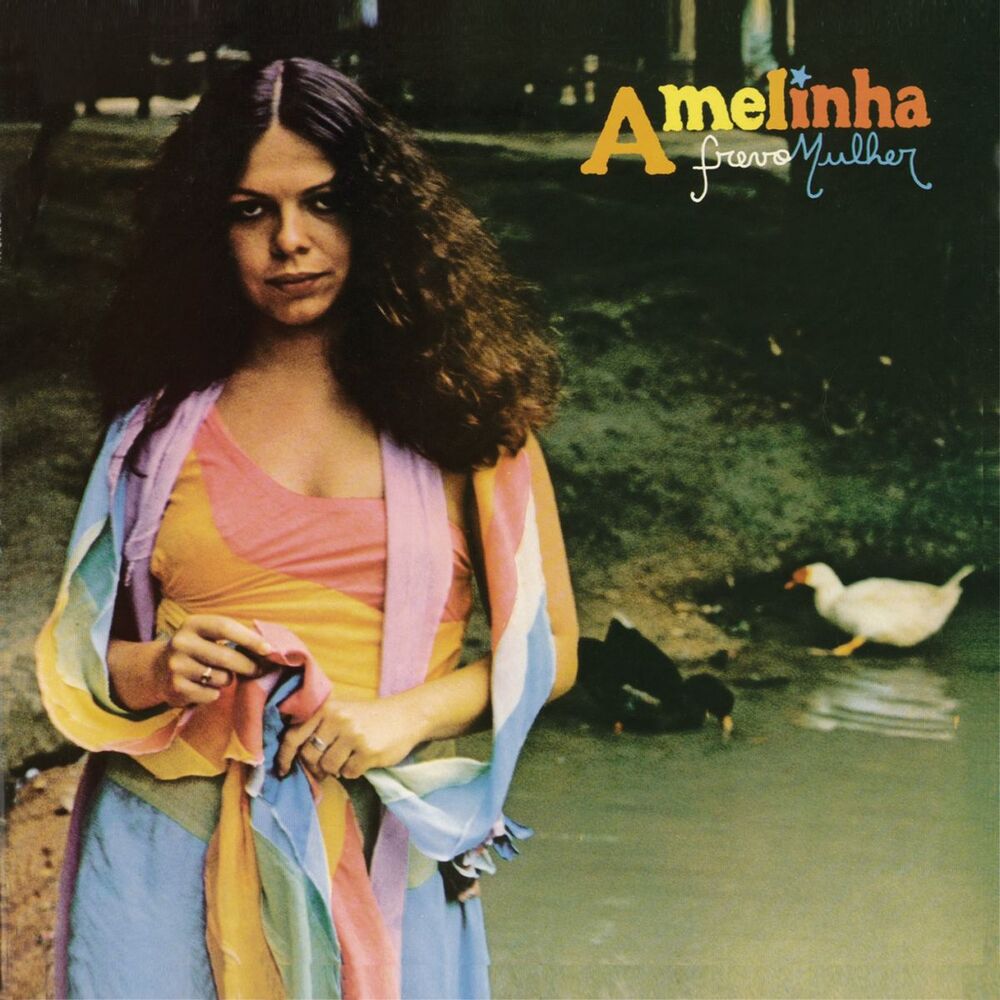
Frevo Mulher, the second album by singer Amelinha, released in 1979, is a seminal work that marked a decisive turning point in her career, catapulting her to national recognition. The album showcases a more vibrant and outgoing facet of the artist, contrasting significantly with the introspection of her debut work, Flor da Paisagem. In it, Amelinha embraces a vast and diverse repertoire which, although immersed in folkloric themes and Northeastern rhythms, is infused with a contagious energy and a festive spirit that would become hallmarks of her musical trajectory. The album stands out for its notable experimentalism, weaving a rich sonic tapestry where the traditional roots of the Northeast converse with international pop and rock influences. This fusion manifests in arrangements that combine erudite, popular, and traditional elements, creating a modern and original sound. The lyrics, in turn, transport the listener to a mystical and reinvented Northeast, permeated by surrealism and deep sentimentality, as Amelinha herself described the album as 'a blossoming for things. A very joyful-sounding record, great variation, down-to-earth and sweaty'.
Context
In the late 1970s, Northeastern music was experiencing a period of unprecedented effervescence and visibility in the Brazilian phonographic scene. Major record labels, such as CBS, were seeking new talents from the region, driving a true 'explosion' of Northeastern artists and sounds. In this environment, Fagner, following the success of his 1976 album, acted as an informal consultant for CBS, facilitating the entry of new names. It was in this context that Amelinha released her debut album, Flor da Paisagem, in 1977. Despite a good critical reception, the album did not achieve the expected commercial success, which led Jairo Pires, CBS's artistic director, to challenge the singer to aim for a 'gold record' on her next project. Determined, Amelinha moved to Rio de Janeiro, staying at the Plaza Hotel, a meeting point for various artists from the record label, including a young and impactful Zé Ramalho, whose mystical lyricism and unusual sound would deeply inspire her and give rise to the emblematic title track.
Recording
Frevo Mulher was recorded in 1978, with its official release occurring the following year by the CBS record label, which at the time was one of the main centres of musical production in Brazil. Artistic, production, and musical direction were handled by Carlos Alberto Sion, a central figure in the production of major names in Northeastern music of that period, with experience in blending regional sounds with contemporary arrangements. The recording work benefited from the expertise of Carlos Signorelli as engineer, assisted by Gilberto Peninha and Silvino Xavier, while mixing was credited to Signorelli and Eugênio Carvalho. The detailed technical sheet in the album's liner notes points to a careful and professional production, characteristic of major record labels of the era. Sion's collaboration, who also produced other emblematic albums by Northeastern artists for CBS in 1979, such as Ave de Prata by Elba Ramalho and A Peleja do Diabo com o Dono do Céu by Zé Ramalho, suggests a standard of quality and a cohesive approach to the sound of the emerging 'Northeastern generation'. It is probable that the recordings took place at CBS's own studios in Rio de Janeiro, which were well-equipped for the label's large-scale productions.
Songs
The repertoire of Frevo Mulher is a sonic mosaic that blends the vigour of Northeastern rhythms with a pop and experimental sensibility. The title track, "Frevo Mulher", by Zé Ramalho, is a frenetic frevo-forró, custom-conceived and inspired by Amelinha herself, which would become one of her greatest successes. Other highlights include "Santa Tereza", a tribute by Fagner and Abel Silva to the Rio de Janeiro neighbourhood, which resonates with Latin sounds and features the participation of the group Tacuabê, and "Dia Branco", by Geraldo Azevedo and Renato Rocha, which is re-imagined as a ballad with guitar solos, being the first song chosen by the artist for the album. The album also explores more introspective and psychedelic soundscapes, such as in "Galope Razante", a gallop by the sea with esoteric nuances that was the first song by Zé Ramalho dedicated to Amelinha. The experimentalism deepens with the progressive rock track "Divindade", presented to Amelinha by Walter Franco. A point of audacity and intensity is "Que Me Venha Esse Homem", a poem by Bruna Lombardi set to music by David Tygel, which explicitly addresses female sexual desire, something quite challenging for the era. Cátia de França contributes with the surreal baião "Coito das Araras", inspired by the literature of Guimarães Rosa. The album concludes with the rock song "Pedaço de Canção", by Moraes Moreira and Fausto Nilo, which features the special participation of the band O Terço, celebrating the importance of radio and music in rural areas.
Legacy
Frevo Mulher was a watershed moment in Amelinha's career, achieving tremendous commercial success and solidifying her position in the Brazilian music scene. The LP sold approximately 176 thousand copies, securing the singer's first gold record and surpassing the 118 thousand copy mark in just one year after its release, as reported by Jornal do Brasil in April 1980. The title track, "Frevo Mulher", became a popularity phenomenon, topping the radio charts (AM and FM) and being played exhaustively in discotheques, aerobics classes, and parties, which established her as one of the most sought-after performers in show business. The song not only became an anthem for Amelinha, but also boosted Zé Ramalho as a hit songwriter, marking the first tour for both artists. Its vibrant mix of frevo-forró made it a classic of June and carnival festivities, featuring among the ten most played songs in the history of Pernambuco carnival and remaining present in celebrations even decades after its release. The song's impact was so significant that Caetano Veloso himself stated that "Frevo Mulher" "changed Bahia's carnival forever". Its popularity was further boosted by a music video produced by TV Globo's Fantástico programme, aired in January 1980. The album and its title track influenced generations of artists and solidified the identity of Northeastern music in the national panorama, paving the way for a new sound that combined tradition and modernity.
Tracks
Credits
Jairo Pires
Carlos Alberto Sion, Zé Ramalho
Alencar
Carlos Signoreli, Eugênio Carvalho
Carlos Signoreli
Peninha, Silvino Xavier
Géu
Carlos Enrique M. de Lacerda
Paulo Klein
Amelinha
Books
Analyses
Frevo Mulher – Wikipedia
Wikipedia, the free encyclopaedia
Frevo Mulher (1979) Amelinha - by Luciano Siqueira
meusdozemais.substack.com
Dona Lourdes was increasingly fascinated by the telluric and mystical force of Northeastern Brazilian music, developing a special admiration for the figure of Zé Ramalho, at the time married to singer Amelinha.
44 Anos de "Frevo Mulher" (1979), de Amelinha - IMMuB
immub.org
Between arrasta-pé and frevo, this song contains within it a vast musical seed and is proof of Zé Ramalho's profound versatility and his connection with the genres that, from Carnival to São João, affect and transform us.
Aquela Musica Apresenta "Frevo Mulher - 1979"
aquelamusica.com
"Frevo Mulher" is the second album released by singer Amelinha and was released by CBS in 1979. The work, produced by Zé Ramalho, won a gold record, boosted by the title track, a huge national success.
Amelinha - Frevo Mulher (1979) - musicasdonordeste.net
musicasdonordeste.net
The album, divided into two parts, brings together the singer's biggest hits from his 20-year career, with songs like "Avôhai", "Chao de Giz", "Bicho de 7 Cabecas", and others.