Out from Out Where
Amon Tobin
2002
Rankings
Why This Album Matters
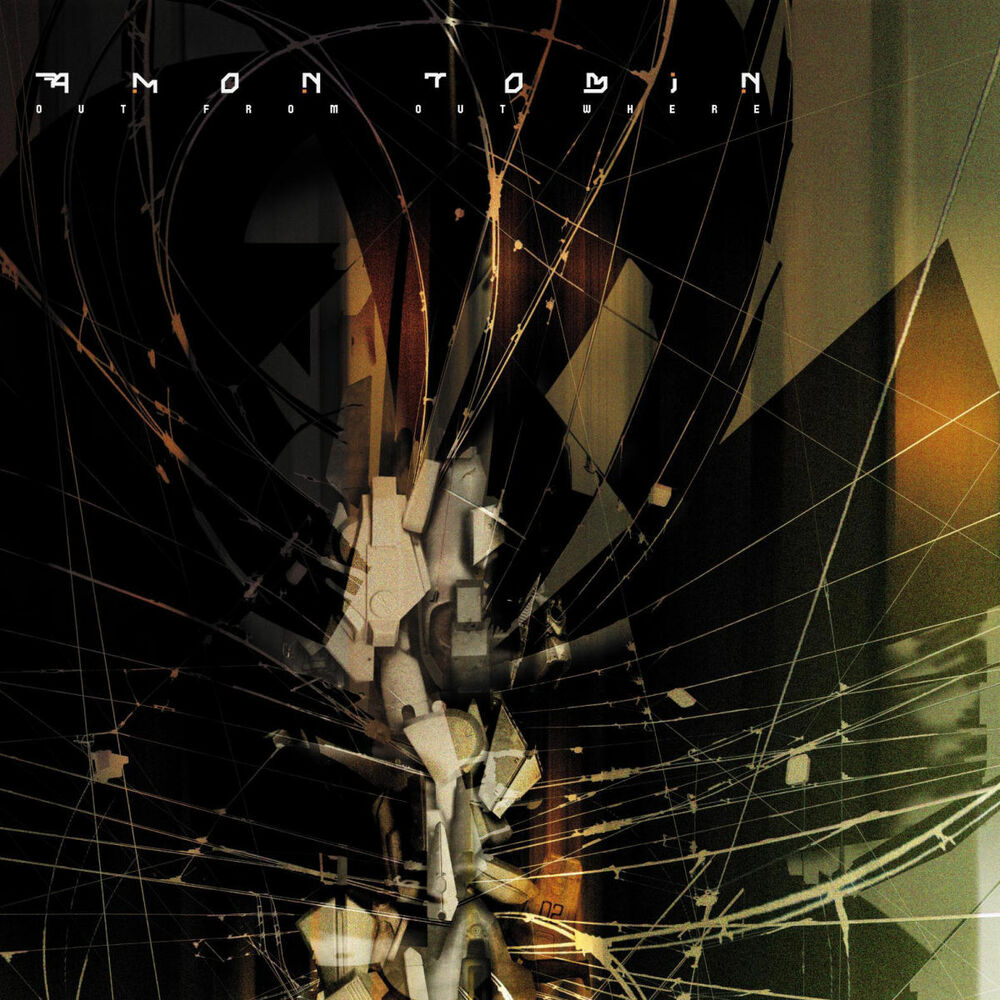
Released in 2002, Out from Out Where is the fifth studio album by Brazilian electronic music producer Amon Tobin and marks a pivotal point in his discography. The work represents a transitional phase for the artist, moving away from some of the more explicit jazz and fusion influences that characterised his previous albums, such as *Bricolage* and *Permutation*. Instead, Tobin delves into a 'mechanistic and fractured' sonic labyrinth, cementing his reputation as a master of sound design and sample manipulation. The album is a manifesto of 'music of the future', weaving elements of drum and bass, IDM, trip-hop and experimental electronica into a cinematic sonic tapestry. Tobin demonstrates his skill in constructing dense and intricate soundscapes, where each audio fragment is meticulously cut and rearranged, resulting in a cohesive, often dark and immersive, auditory experience. For some critics, Out from Out Where is seen as the last work of the 'original Amon Tobin' before his forays into even more experimental territory.
Context
Amon Tobin, born in Rio de Janeiro, Brazil, spent his formative years in the United Kingdom, where he immersed himself in the hip-hop, jungle and drum and bass scenes of the 80s and 90s. His debut, under the pseudonym Cujo, on the Ninebar Records label, led him to sign with the renowned Ninja Tune in 1996. Before Out from Out Where, Tobin had already established a solid reputation with acclaimed albums such as *Bricolage* (1997), *Permutation* (1998) and *Supermodified* (2000), in which he demonstrated a singular talent for sound synthesis and the innovative use of samples. By 2002, he was already widely recognised as a prominent figure in electronic music.
Recording
Amon Tobin is known for his meticulous and self-sufficient approach to production, predominantly using samplers and effects to construct his intricate sonic sculptures. For Out from Out Where, he created the album entirely with a sampler, a few effects and a vast collection of records, without the use of real instruments. Interestingly, this album marked the first time in his career that Tobin began incorporating his own pre-recorded parts, a technique that not only helped to avoid sample clearance issues, but also significantly expanded his sonic palette. The album's creation process lasted approximately 18 months, with the final six months being intensely dedicated to its completion. Tobin is a 'night owl' in his composition method, frequently starting in the mid-afternoon and working until the following day to develop the main structure of a track. He then spends weeks refining the production and mixing, a testament to his incessant pursuit of precision. He scrutinises samples in such detail that their original sources become virtually unrecognisable, creating a truly unique and immersive sound.
Songs
The particularities of the songs on Out from Out Where reflect Amon Tobin's evolution and mastery in sound design. 'Verbal', the album's only single, stands out due to the participation of MC Decimal R. and its ingenious 'cut-up' vocal technique, which lends a funky and distinct flow to the track. 'Proper Hoodidge' also received a music video and incorporates Tobin's jazzy influences, with bass and electric piano riffs that sound variable and almost improvised. Tracks such as 'Back From Space' open with ominous fugues and scratching sounds, which gradually transform into dense and cinematic orchestrations, creating an intense atmosphere from the outset. 'Chronic Tronic' and 'Searchers' are described as fiercely dense, with vibrant beat exchanges and claustrophobic constraints; 'Searchers', in particular, features a dark and oriental flavour, with layers of strings, brass and tribal beats. 'Mighty Micro People' is notable for its delicate layers of harp sounds and a deep groove, having even been licensed for the racing game *Need for Speed: Undercover*. The album as a whole is a collage of 'huge animated beams of metal and sonic electricity', combined with funky, jazzy and human touches, encompassing styles such as drum and bass, hip-hop, jazz, Latin rhythms, film soundtracks and experimental electronica. Compositions like 'Triple Science' exhibit 'supersonic speed-cutting sorcery' and elements of drill 'n' bass, showcasing the work's sonic diversity.
Legacy
Out from Out Where consolidated Amon Tobin's position as one of the most visionary electronic artists of his generation. In 2010, the album received a gold certification from the Independent Music Companies Association (IMCA), denoting sales of at least 100,000 copies in Europe. Critics recognised Out from Out Where as a 'pioneering album' that challenged listeners' preconceived notions of how electronic music could be constructed. Although some reviews described it as 'stubborn and hermetic', it was widely praised as 'another astonishing album from one of the most consistent, singular and frankly brilliant producers of the last twenty years'. Tobin's music, including tracks from this period, has been widely used in films and video games, solidifying his reputation as a virtuoso sound designer. His work continues to inspire a vast range of artists, both within and outside the spectrum of electronic music, attesting to the lasting impact of his sonic innovation.
Tracks
Credits
Amon Tobin
She-T
Openmind
Analyses
Out from Out Where – Wikipedia
Wikipedia, the free encyclopaedia
Amon Tobin: Out From Out Where Album Review | Pitchfork
pitchfork.com
Tobin's definitely out to have some fun with this record, though the immense density of these soundscapes prevent them from being reduced to chop-shop filler.
Classic Album Review: Amon Tobin | Out From Out Where
tinnitist.com
This came out in 2002 - or at least that's when I got it. Here's what I said about it back then (with some minor editing): Born in Brazil, raised in the U.K. and now living in Montreal, drum 'n' bass electronician Amon Tobin can obviously cross cultures comfortably.
Amon Tobin - Out From Out Where (Ninja Tune, 2002) - Fast 'n' Bulbous
fastnbulbous.com
Whispers of ancient Arabic Indian classical melodies squirm just below the surface throughout the album, particularly in the multi-layered "Searchers." "Triple Science" exudes that particular claustrophobia of space madness — you know the kind, when the navigator robot is humping your leg and the mutant guinea pig is driving the ship ...
Amon Tobin - "Out From Out Where" | fmstereo - profelectro.info
profelectro.info
"Out from out where" confirms its author as one of the most imaginative demiurges of "sampling", but it might cause disappointment rhythmically, by taking refuge in safer formulas than those that made "Supermodified" a continuous provocation. But now it's time to dream.