Clara Crocodilo
Arrigo Barnabé
1980

Rankings
Why This Album Matters
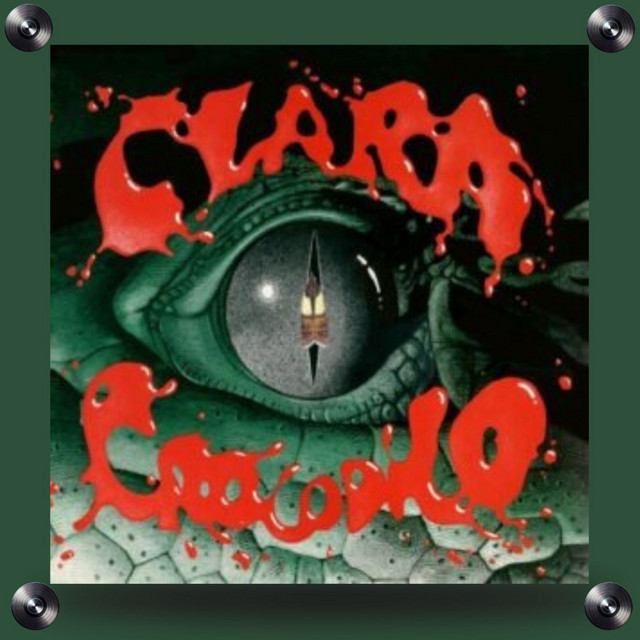
Clara Crocodilo, released in 1980, represents the debut album by composer Arrigo Barnabé, accompanied by the band Sabor de Veneno, and marked a watershed moment in Brazilian popular music. Its arrival caused a significant impact, garnering praise from specialised critics who promptly considered it "the greatest novelty to emerge in Brazilian music since Tropicália". The album is a fundamental milestone, recognised as the starting point of the so-called Vanguarda Paulista, a musical movement that, in addition to Barnabé, harboured names such as Itamar Assumpção and Tetê Espíndola, and groups like Premeditando o Breque, Língua de Trapo and Rumo. Musically, Clara Crocodilo distinguishes itself through its audacious incorporation of serial techniques, notably dodecaphonism and free atonality. This characteristic positioned Arrigo Barnabé as the pioneer in the systematic use of these methods in Brazilian popular music. The album's lyrics delve into urban life, exploring the neurosis and degradation of contemporary Brazilian metropolises, with a keen eye on the Paulistana marginal counterculture. The poetic approach is openly influenced by comic books, and Rolling Stone Brasil described it as a "pop opera" that portrays degraded life in cities. Arrigo Barnabé himself considers it his most consistent work from a musical point of view, reinforcing the intrinsic relevance of the work for his career and for the country's musical landscape.

Clara Crocodilo is a sound powerhouse that blends avant-garde contemporary classical music, dodecaphonism, pop, and heavy rock.
Antônio do Amaral Rocha · Rolling Stone Brasil
Context
Born in Londrina in 1951, Arrigo Barnabé had an eclectic education, studying piano and theoretical subjects at the Conservatório Musical Filadélfia. From adolescence, he participated in a circle of friends who discussed various topics, from mathematics to music, where he came into contact with works by composers such as Stravinsky and Stockhausen, which led him to his first experimental compositions. After moving to São Paulo in 1970 and studying architecture at USP, Arrigo deepened his interest in comic books, which became an aesthetic reference and source of inspiration for his characters. In 1974, he enrolled in the music course at ECA-USP, where he studied composition and piano. His musical trajectory pre-Clara Crocodilo included the formation of the ensemble Navalha, which anticipated the band Sabor de Veneno, and victory at the TV Cultura de São Paulo University Song Festival in 1979 with the song "Diversões Eletrônicas", which boosted his performances across the country.
Recording
The production of Clara Crocodilo was not a deliberate choice of "cultural resistance", but rather a necessity imposed by friction with the Polygram record label. The album was initially planned for release by the label, as part of the series "Música Popular Brasileira Contemporânea", intended for new talents. However, independent production became the only option, being carried out between July and September 1980 at Nosso Estúdio in São Paulo, under the direction of Robinson Borba. The official launch took place on 15 November of the same year at the Faculty of Architecture and Urbanism at USP, but its commercialisation was delayed due to censorship, which only cleared the album in the last week of December.
Songs
The songs on Clara Crocodilo, except for "Instante", crudely and realistically explore the neurotic and dehumanising life in contemporary Brazilian metropolises. The album's lyricism is markedly influenced by comic books, focusing on the Paulistana marginal counterculture. All tracks on the LP are serial compositions. The two oldest songs, the title track "Clara Crocodilo" (from 1972) and "Sabor de Veneno" (from 1973), use series of eight and six pitches, respectively. From 1974, Arrigo Barnabé began to employ dodecaphonism, a technique that was applied to all other tracks on the album.

Only those who experienced the early 1980s have a truer sense of the impact this album had.
Carlos Calado · 300 Discos Importantes
Legacy
Clara Crocodilo was acclaimed by specialised critics as the spokesperson for the "third revolution" of MPB, succeeding bossa nova and Tropicalismo. The album was responsible for systematically introducing atonal music and dodecaphonism into the Brazilian musical universe, receiving numerous favourable reviews both in Brazil and abroad, and becoming a reference among avant-garde circles. However, despite its critical recognition and its position as a landmark of the Vanguarda Paulista, Clara Crocodilo never achieved widespread popular success. In 2007, the list of the 100 greatest Brazilian albums, compiled by Rolling Stone Brasil, ranked the album in 51st position, and Arrigo Barnabé himself considers it his most musically consistent work.
Tracks
Credits
Robinson Borba
Marcus Vinicius
Eliana Estevão, Gilberto Mifune
Passoca
Suzana Salles, Vânia Bastos
Gilson Gibson
Ubaldo Versolato
Ronei Stella
Tavinho Fialho
Mario Aydar
Marcelo Galberti
Felix Wagner
Paulo Barnabé
Bozzo Barretti
Regina Porto
Rogério Benatti
Arrigo Barnabé
Mané Silveira
Chico Guedes
Marcus Vinicius
Carlos Duttweller, Francisco Braga
Luis Gê
A. C. Tonelli
Podcasts
Antigas Novidades - podcast de heavy metal, rock progressivo, jazz, blues, MPB e rock classico · Antigas Novidades do Rock
No episódio de hoje do Antigas Novidades, vamos mergulhar em um dos discos mais ousados e revolucionários da música brasileira: Clara Crocodilo, lançado por Arrigo Barnabé em 1980. Um álbum que marcou para sempre a Vanguarda Paulista e desafiou as fronteiras entre música erudita e popular, misturando dodecafonismo, serialismo, atonalidade e expressionismo com críticas sociais e culturais afiadas.D

Sons e Histórias · Daniel Queiroz
Chegamos ao episódio 100 — e celebramos com um mergulho profundo em um dos discos mais ousados da música brasileira: Clara Crocodilo (1980), de Arrigo Barnabé.Uma obra que rasgou a MPB tradicional, inaugurou a Vanguarda Paulistana e trouxe para o Brasil um choque de atonalidade, narrativa, violência urbana e invenção radical.Neste episódio especial, além do trio habitual — Júnior Beatle, Daniel Qu

Nesta edição especial do DOA, trazemos uma excentricidade da música brasileira, Arrigo Barnabé, com o disco Clara Crocodilo. Link para o disco - https://www.youtube.com/watch?v=27_o7Yh77sI&list=OLAK5uy_nZRyJVLovx9vwe2z6XrX53jIid2VmLnKM&index=1&t=0s A nossa opinião é somente a nossa opinião, deixe a sua nos comentários também. Nos siga no Twitter Marlon - https://twitter.com/warmturtle141 P
Videos
CLARA CROCODILO: O MONSTRO GENIAL DE ARRIGO BARNABÉ | ALBUM REVIEW
Som de Peso
Resenha Arrigo Barnabé, Clara Crocodilo
NonaOrelha
Ep. 100 – Clara Crocodilo: O Álbum que Rasgou a Música Brasileira | Arrigo Barnabé
Sons e Histórias
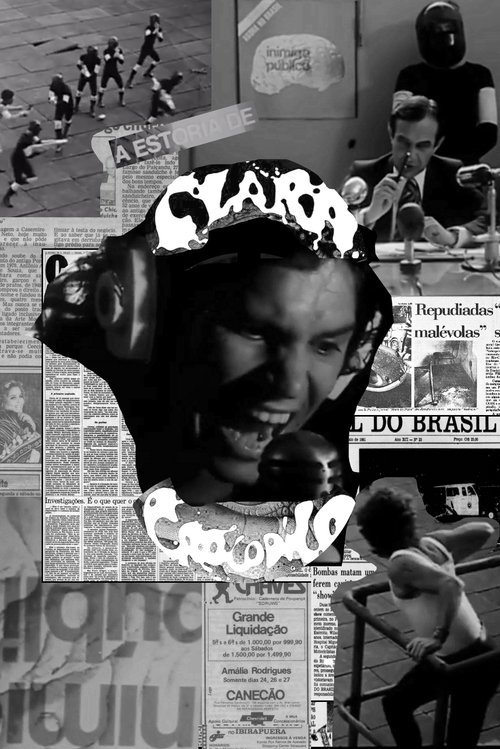
A estória de Clara Crocodilo de Cristina Santeiro, 1981
Cristina Santeiro
Arrigo Barnabé fala sobre Clara Crocodilo e etc
baksbambino
Films

Books
Álbum 3 – 1978 a 1993
Pedro Alexandre Sanches · 2024
This volume in the 'Álbum' series by renowned journalist and music critic Pedro Alexandre Sanches proposes to retell the history of Brazilian music through the analysis of records that marked different generations. Covering the period from 1978 to 1993, it is highly probable that 'Clara Crocodilo' (1980), a seminal album frequently cited as a landmark of the São Paulo avant-garde, will be discussed in depth, providing context and detailed analysis of Arrigo Barnabé's work.
Os 500 Maiores Álbuns Brasileiros de Todos os Tempos
Ricardo Alexandre · 2022
The largest Brazilian music election ever conducted: 162 specialists, spanning journalists, critics, musicians, producers and podcasters, each nominated 50 essential albums, supported by a masterlist of more than 2,000 works. Led by Ricardo Alexandre with tabulation by Sérgio Jomori, it was published in December 2022 as a 200-page hardcover book with graphic design by Fernando Pires.
300 Discos Importantes da Música Brasileira
Charles Gavin, Tárik de Souza, Carlos Calado, Arthur Dapieve · 2008
Conceived by Titãs drummer and musical researcher Charles Gavin, the 434-page book brings together covers and reviews of albums released between 1929 and 2007. The texts were written by journalists Tárik de Souza, Arthur Dapieve and Carlos Calado.
Analyses
Clara Crocodilo – Wikipedia
Wikipedia, the free encyclopaedia
Clara Crocodilo – The 100 Greatest Albums of Brazilian Music
Antônio do Amaral Rocha · Rolling Stone Brasil
Clara Crocodilo is a sound powerhouse that blends avant-garde contemporary classical music, dodecaphonism, pop, and heavy rock.
Crítica | "Clara Crocodilo" - Arrigo Barnabé - Plano Crítico
planocritico.com
Clara Crocodilo was a pioneer aesthetically and in its production model. It is a fundamental album for understanding certain strands of contemporary Brazilian music that prioritise experimentation and risk. A difficult record to consume, but an honest work, committed solely to the realisation of its aesthetic vision.
Arrigo Barnabé: 'Naquela época falar de violência, mutação, paranoia ...
correiodamanha.com.br
The inaugural work of the so-called Vanguarda Paulista, the album "Clara Crocodilo" celebrates over four decades, maintaining its transgressive force intact. Launched in October 1980 by Arrigo Barnabé and Banda Sabor de Veneno, the record marks a point of rupture and reinvention in Brazilian music.
Álbum com gravação inédita de show de Arrigo Barnabé em 1980 ... - G1
g1.globo.com
With eight tracks, the album Arrigo Barnabé & Banda Sabor de Veneno - Ao vivo no Sesc_1980 captures Clara Crocodilo live on stage, featuring seven of the eight songs from the record.