Arthur Verocai
Arthur Verocai
1972

Rankings
Why This Album Matters
Arthur Verocai's debut album, released in 1972, is a singular work that transcends the musical categories of its era. Although initially neglected, it retrospectively established itself as a landmark of Brazilian music, distinguished by its rich fusion of elements. Verocai orchestrated an innovative sound that combines the effervescence of Brazilian pop with the depth of American soul, funk, and folk. Influenced by figures such as Frank Zappa, Miles Davis, and Wes Montgomery, the album presents a progressive sonic mosaic that, although superficially aligned with Tropicália, was an independent and visionary artistic expression of the musician. The presence of striking instrumental solos, some with touches of traditional Brazilian music as in "Pelas Sombras" and "Karina", adds layers of sophistication and 'brasilidade' to its proposition. Despite not having achieved immediate recognition, Arthur Verocai is today celebrated for his audacity and musical complexity, demonstrating a mastery in arrangements and compositions that would come to be recognised by new generations of artists and global music enthusiasts.
Context
The recording of the album Arthur Verocai occurred during a period of intense musical activity for the artist, who had abandoned his civil engineering course in 1968 to dedicate himself entirely to music. Before his solo debut, Verocai was already a sought-after name behind the scenes of MPB, working as an arranger and instrumentalist for big names such as Jorge Ben, Ivan Lins, Gal Costa, Célia and Marcos Valle. The album's release, in 1972, took place at the height of the Brazilian military dictatorship, an authoritarian regime that would persist for over two decades. This complex and repressive political scenario would also be subtly, yet present, reflected in the album's lyrics.
Recording
The production of the album Arthur Verocai was marked by a remarkable creative freedom granted to the musician by the Continental record label in 1972. Verocai reported that the label "let me do what I wanted", allowing him total control over the recording process. The recording sessions were carried out in a studio in the Botafogo neighbourhood, Rio de Janeiro. To bring his musical vision to life, Verocai assembled an impressive cast of musicians, which included a section of twelve violins, four violas and cellos, as well as pairs of percussion and saxophones, a trombone, a flute, an electric piano, and a vocal team who took turns on the nine songs of the record.
Songs
The album's lyrics were mostly written by Vítor Martins, a composer openly opposed to Brazil's then-current military dictatorship. The songs stand out for their abstract and veiled criticisms of the regime, which, according to Verocai, managed to circumvent the federal censorship of the time due to the censors' lack of comprehension. Musically, the album is a melting pot of influences, with instrumental solos that incorporate hints of traditional Brazilian music, as exemplified in the tracks "Pelas Sombras" and "Karina". Songs like "Na Boca do Sol" and "Cabocla" would become particularly notable decades later, when they were widely sampled by hip-hop artists.
Legacy
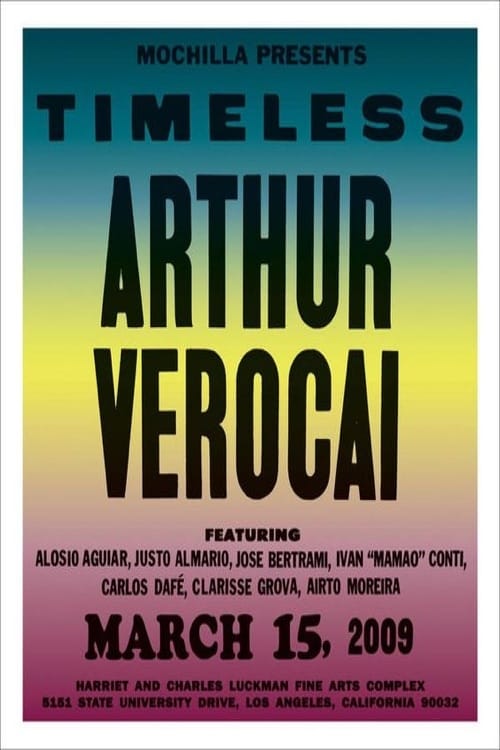
Initially, Arthur Verocai was a commercial and critical failure, resulting in a disappointment that led the musician to re-evaluate his solo career and dedicate himself more to composing, arranging, and producing for other artists. The album remained in relative anonymity for almost three decades, with copies even being melted down by the record label due to financial difficulties and low demand. Its rediscovery occurred in the early 2000s, driven by US hip-hop producers. In 2005, the track "Cabocla" was sampled by Little Brother in the song "We Got Now", and "Na Boca do Sol" was used by MF Doom in "Orris Root Powder". This rediscovery generated a wave of recognition, with the album being reissued by Ubiquity in the USA in 2003 and retrospectively acclaimed. Critics such as Jason Ankeny, from AllMusic, described it as a "shimmering, dreamlike sonic mosaic", whilst producers like Madlib consider it one of their favourites. Today, Arthur Verocai is considered the musician's masterpiece, with original LP copies reaching high values in the collectors' market. The resurgence of interest in Verocai's work motivated him to release another studio album, Saudade Demais, in 2002, thirty years after his iconic debut, and to perform a concert in Los Angeles in 2009, as part of the Timeless: The Composer/Arranger Series.
Tracks
Credits
Arthur Verocai
Paulinho Tapajós, Vitor Martins
Célia, D. Carlos, Gilda Horta, José Carlos, Luiz Carlos Batera, Paulinho Da Costa, Toninho Café, Toninho Horta
Oberdan Magalhães
Oberdan Magalhães
Hélio Delmiro
Aloisio Milanez, Edson Maciel, Hamilton, Hélio Delmiro, Jorge Ferreira Da Silva, Luiz Alves, Luiz Carlos Batera, Nivaldo Ornelas, Oberdan Magalhães, Pascoal Meirelles, Paulinho Da Costa, Paulo Moura, Pedro Santos, Robertinho Silva, Serginho Do Trombone
Aloisio Aguiar
Paulo Moura
Nivaldo Ornelas
Edson Maciel
Vitor Martins
Podcasts
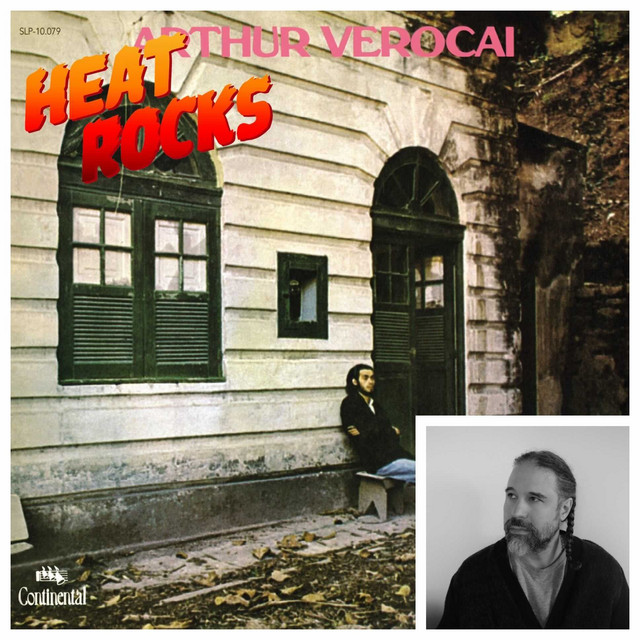
Heat Rocks · MaximumFun.org
Bassist/composer Joshua Abrams sits down with Oliver and guest co-host Jocelyn Brown to discuss Arthur Verocai's underrated self-titled debut record. We discuss the rediscovery of this album via sampling, the texture of Arthur's synth work, and why we connect with the album even though our Portuguese is, uhh, a bit rusty.More on Joshua AbramsJoshua Abrams' Chameleonic Quartet Gets Exuberantly Orne
Jazz of the World - Live on WKCO 91.9 · Nicholas Kloor
The return to Jazz of the World features the musical stylings of Arthur Verocai, Brazilian composer and arranger. His 1972 debut album re-emerged as a result of sampling and crate-digging, which has led to a massive resurgence in his popularity. Embark on this musical journey to hear parts of his original album, the popular samples, and his new collabs with groups like Hiatus Kaiyote and the Far O
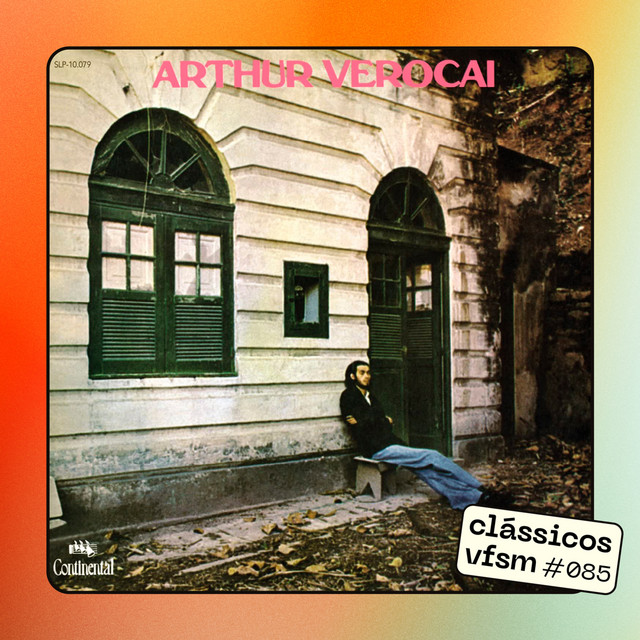
Ignorado na época de seu lançamento, o homônimo registro de estreia de Arthur Verocai, de 1972, acabou se transformando em um objeto de culto para colecionadores de discos, virou matéria-prima para diferentes nomes do rap norte-americano e, mais de três décadas depois de apresentado, foi redescoberto por uma nova geração de ouvintes. Nesta edição, Cleber Facchi (@cleberfacchi) e Nik Silva (@niksil
Disco Voador · Ramon Duccini
Sempre falei que Arthur Verocai era um dos personagens principais da nossa pesquisa musical. Seu disco de 1972, que na época do lançamento não teve nenhuma repercussão, hoje alcança facilmente os cinco dígitos quando encontrado em ótimo estado. Qual o motivo do culto a esse disco? Quais são as histórias por trás de cada música? O que aconteceu com Arthur Verocai entre o auge de sua produção como
Videos
REVIEW: ARTHUR VEROCAI (1972)
Georg e suas mídias
Crítica do álbum Arthur Verocai (1972), de Arthur Verocai
Robertando
Films

Books
Analyses
Arthur Verocai – Wikipedia
Wikipedia, the free encyclopaedia
Vitrola | O genial disco de 1972 de Arthur Verocai é fruto de ... - Alataj
alataj.com.br
It's strange to think that in 1972, just 4 years after Arthur Verocai left civil engineering to fully dedicate himself to music, one of the richest albums in Brazilian musical culture was produced.
Arthur Verocai - Arthur Verocai - Monkeybuzz
monkeybuzz.com.br
But, above all, due to Verocai's genius, the album sounds unique, one of those that with each listen reveals a new secret that once again turns the wheel of supposed influences.
"Arthur Verocai", Arthur Verocai (1972) - Lucas Bonetti
lucasbonetti.com.br
The songs were performed by names like Toninho Horta, Célia, and Verocai himself. The sound of the tracks is very diverse, in an amalgam that encompasses samba, jazz, funk, and flirts with the *música mineira* of Clube da Esquina.
O disco de MPB esnobado em 1973 que virou cult no rap americano atual - BBC
bbc.com
A conductor and arranger from Rio de Janeiro, Arthur Verocai made an album that flopped and was criticised in the 1970s, to the point of almost leaving the artist in depression; until, in the 2000s, he began to ...