September 17, 1969
Astrud Gilberto
1970
Rankings
Why This Album Matters
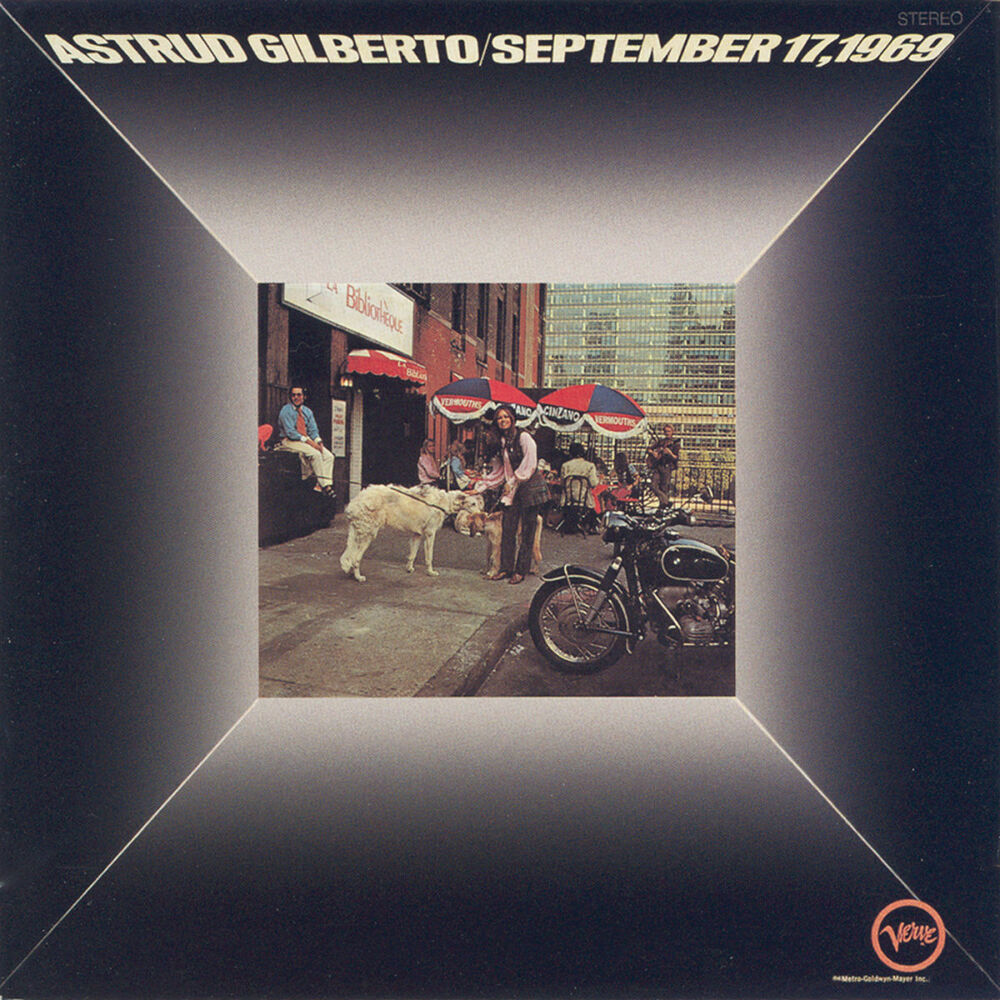
Released in 1970, Astrud Gilberto's album September 17, 1969 represents a moment of transition and stylistic expansion in the career of the acclaimed 'Queen of Bossa Nova'. Distancing itself from the purism of the genre that made her globally famous, this work embraces broader, more contemporary sounds from the late 1960s. With her soft, almost whispered voice, Astrud navigates arrangements that incorporate elements of pop and easy listening, maintaining the elegance that became her trademark. The album stands out for its approach to well-known songs, reinterpreted with Gilberto's unique vocal delicacy and a more 'groovy' and orchestral instrumentation. It offers a perspective on how the artist explored new musical directions, without losing the melodic essence and subtle interpretation that define her. The album is a testament to Astrud's versatility and her ability to transcend labels, exploring a repertoire that dialogues with the musical landscape of the era.
Context
Astrud Gilberto achieved international fame in the mid-1960s, following her vocal contribution to the global hit 'The Girl from Ipanema'. Starting with her first solo album, The Astrud Gilberto Album, in 1965, she consolidated a prolific career, releasing several works through Verve Records until 1970. Having permanently emigrated to the United States in 1963 and divorced João Gilberto in 1964, Astrud built her artistic identity on the international scene, becoming a popular figure in both the USA and Japan. The late 1960s marked a period of experimentation and fusion for bossa nova, with artists like Astrud Gilberto expanding the sound to incorporate more pop influences.
Recording
The album September 17, 1969 was recorded at Century Sound Studios, in New York. Production, engineering and vocal arrangements were handled by Brooks Arthur, who worked to shape the album's distinctive sound. Most of the arrangements and conducting were done by Albert Gorgoni, with Michel Legrand responsible for the arrangement of one of the tracks, 'Let Go (Canto de Ossanha)'. The team of musicians included notable names such as Airto Moreira on percussion, enriching the album's rhythmic texture. The recording also featured a comprehensive instrumental section, including strings, brass, and a robust group of keyboardists and guitarists, who contributed to the album's 'groovy' sound.
Songs
The repertoire of September 17, 1969 is largely composed of covers of popular songs from the era, receiving Astrud Gilberto's characteristic vocal treatment and arrangements with a 60s feel. Among the standout tracks is the reinterpretation of 'Beginnings', by the band Chicago, notable for Astrud's sensual, whispered vocals and a funky bassline. Other notable interpretations include 'Light My Fire', originally by The Doors, and 'Here, There and Everywhere' by The Beatles. The album also features the track 'Let Go (Canto de Ossanha)', which incorporates a Brazilian touch into the repertoire. 'Summer Sweet' is another highlight, described as an easy listening piece that evokes the lightness of the 60s. The lyrics, for the most part, explore themes of love and contemplation, aligning with the romantic and introspective atmosphere that Astrud Gilberto usually conveyed in her performances.
Legacy
Released by Verve Records in 1969 (and in 1970 in the United Kingdom with the title Holiday), September 17, 1969 represented another chapter in Astrud Gilberto's discography. Although critical reception of her style and vocal production was sometimes divided, with some analyses pointing to a more pop direction compared to earlier works, the album earned its place. It was included in the acclaimed list of '1001 Albums You Must Hear Before You Die', attesting to its international recognition. The album is valued by collectors and DJs for some of its tracks, which show the fusion of Astrud's style with the psychedelic and orchestral sound of the turn of the 60s into the 70s.
Tracks
Credits
Al Gorgoni
Brooks Arthur
Brooks Arthur, David White, Frankie Callen, Gene Maharrey, Linda November, Maeretha Stewart, Ron Dante
Astrud Gilberto
Joe Macho, Julio Ruggiero
Harry Wimmer, Maurice Bialkin
Al Rogers, Bill Lavorgna
Burt Collins, Joe Shepley
Sal Ditroia
Ben Aronov, Frank Owens, Paul Griffin, Stan Free
Airto Moreira, Bobby Gregg
Joseph Ferrantello, Leon Cohen, Seldon Powell
Mickey Gravine
Archie Levin, Seymour Berman
Harry Lookofsky, Joseph Haber, Louis Stone, Paul Winter
Jay Tropp
Don Martin, Orson Lewis
Analyses
September 17, 1969 – Wikipedia
Wikipedia, the free encyclopaedia
Astrud Gilberto - September 17, 1969 - soulstrut.com
soulstrut.com
It was hard to find a definitive Astrud Gilberto album to write about for the Archive. The opinion on her vocal style and output has been divisive. I chose this record because it has a couple cuts that fall into the vinyl DJ realm. September 17, 1969 was Gilberto tackling cover songs that got the groovy 60s treatment with very minimal bossa. The best of the bunch is her cover of Chicago's ...
Astrud Gilberto - September 17, 1969 (1979)
musicasdonordeste.net
One of the best albums by the adorable Astrud Gilberto, a session that wonderfully mixes her usual bossa nova with bits of Sunshine Pop and other late 60s grooves, all in a way that truly stands out much more than other Gilberto albums on Verve!