Depois do Fim
Bacamarte
1983
Rankings
Why This Album Matters
Depois do Fim, the debut album by Brazilian progressive rock band Bacamarte, released in 1983, stands out as a singular work. Although recorded in the 1980s, a period already dominated by neo-progressive rock, the album remarkably faithfully embraces the distinctive characteristics of the genre's first phase, the 1970s. Its sound is a link between eras, presenting a style that resisted the trends of its time. The album is an ambitious conceptual journey, narrating the story of a post-apocalyptic world. Musically, it alternates complex instrumental tracks with songs featuring vocal passages in Portuguese, revealing influences from groups such as Renaissance and Curved Air, which lends the work a rich and multifaceted identity in the national and international progressive rock scene.
Context
Released in 1983, Depois do Fim emerged during a transitional period for progressive rock, as the neo-progressive style began to gain momentum. The line-up that recorded the album included a diverse array of musicians, such as Mário, Marcus, Sérgio, Delto Simas on cello, Mr. Paul, William Murray on bass, and Mário Leme on drums, indicating the instrumental richness present in the band.
Recording
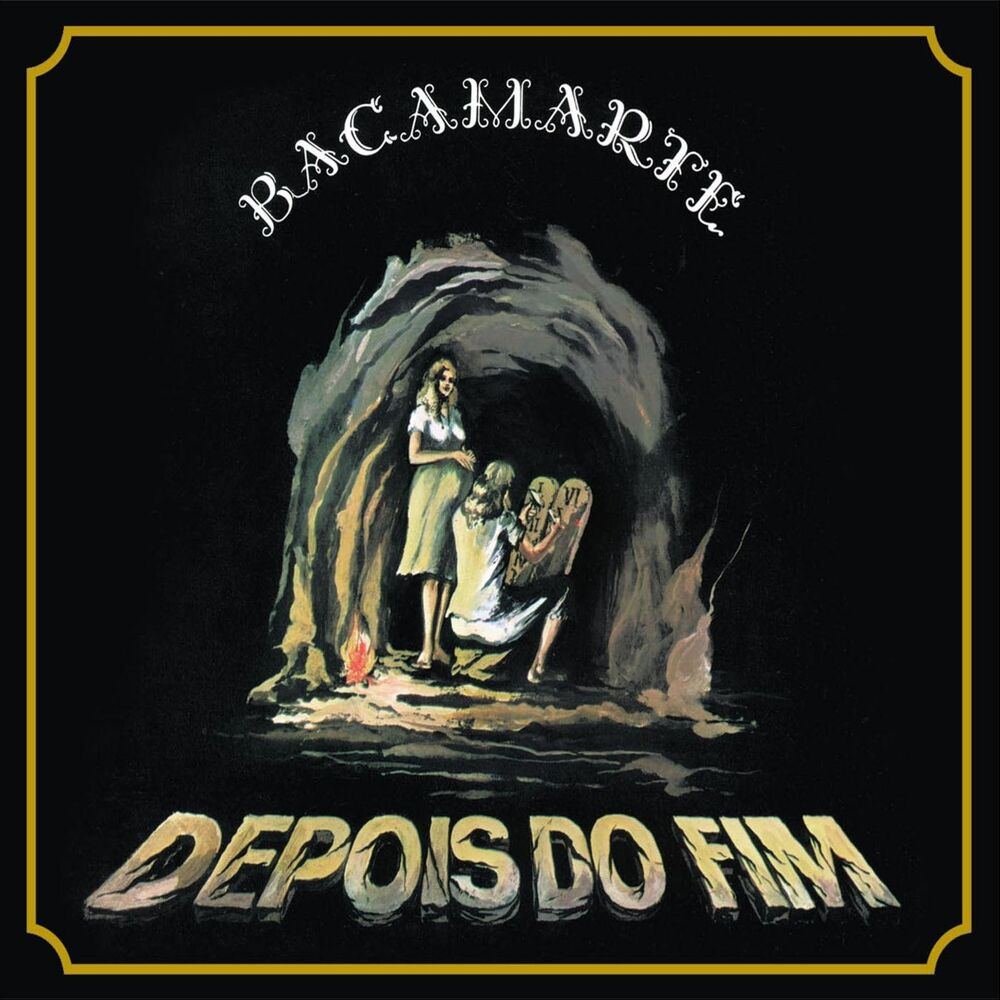
The album's visual production was equally notable, with a beautiful cover elaborated by Eduardo Pereira that complements the work's conceptual universe. The album's booklet featured a photograph of the band during a live performance at Circo Voador, contextualising the group within its performative environment. In the musical credits, the recording featured Jane Duboc's vocal participation on tracks 2, 4, 6 and 8. Mário Neto was responsible for acoustic and electric guitar, in addition to playing all instruments on track 9, including electric guitar, keyboard, electric bass, and electronic drums. The diverse instrumentation was completed by Marcus Moura on flute and accordion, Mr. Paul on percussion, Delto Simas on electric and acoustic bass, Marco Verissimo on drums, and Sergio Villarim on keyboards.
Songs
Depois do Fim is a conceptual album that explores the narrative of a post-apocalyptic world. The track structure is particularly curious, consistently interspersing an instrumental track with a vocal one, so that odd-numbered tracks are instrumental and even-numbered ones are vocal. The opening track, “UFO”, is a striking example, beginning with a notable performance of “Capricho árabe” by Francisco Tárrega, which quickly develops into a complex progressive composition, enriched by the genre's characteristic organs. The following song delves into the metaphor of the Apocalypse, initiating the story told on the album. “Último entardecer” pays a subtle homage to the German band Triumvirat, replicating the opening riff of their song “I believe”. The title track, in turn, poetically describes Earth after the Apocalypse, with its lyrics culminating in the scene depicted on the album's cover itself, cohesively uniting visual and narrative.
Legacy
The importance of Depois do Fim is widely recognised, being considered by the Prog Archives community as one of the 100 Best Progressive Rock Albums of All Time. Its relevance transcends borders, with Jornal do Brasil, through Ricardo Schott, mentioning that the album was cited in the list "Os 100 melhores álbuns de rock" by the Dutch magazine Exposure, alongside works by iconic bands such as The Beatles, The Rolling Stones, and Pink Floyd. The album's enduring nature is evidenced by its multiple re-releases. The first occurred in 1996 via an independent label, including the bonus track “Mirante das Estrelas”. In July 2009, it was re-released in a digipack, with a photo and lyric booklet, and the CD styled as vinyl, although without the previous bonus track. More recently, in September 2025, a vinyl record (LP) re-issue was launched, the result of a partnership between the Três Selos label and the Rocinante factory, confirming its status as an enduring work.
Tracks
Credits
Mario Neto
Jane Duboc
Marco Veríssimo
Delto Simas
Marcus Moura
Mario Neto
Sergio Villarim
Mr. Paul
Américo Marques Pinto
Toninho Barbosa
Eduardo Pereira
Ney Robson
Luiz Antônio Mello
Podcasts

Já ouviu esse disco? · Danilo de Almeida
No final dos anos 70 surgia no Rio de Janeiro uma banda de Rock Progressivo que mais tarde nos anos 80 viria a lançar um disco que é considerado um dos maiores do gênero. O Bacamarte apesar de não ter sido uma banda tão popular no Brasil, seu disco de estreia, o Depois do Fim de 1983 conseguiu cravar o nome da banda na história do Rock Progressivo. Siga no Twitter: @jaouviuodisco e no Instagram:
Videos
Bacamarte - Depois Do Fim | ALBUM REVIEW
Som de Peso
Analyses
Depois do Fim – Wikipedia
Wikipedia, the free encyclopaedia
Resenha: Bacamarte - Depois do Fim (1983) - Roadie Metal
roadie-metal.com
This thought occurs to me when I listen to an album like this one by Bacamarte. Seriously: this is an absolutely brilliant Progressive album, duly revered by fans of the genre abroad, but this sentiment doesn't seem to be the same in our forgetful country.

Prog Voyager: Bacamarte - Depois Do Fim (1983)
progvoyager.blogspot.com
Depois do Fim is a true gem of Brazilian progressive rock. Each track is a demonstration of talented and creative musicians, combining complex arrangements and captivating melodies that resonate with the listener on a deep emotional level.

A Máquina de Fazer Sonhos: BACAMARTE Depois do Fim 1983
amakina.blogspot.com
In 1982 the group gained prominence, with the emergence of Fluminense FM radio (Niterói, RJ) and its policy of promoting new bands, releasing the album "Depois do Fim" the following year, which is considered one of the best Brazilian Progressive Rock albums.
Bacamarte - "Depois do Fim", o disco brasileiro que impôs respeito ...
whiplash.net
The success of this album was so great that by the end of the 80s, Progarchives considered 'Depois do Fim' one of the 100 best progressive rock albums of all time.