Bluesman
Baco Exu do Blues
2018

Rankings
Why This Album Matters
Bluesman, released in 2018, is the second studio album by acclaimed Bahian rapper Baco Exu do Blues and quickly established itself as a landmark in contemporary Brazilian music. The record is a daring fusion of rap with the melancholic and visceral depth of blues, also incorporating elements of MPB, soul, funk, rock, and jazz. Its central proposal, expressed in the title track, is to re-signify Black pain and cultural expression by stating that "tudo é blues" (everything is blues), transcending genres and connecting the Afro-Brazilian experience to the ancestry and universal struggle of the blues. Through poetic and raw lyricism, Baco Exu do Blues addresses pressing issues of social inequality, institutionalised racism, and oppression, without shying away from exploring his own vulnerabilities and mental health. The album stands out for its musical inventiveness, with tracks that frequently alter their structures and sounds, creating a rich and multifaceted auditory experience that is both confrontational and introspective. Bluesman not only solidified Baco as an essential voice but also redefined the narrative and sonic potential of hip-hop in Brazil.
Context
Before Bluesman, Baco Exu do Blues, artistic name of Diogo Álvaro Ferreira Moncorvo, had already distinguished himself in the Brazilian rap scene with the impactful track "Sulicídio" (2016), in which he criticised the hegemony of rap production in the Southeast of the country, seeking to give voice to the rich scene of the Northeast. His debut album, Esú (2017), was acclaimed by critics, being recognised as a fundamental piece for understanding Bahian and Afro-Brazilian culture, addressing themes such as faith, death, love, literature, and Black identity. Esú marked a turning point in national hip-hop, positioning Baco as an artist who subverted expectations and expanded the genre's boundaries. Bluesman emerged in 2018 as the natural sequence of this trajectory, deepening the discussions initiated in his previous work and consolidating the vision of an artist who uses his platform for social activism and personal reflection, in a scenario where Brazilian rap, following in the footsteps of names like Racionais MC's, Criolo, Emicida, and Rincon Sapiência, had already established itself as an important vehicle for social criticism and poetic expression.
Recording
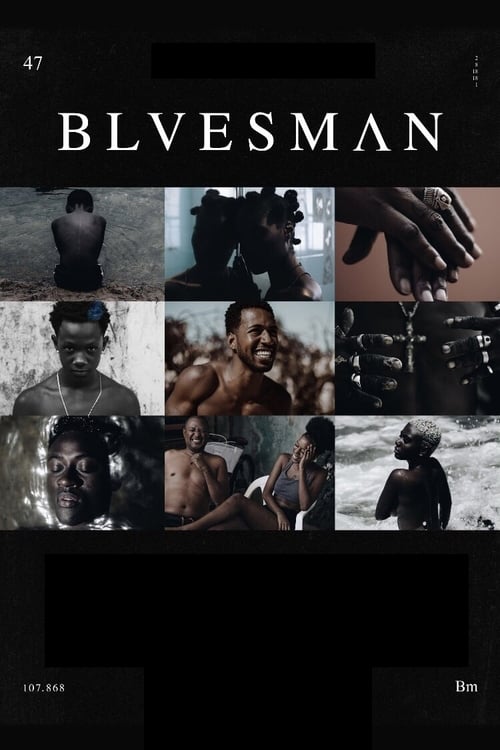
The production of Bluesman relied on a technical team that contributed to the album's characteristic and multifaceted sound. The beats were signed by DKVPZ, JLZ, and Portugal, who created the instrumental foundations that permeate the nine tracks of the work. The album's recordings were carried out by Felipe Crocco and João Noronha, with mixing and mastering handled by Cesar Pierri, ensuring the project's sound quality. One of the notable elements in the production is the use of samples that interact with the album's conceptual proposal, such as the sample of Muddy Waters' classic "Mannish Boy" on the opening track, "Bluesman", which immediately establishes the connection to the roots of American blues. Additionally, the album's release was accompanied by a cinematic short film, directed by Douglas Bernardt of Stink Films and produced by AKQA São Paulo, which visualises the album's narrative, using songs like "Preto e Prata", "Queima Minha Pele", and the title track to deepen Baco's message.
Songs
The album Bluesman is comprised of nine tracks that, in just over 30 minutes, offer a dense and emotional overview of Baco Exu do Blues' lyrical and musical universe. The lyrics intensely explore themes such as institutionalised racism, Black identity, poverty, violence, as well as delving into the artist's internal battles with depression and the search for self-knowledge and acceptance. The album's sound skilfully transitions between rap, R&B, blues, funk, soul, jazz, and rock, demonstrating Baco's versatility and his ability to integrate diverse influences into a cohesive language. Among the standout tracks, the eponymous "Bluesman" serves as an opening manifesto, with Baco proclaiming that Black music, in its various manifestations, is a blues, a path to freedom and empowerment. "Me Desculpa Jay Z", featuring the collaboration of 1LUM3, is a reflection on vulnerability and mental health, while "Flamingos", with Tuyo, offers an emotional ballad. "Preto e Prata" features a more robust trap beat, and "Queima Minha Pele", with Tim Bernardes, explores a more romantic angle, both being part of the short film that accompanies the album. Inventiveness is manifested in the structure of the songs, which frequently transform during their performance, keeping the listener engaged in the journey proposed by Baco.
Legacy
Bluesman achieved significant critical and commercial recognition, being named the best Brazilian album of 2018 by Rolling Stone Brasil magazine and included among the 25 best Brazilian albums of the second half of the same year by the Paulista Association of Art Critics. The album's success was confirmed by its certifications, with the record being awarded Gold and Platinum. Its singles also achieved significant success: "Me Desculpa Jay Z" reached diamond certification, "Flamingos" and "Girassóis de Van Gogh" achieved double platinum, and the tracks "Bluesman" and "Queima Minha Pele" were certified platinum. Together, the album's songs surpassed 280 million streams on digital platforms. Beyond its musical success, the short film that accompanied the album's release earned a Grand Prix at Cannes Lions, in the entertainment for music category, highlighting the project's visual and narrative impact. The film and album not only amplified Baco's visibility, resulting in a 495% increase in his monthly listeners on Spotify and 20 million views on YouTube for the short, but also triggered an important debate about institutionalised racism, inspiring a national movement where people identified as 'Bluesman' in support of his message. Bluesman is widely considered a crucial work and a watershed release in the Brazilian hip-hop scene, solidifying Baco Exu do Blues as an inspiring social force that challenges prejudice and injustice.
Tracks
Credits
Ali Lundbohm, Bengt Göran Staaf, Rolf Wikström
Rolf Wikström
Rolf Wikström
Ali Lundbohm
Kristoffer Hansén
Björn Hamrin
Thomas Jutterström
Lasse Olofsson
Christer Eklund
Ulf Adåker
Bengt Göran Staaf
Jonas Sjöström
Lars Lindell
Lars Lindell
Videos
Baco Exu Do Blues - Bluesman | ALBUM REVIEW
Som de Peso
Resenha Baco Exu do Blues, Bluesman
NonaOrelha
BLUESMAN - Baco Exu do Blues (Filme Oficial) REACT ANÁLISE
JP Dogg
Baco Exu do Blues Bluesman Evolução ou mais do mesmo?
Eldo Boss
Análise Musical - BLUESMAN
Paulo Fonsêcà
significado En Tu Mira - Baco Exu do Blues - Análise da Letra #78 BLUESMAN
Pensando Nisso.
Films

Analyses
Bluesman – Wikipedia
Wikipedia, the free encyclopaedia
Bluesman, Baco Exu do Blues: detailed analysis of the album
nairaquest.com
Bluesman é um disco do rapper Baco Exu do Blues, released in November 2018. Among contemporary thinkers who are using Brazilian rap as a vehicle for social transformation, or even Baco Exu do Blues stands out. Bluesman I will confirm or your talent and make evident the political and social guidelines that you promote.
This Year's Late 'Album of the Year' Nomination Comes From Baco Exu do ...
soundsandcolours.com
This year that happened as soon as I heard the opening notes of Bluesman, the second album from Brazilian rapper Baco Exu do Blues. The sound of Muddy Waters is nothing new, but somehow in this context, the voice and guitar distant, crackling and repeating, clearly ushering in the arrival of something else, felt poignant.
Review: Baco Exu do Blues - Bluesman (2018)
collectorsroom.com.br
Musically, the album predominantly draws from rap with touches of rhythm & blues, but it also injects ingredients of rock, funk, soul, jazz, and whatever else takes its fancy, resulting in a sonic salad that perfectly matches the lyrics.
Resenha: "Bluesman" - Baco Exu do Blues (2018)
br.nacaodamusica.com
"Bluesman" is one of the major releases of 2018, and it still manages to maintain the high standard of his previous album "Esú". This new album also successfully blends samba and R&B tones along with its powerful rap verses.