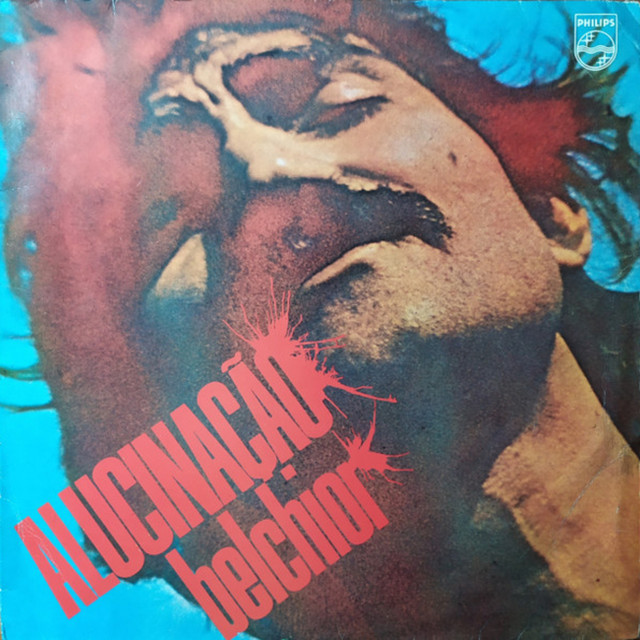
Alucinação
Belchior
1976

Rankings
Why This Album Matters
Alucinação, the second studio album by Ceará-born singer and songwriter Belchior, released in 1976, is a seminal masterpiece of Brazilian Popular Music that solidified his reputation as one of the most important lyricists and performers of his generation. The record stands out for the originality of its lyrical and musical approach, blending influences from blues, country, baião, and rock with existentialist and questioning poetry, distancing itself from the aesthetic and thematic standards prevalent in MPB at the time. Featuring timeless successes such as "Apenas um Rapaz Latino-Americano", "Como Nossos Pais", and "Velha Roupa Colorida", the album not only catapulted Belchior to stardom, selling over five hundred thousand copies and transforming him into a mass idol, but also resonated deeply with the aspirations and disillusionments of a Brazilian youth in transition. The "alucinação" (hallucination) of the title, according to the artist himself, was the very experience of living, an "absolute delirium" that he translated into songs of great depth and impact.
Context
The release of Alucinação took place in Brazil under a civil-military dictatorship, a period marked by repression, censorship, and a youth oscillating between despair and the search for new forms of expression and resistance. In this scenario, Belchior's lyrics served as a mirror for the anxieties and questionings of a generation, addressing themes such as the migration of Northeastern Brazilians to the big city, disillusionment with the hippie dream, and veiled, yet poignant, social criticism. Before Alucinação, Belchior had already embarked on a path of artistic effervescence. A member of "Pessoal do Ceará", a movement of young artists from Ceará who emerged in the early 1970s, he had abandoned his Medicine course to dedicate himself to music. His first album, eponymous, released in 1974, contained gems such as "A Palo Seco" and "Na Hora do Almoço", but did not achieve the same recognition. Mass recognition would come when Elis Regina included "Como Nossos Pais" and "Velha Roupa Colorida" in her acclaimed show "Falso Brilhante" (1975-1977), exposing Belchior's talent to a wider audience and paving the way for the tremendous success of Alucinação.
Recording
Alucinação was recorded in June 1976 at Phonogram Studios, in Rio de Janeiro, a 16-channel studio of the time. Production was handled by Marco Mazzola, who, at 26 years old, had already worked with names such as Raul Seixas and Elis Regina, and was fundamental in ensuring Belchior had his opportunity with the record label. Mazzola was enchanted by Belchior's songs after hearing a cassette tape delivered by Elis, and faced initial resistance from PolyGram, which did not see commercial potential in the artist. Rehearsals for the album lasted one week, and the recordings were carried out organically, "live, without playback", over just two days, a Friday and a Saturday. The "selection" of musicians recruited by Mazzola, which included Pedrinho Bateria, Paulo César (bass), Antenor Gandra (acoustic guitar, viola, and electric guitar) and Ariovaldo Contesini (percussion), contributed to the solid sonic foundation of the record. The arrangements, which benefited from the mastery of José Roberto Bertrami, from Azymuth, were crafted on the spot, directly in the studio, lending a unique spontaneity to the work.
Songs
The ten tracks of Alucinação are a dive into the psyche of Brazilian youth, portraying despair, revolt, and reflections on daily life under the dictatorship. Songs like "Apenas um Rapaz Latino-Americano" became anthems, with verses that capture the essence of the Northeastern migrant searching for their place in the metropolis, without money or "important relatives". "Como Nossos Pais", also immortalised by Elis Regina's voice, questions the repetition of generational mistakes and the difficulty of breaking established patterns. "Velha Roupa Colorida" expresses dissatisfaction with a past that no longer serves, seeking the "new" in a context of social and political paralysis, criticising both the regime and the rigid activism of the time. In "A Palo Seco", Belchior positions himself against the escapism and "desbunde" (counter-cultural indulgence) of the era, stating that his crooked singing aims to "cut the flesh" of the listener, with a mix of rock and elements of Northeastern music, such as the triangle. The title track, "Alucinação", presents the artist's view that his "hallucination is to endure daily life" and his "delirium is the experience with real things", with lyrics that paint a vivid and at times sombre portrait of urban life.

"I'm not interested in any theory, nor in those things from the East, astral romances. My hallucination is enduring the day-to-day."
Tárik de Souza · 300 Discos Importantes
Legacy
Alucinação is widely considered one of the most revolutionary and important albums in the history of MPB. In just one month after its release, it sold thirty thousand copies, and over the years, it surpassed the five hundred thousand mark, becoming an instant classic that transcended generations. Its critical reception was divided, with Renato de Moraes and Nelson Motta praising the lyrical novelty and production, while Sérgio Cabral criticised it for its supposed "fixation on the new" being, in reality, "old". The album is seen as a mirror of the feelings of an entire Brazilian generation, especially the "disillusioned and desperate youth" and migrants from the interior in the big city, expressing the urgency of young people caught between state violence and the end of dreams of freedom. Belchior's profile was significantly boosted by Elis Regina, who popularised songs such as "Como Nossos Pais" and "Velha Roupa Colorida" in her iconic show "Falso Brilhante" even before the release of Belchior's album. To this day, several tracks from Alucinação remain among the composer's most played on streaming platforms and radio, reaffirming its lasting relevance.
Tracks
Credits
José Roberto Bertrami
Mazzola
Belchior
Orlando Silveira
Paulo César Barros
Pedrinho Batera
Belchior
Ariovaldo Contesini
Antenor
Rick Ferreira
Rick Ferreira
Joaquim Figueira
Ary Carvalhaes
Paulo Sergio
Rafael Azulay
Aldo Luiz
Nilo De Paula
Januário Garcia
Podcasts
Discoteca Básica Podcast · Parasol Storytelling
E O RAPAZ LATINO-AMERICANO VENCEU. O segundo álbum de Belchior foi um dolorido grito de renovação na década de 1970, mas só no Século 21 foi reconhecido como um dos 20 maiores álbuns brasileiros de todos os tempos. Convidado do episódio: Zeca Baleiro Assinante do Clube Discoteca Básica tem conteúdo complementar. Nesta semana, a equipe do Discoteca Básica traz uma entrevista com o cineasta Nirt
Sons e Histórias · Daniel Queiroz
Raildo Vasconcelos, Junior Beatle, Daniel Queiroz e o convidado Dyrone Lima comentam e contam curiosidades sobre o disco Alucinação do Belchior lançado em 1976

Ouvindo Estrelas · Marco Mazzola
- A Descoberta de Belchior e a Produção de Alucinação - TEMPORADA 02 - EPISÓDIO 02 Na segunda temporada do videocast e podcast OUVINDO ESTRELAS o produtor Marco Mazzola continua a revelar segredos e bastidores da produção musical no Brasil, desvendar mistérios da indústria musical e contar histórias dos maiores álbuns da história fonográfica e discográfica nacional e internacional. Nesse episód
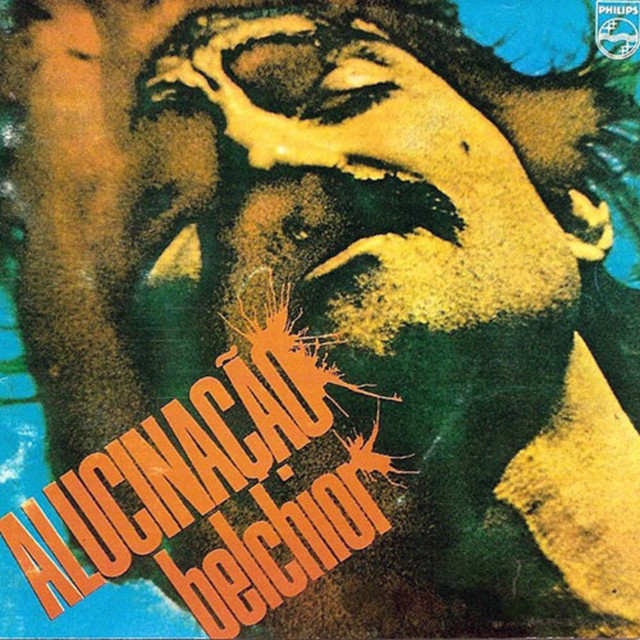
Belchior foi o escolhido para ser assunto do primeiro episódio do Maniçoba Podcast. Ao som de Alucinação (Phonogram, 1976) e suas histórias, explicamos como surgiu a ideia do podcast. Lado A Primeiro Maniçoba Podcast. Apresentação do formato do programa. Doses de Nega Fulô e copos de cerveja. Maniçoba, uma feijoada indígena. Bigodes. Ditadura militar no Brasil. Referências à cultura pop, Bob Dylan

Além do Ontem · Prof. Thiago Moretti
No Episódio 10 do podcast Além do Ontem, mergulhamos na obra-prima de Belchior: a canção "Alucinação". Mas não se trata apenas de uma análise musical; é uma investigação profunda sobre como essa letra, escrita em 1976, continua a gritar verdades incômodas em pleno 2026.A Queda das Ilusões: Como Belchior rompe com o lirismo romântico e hippie para confrontar a dureza do asfalto e da "maior cidade d
Videos
BELCHIOR - ALUCINAÇÃO (1976) | ALBUM REVIEW
Vinilteca
Belchior - Alucinação | ALBUM REVIEW
Som de Peso
"Alucinação" - Belchior | Os melhores discos da MPB nos anos 70 | Alta Fidelidade
Alta Fidelidade
Toda História Envolvendo a Música Alucinação de Belchior
Vitrola do PS
ALUCINAÇÃO | O Tempo Segundo BELCHIOR
Balcão Pop!
Belchior | O legado de Alucinação 50 anos depois
Pitadas do Sal and Canal Musicália
Films

Books
Os 500 Maiores Álbuns Brasileiros de Todos os Tempos
Ricardo Alexandre · 2022
The largest Brazilian music election ever conducted: 162 specialists, spanning journalists, critics, musicians, producers and podcasters, each nominated 50 essential albums, supported by a masterlist of more than 2,000 works. Led by Ricardo Alexandre with tabulation by Sérgio Jomori, it was published in December 2022 as a 200-page hardcover book with graphic design by Fernando Pires.

Belchior - Apenas um Rapaz Latino-Americano
Jotabê Medeiros · 2017
A revealing book about a fascinating MPB figure who deserves to be better known to the public. An artist sometimes enigmatic, always refined, and immensely popular. Contains a colour image section and complete discography. Belchior's death in April 2017 caused national commotion.

300 Discos Importantes da Música Brasileira
Charles Gavin, Tárik de Souza, Carlos Calado, Arthur Dapieve · 2008
Conceived by Titãs drummer and musical researcher Charles Gavin, the 434-page book brings together covers and reviews of albums released between 1929 and 2007. The texts were written by journalists Tárik de Souza, Arthur Dapieve and Carlos Calado.
Analyses
Alucinação – Wikipedia
Wikipedia, the free encyclopaedia
Alucinação: O Disco definitivo de Belchior - musicaemprosa
musicaemprosa.com
"Alucinação" speaks to those who came after, to those who also feel displaced, to those who are suspicious of the shop windows of progress and of very well-behaved slogans. It is an album about Brazil in the 1970s, of course.
Ápice de Belchior, o álbum 'Alucinação' completa 50 anos ... - G1
g1.globo.com
The 1976 album presents, in an inspired original songbook, a disillusioned inventory of the losses and yearnings of the generation that tried in vain to change the world.
Alucinação - Belchior: O grito de uma geração que envelheceu com ...
cantinhododisco.com.br
The warmth of the acoustic instruments, the rawness of Belchior's voice and the undertones of pain and hope that permeate each track become almost palpable, making Alucinação not just a classic, but a physical experience, charged with emotion.
Belchior retrata o desespero da juventude e a força do novo em "Alucinação"
apistajornal.com
"Alucinação" was the second album in the career of singer, songwriter and poet Belchior (1946-2017). The album, which was released in 1976, has ten tracks in total and celebrates 48 years since its release in June 2024.