Bicho
Caetano Veloso
1977

Rankings
Why This Album Matters
Bicho, Caetano Veloso's ninth solo work released in 1977 by Philips, represents a milestone in the artist's discography by embracing global sounds. The album is notable for its innovative fusion, incorporating the richness of African music, especially Jùjú, and the effervescence of disco music, which dominated the charts at the time. This stylistic blend gives the record a vibrant and danceable sound, whilst maintaining Veloso's characteristic lyrical depth and harmonic sophistication. Bicho stands out as an example of the singer's ability to absorb and reinterpret musical trends, creating a work that is simultaneously universal and profoundly Brazilian.
Context
The conception of Bicho was profoundly influenced by a significant experience in Caetano Veloso's life: his one-month stay in Lagos, Nigeria, alongside Gilberto Gil. This immersion in African culture and music prior to the album's recording is the primary source of the rhythmic and melodic influences that permeate the work.
Recording
The production of Bicho featured the direction and orchestral arrangements of Perinho Albuquerque, who played a fundamental role in the album's sonic conception. Paulinho Chocolate was responsible for the recording and mixing engineering, with the support of assistants Geraldo and Luis Claudio Varella. The production credits also mention PhonoGram's participation in recording the strings, as well as William for editing and Ivan Lisnik for cutting, indicating a team dedicated to various technical aspects of the process.
Songs
Bicho is an album that solidified several compositions in the gallery of Caetano Veloso's classics. Songs such as "Odara", "Gente", "Tigresa" and "O Leãozinho" emerged from this work, becoming fundamental pieces in his repertoire and in Brazilian popular music.
Legacy
The relevance of Bicho was quickly recognised, with some of its songs achieving great success. Gal Costa's re-recorded version of "Tigresa", for her 1977 album Caras e Bocas, featured as the 47th most played song of that year. Similarly, "O Leãozinho", another highlight from the record, secured the 91st position on the same play-count list.
Tracks
Credits
Perinho Albuquerque
Ivan Lisnik
Paulinho Chocolate
Caetano Veloso
Films


Narcissus Off Duty
2020
Brazilian singer-songwriter Caetano Veloso reflects on his imprisonment in 1968, during the military dictatorship.

Wandering Heart
2009
Wandering Heart intimately follows Caetano from São Paulo to New York and Japan, during the release of his first album recorded solely in English. It takes considerably more than a week-long series of shows at Carnegie Hall, accolades in the New York Times, or the admiration of friends like Pedro Almodóvar, David Byrne and Michelangelo Antonioni to make Caetano feel comfortable outside of Brazil.
Books
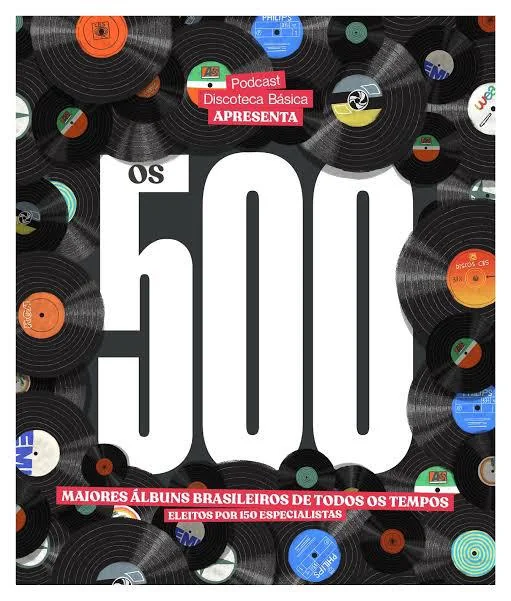
Os 500 Maiores Álbuns Brasileiros de Todos os Tempos
Ricardo Alexandre · 2022
The largest Brazilian music election ever conducted: 162 specialists, spanning journalists, critics, musicians, producers and podcasters, each nominated 50 essential albums, supported by a masterlist of more than 2,000 works. Led by Ricardo Alexandre with tabulation by Sérgio Jomori, it was published in December 2022 as a 200-page hardcover book with graphic design by Fernando Pires.
Brazilian Popular Music
Lorraine Leu · 2006
Through an in-depth analysis of his songs, this book explores the life and music of the composer Caetano Veloso, and his involvement with the development of Brazilian Popular Music. It offers an academic and detailed perspective on the artist's work, being essential for those seeking to fully understand his albums.

Verdade tropical
Caetano Veloso · 1997
In this autobiographical and essayistic book, Caetano Veloso narrates the history of Tropicalismo and reflects on the movement, his own artistic journey, and the cultural and political context of Brazil. It is a fundamental work for understanding the evolution of his music and thought, covering the period in which the album 'Bicho' was released.
Analyses
Bicho – Wikipedia
Wikipedia, the free encyclopaedia
vinylfanatics.com - Vinyl Record Reviews, News and Forum
vinylfanatics.com
In the sprawling catalog of Caetano Veloso's revolutionary career, 1977's "Bicho" stands as perhaps his most nakedly emotional and sonically adventurous statement—a raw nerve ending of an album that captures the Brazilian icon at his most vulnerable and creatively unhinged. While purists might argue for the historical significance of his Tropicália classics or the accessibility of later ...

Uncle Tomy Mostalas and His Music Review Farm: CAETANO VELOSO - Bicho ...
tomymostalas.blogspot.com
The song is "Odara" from the Caetano Veloso "Bicho" ("The Beast") album. "Odara" means, as far as I was able to understand it, "supreme beauty". In the song the singer and the world all become "Odara" - but I decided to omit the word itself from my robots-aided translation - for the sake of clarity.
Bicho: o álbum em que Caetano Veloso transformou dança em política
metropoles.com
With "Bicho", Caetano showed that dancing can also be political, and that the body, like the word, is a place of resistance. Today, decades later, the album is understood as one of the freest and most inventive expressions in his discography.
A tentativa de Caetano de unir Disco Music à África ancestral em 1977
metropoles.com
Released in 1977, "Bicho", Caetano Veloso's tenth studio album, was structured around two musical elements that, at first glance, appear disparate: African tradition and disco music.