Caetano Veloso (1969)
Caetano Veloso
1969

Why This Album Matters
Released in 1969 by Philips record label, the album Caetano Veloso, often referred to as Álbum Branco, Disco da Assinatura or Irene, is a seminal work in the artist's discography and in Brazilian music. This second solo effort by Caetano Veloso transcends the adverse circumstances of its creation to deliver a manifesto of resistance and musical innovation. Its minimalist cover, a direct reference to The Beatles' celebrated Álbum Branco, already heralded a work of deep introspection and reinvention, moving away from the explosive Tropicalista experimentalism to explore new sonic territories. The album stands out for its remarkable eclecticism, an intrinsic characteristic of the Tropicália movement, of which Caetano was one of the exponents. The songs transition fluidly between genres as diverse as bossa nova, psychedelic rock, carnival music, traditional Bahian rhythms, fado and tango, demonstrating the artist's versatility and fusion capability. The inclusion of songs in Portuguese, Spanish and English not only expands the album's lyrical palette, but also reinforces its ambition to engage with multiple cultures and experiences. Recorded under the yoke of the military dictatorship, the album solidified Caetano's reputation as one of Brazil's most sophisticated and courageous composers.
Context
The year 1969 marked one of the darkest periods in Brazilian history, under the intensification of the military dictatorship following the promulgation of Institutional Act Number Five (AI-5) in December 1968, which granted unrestricted powers to the government to repress political and cultural dissent. It was in this oppressive scenario that Caetano Veloso and Gilberto Gil were detained in late 1968, in Rio de Janeiro, under unspecified charges, for resisting the authoritarian regime. Although the artists had declared the end of the Tropicália movement, their audacity and disregard for conventions and cultural censorship attracted the attention of the authorities. After two months of imprisonment in military barracks, Caetano and Gil were released, but placed under house arrest in Salvador, Bahia. This forced confinement, which lasted five months, was the backdrop for the creation of this album and Gilberto Gil's eponymous record, both recorded under strict surveillance. The experience of imprisonment and impending exile imbued Caetano's compositions with a new layer of melancholy, reflection and, paradoxically, free creativity.
Recording
The conception of Caetano Veloso (1969) is a testament to artistic resilience in times of adversity. The fundamental recordings for the album were carried out in a small studio in Salvador, in June 1969, while Caetano was serving his house arrest. In this restricted environment, Caetano recorded his vocals, accompanied only by Gilberto Gil on acoustic guitar, often with the aid of a metronome. These initial, sparse and intimate recordings were then sent to São Paulo, where producer Manoel Barenbein and arranger Rogério Duprat, a central figure of Tropicalismo, added the orchestral and instrumental layers in a better-equipped studio. Duprat, with his innovative vision, incorporated a rock formation, including Lanny Gordin on electric and acoustic guitar, Sérgio Barroso on electric bass, Wilson das Neves on drums and Chiquinho de Moraes on piano and organ. Despite the 'disconnected' nature of the recording sessions, with the artist separated from his producer and the musicians, the final result is cohesive and vibrant, exuding an energy that at times borders on the celebratory.
Songs
The album Caetano Veloso (1969) is a mosaic of textures and emotions, reflecting the artist's internal turmoil and the innovations that marked Tropicalismo. The opening song, "Irene", is a highlight. Written by Caetano in prison and dedicated to his sister, the track is a simple regional-psychedelic mantra of singular beauty, with simple and repetitive verses that convey the yearning for freedom and the melancholy of a wounded soul. Other standout songs in Portuguese include "Não Identificado", with its deliberately spatial and psychedelic atmosphere, and "Atrás do Trio Elétrico", which exudes a festive and 'party-like' vibe. The album also features songs in English, such as "The Empty Boat" and "Lost in the Paradise", which bring a sense of gravitas and melancholy, foreshadowing the sound of his future works in exile. The visceral interpretation of the tango "Cambalache" and the inclusion of Chico Buarque's "Carolina" demonstrate the breadth of his choices. The track "Alfômega" is notable for its audacity and exuberance, with Caetano's drawn-out vocals and Gilberto Gil's shouts. Completing the picture, "Acrilírico", a collaboration with Rogério Duprat, is a recited poem with background noises that suggest urban chaos and cinematic string arrangements, one of the album's most surreal moments.
Legacy
Caetano Veloso (1969) cemented the artist's place as one of the most important composers in Brazilian music, despite having been conceived under the restrictions of the military dictatorship. The album is frequently cited as a fundamental milestone, bridging the effervescent phase of Tropicalismo and the post-Tropicalista period, which would culminate in Caetano and Gilberto Gil's exile in London. The audacity and lyrical and musical depth demonstrated on the record secured its place on various lists of the best albums in national music. Its critical reception was largely positive, with the album being praised for its maturity, elegance and sonic experimentation, even despite the precarious recording conditions. The album's influence extends beyond Brazil's borders, as evidenced by the sample of the track "Alfômega" by rapper MF DOOM on Ghostface Killah's song "Charlie Brown" in 2006. The work remains a powerful testament to Caetano Veloso's creative capacity and resilience, an album that, according to critics, 'had everything to go wrong and went very right', revealing a Caetano 'sharp, creative, free' even in confinement.
Rankings
Tracks
Credits
Rogério Duprat
Podcasts
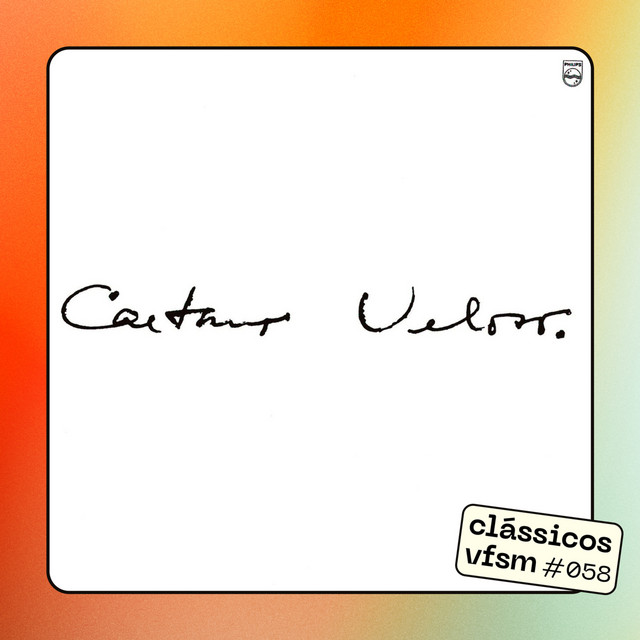
“Caetano Veloso”, o disco de 1969, conhecido como o disco branco ou ainda “aquele da capa branca assinado”, é o segundo disco solo de Caetano Veloso. Gravado em um pequeno estúdio na Bahia, quando Caetano já estava sob a vigilância da Ditadura Militar, o disco teve arranjos e produção feitas por Rogério Duprat. Com clássicos como “Irene”, “Não identificado” e “Atrás do trio elétrico”, o álbum de 1
Videos
CAETANO VELOSO - TRANSA (1972) | ALBUM REVIEW
Vinilteca
Grandes Álbuns: Caetano Veloso (1971) ALBUM REVIEW (PT-BR)
O Audiófilo
O ÁLBUM BRANCO DE CAETANO VELOSO
Minha Vida Em Vinil
The Cookie Collector | Transa ALBUM REVIEW (Caetano Veloso, 1972)
The Cookie Collector
50 ANOS DE TRANSA DE CAETANO VELOSO | ALBUM REVIEW
Som de Peso
Caetano Veloso – A História do Álbum Cinema Transcendental
Vinilteca
Films

Books
Analyses
Discogs

Caetano Veloso (1969) – Discogs
discogs.com