Circuladô
Caetano Veloso
1991

Rankings
Why This Album Matters
Released in November 1991, Caetano Veloso's Circuladô represents a milestone of refinement and experimentation in his vast discography, standing out for the profound influence of the Concretist movement. The album not only reverences the work of the poet Haroldo de Campos, whose eponymous poem is recited on the title track, but incorporates this search for new forms and meanings into its own musical and lyrical structure. Musically, the album is a rich tapestry that blends Brazilian rhythms with contemporary and experimental textures, encompassing MPB, Tropicália, and Brazilian pop. Caetano demonstrates masterful control over concise and melodic songs, adorned with elaborate arrangements and lyrics of remarkable depth. Considered by many to be a more cohesive and clearly produced work than its predecessor, Estrangeiro, Circuladô evokes an atmosphere that is at once "sensual and seductive", keeping the essence of Tropicalismo alive in a new sonic guise. The album proposes a "quietly experimental" sonic journey, incorporating elements of jazz improvisation, folk, samba, bossa nova, new age, and funk, resulting in an organic and innovative fusion that reaffirms Caetano's position as an artist in constant reinvention.
Context
In the early 90s, Caetano Veloso had already consolidated his reputation as one of the most influential figures in Brazilian music, achieving growing international recognition. His previous album, Estrangeiro (1989), recorded in New York, was fundamental in establishing his presence on the global stage, and Circuladô was the third of his works to be widely distributed in the United States. During this period, the artist showed a growing interest in contemporary rhythms such as modern R&B and hip-hop, which were beginning to manifest in his sound. Circuladô reflects this phase of openness and experimentation, where Caetano, already considered the most notable Brazilian musician of his generation, continued to expand the boundaries of his art without losing his identity.
Recording
The production of Circuladô was handled by musician and producer Arto Lindsay, known for his work with avant-garde artists and his ability to integrate experimental textures. The album was recorded in two important cities for global music: Rio de Janeiro, at PolyGram Studios, and New York, at East Hill Studios, reflecting the cultural bridge that Caetano Veloso had already established. The album's rich sound featured the participation of a cast of talented musicians. Bass was played by Melvin Gibbs, while Ryuichi Sakamoto contributed sampler, keyboards, strings, and piano, adding layers of sophistication to the compositions. Gilberto Gil and Gal Costa lent their voices to some tracks, and Marc Ribot played electric guitar. Lindsay's production was praised for its clarity and fullness, surpassing the sound of previous works and allowing the nuances of each arrangement to shine. The album's mastering was carried out by Bob Ludwig.
Songs
Circuladô is an album where Caetano Veloso deepens his poetic and experimental vein, with the lyrics playing a crucial role in understanding his art. The title track, "Circuladô de Fulô", is an exquisite example, setting to music a fragment of Haroldo de Campos's eponymous poem, which Caetano first heard in 1969 and which the concrete poet himself praised for its fidelity to the content. Several songs on the album stand out for their particularities. "Fora da Ordem" features a tense beat with a 70s pop-funk groove, whose lyrics address themes of urban disorder, trafficking, and poverty, but also celebrate the vitality of South American metropolises. "Itapuã" is described as a "modern elegy for the beautiful beach", with contemporary arrangements for string quartet and rhythm section. Meanwhile, "Santa Clara, Padroeira da Televisão" is a brilliant satire mixing spiritual imagery and media criticism. Other notable tracks include "O Cu do Mundo", which shocks with the rawness of its repetitive chorus, described as a "terrible mantra", and "Lindeza", which features the collaboration of Ryuichi Sakamoto on string, bass, and piano arrangements. The diversity of genres, moving between folk, jazz, samba, bossa nova, new age, and funk, is skilfully interwoven, highlighting Caetano's ability to explore the "mix of precise observation and fatalistic acceptance" that characterises his worldview.
Legacy
Circuladô achieved significant recognition, being critically acclaimed and consolidating Caetano Veloso's stature in the global music scene. In 2022, the album was voted one of the best Brazilian music albums of the last 40 years in a survey conducted by the newspaper O Globo, which gathered the opinions of 25 specialists. Stephen Holden, from The New York Times, highlighted Circuladô as the second best album of 1992, reinforcing its international critical impact. The album received positive ratings from important outlets, such as 4 out of 5 stars by AllMusic and an 8/10 rating by the Spin Alternative Record Guide. Critics from The New York Times praised Caetano's lyrics for their "mix of precise observation and fatalistic acceptance", recognising him as a "true poet". Newsday described the song "Santa Clara, Padroeira da Televisão" as an "impressive and satirical mix of spiritual imagery and media criticism". Beyond the critical reception, Circuladô marked a "new phase" in the artist's career, solidifying his ability to transition to the American audience and establishing him as a "beloved figure in New York". The album was Caetano's third work to receive wide distribution in the United States, contributing to his lasting international reputation.
Tracks
Credits
Mayrton Bahia
Arto Lindsay, Ryuichi Sakamoto
Arto Lindsay
Caetano Veloso
Bob Ludwig
Patrick Dillett
Podcasts
Escuta · Nexo Jornal
Em 1991 Caetano Veloso estava prestes a completar 50 anos de vida e 24 de carreira. A comemoração veio em grande estilo: seu 16º álbum solo de estúdio, “Circuladô”, junto com uma turnê que revisitou clássicos de sua carreira e covers de músicas que o inspiravam, de Michael Jackson a Bob Dylan.Nesta edição do Escuta, como parte da série “Disco Explicado”, o podcast conta histórias de bastidores, an

Escuta · Nexo Jornal
Em 1991 Caetano Veloso estava prestes a completar 50 anos de vida e 24 de carreira. A comemoração veio em grande estilo: seu 16º álbum solo de estúdio, “Circuladô”, junto com uma turnê que revisitou clássicos de sua carreira e covers de músicas que o inspiravam, de Michael Jackson a Bob Dylan.Nesta edição do Escuta, como parte da série “Disco Explicado”, o podcast conta histórias de bastidores, an
Films

Circuladô
Circuladô
1992
Documentary about Caetano Veloso's album and show, Circulado.
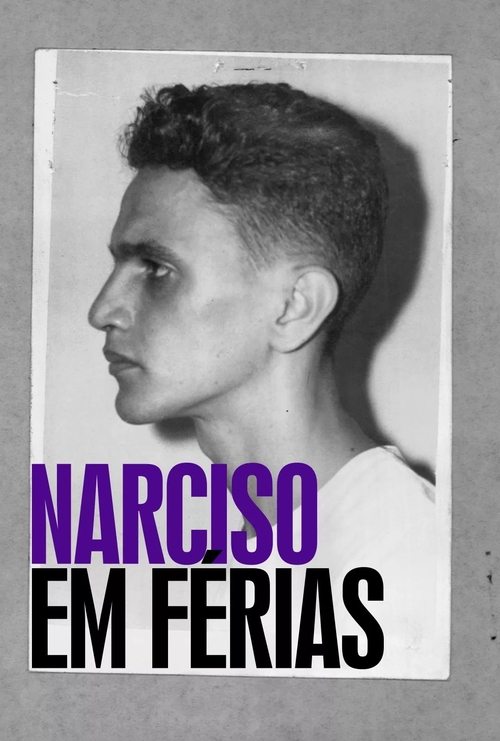
Narcissus Off Duty
2020
Brazilian singer-songwriter Caetano Veloso reflects on his imprisonment in 1968, during the military dictatorship.
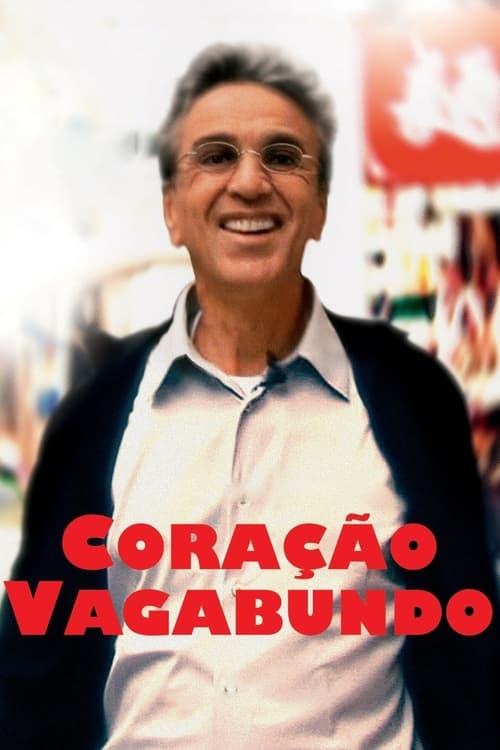
Wandering Heart
2009
Wandering Heart intimately follows Caetano from São Paulo to New York and Japan, during the release of his first album recorded solely in English. It takes considerably more than a week-long series of shows at Carnegie Hall, accolades in the New York Times, or the admiration of friends like Pedro Almodóvar, David Byrne and Michelangelo Antonioni to make Caetano feel comfortable outside of Brazil.
Books
Caetano Veloso
Carlos Galilea · 2022
For almost thirty years, Caetano Veloso and Carlos Galilea met in various cities, such as Rio de Janeiro, Salvador, Paris, and London, to converse openly and with great complicity about music, cinema, politics, journalism, sex, old age, among other topics. The book compiles 19 of these conversations, offering an in-depth overview of the artist's work and thought.
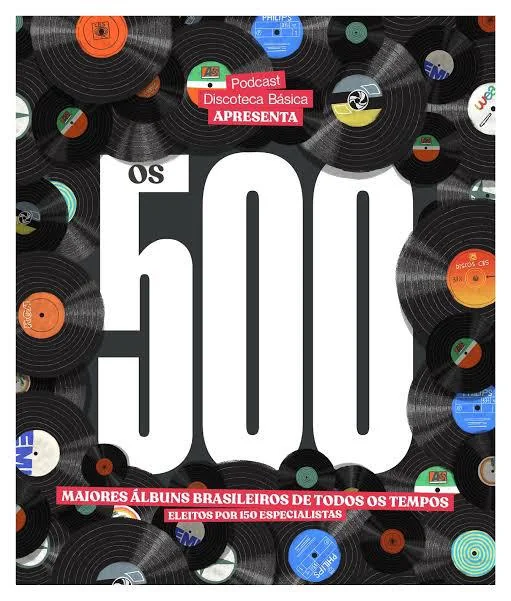
Os 500 Maiores Álbuns Brasileiros de Todos os Tempos
Ricardo Alexandre · 2022
The largest Brazilian music election ever conducted: 162 specialists, spanning journalists, critics, musicians, producers and podcasters, each nominated 50 essential albums, supported by a masterlist of more than 2,000 works. Led by Ricardo Alexandre with tabulation by Sérgio Jomori, it was published in December 2022 as a 200-page hardcover book with graphic design by Fernando Pires.
Infinitivamente Pessoal: Caetano Veloso e sua verdade tropical
Rafael Julião · 2018
In his vast production, Caetano Veloso always had an aptitude for fusing private matters with public discussions, as well as presenting original ways to discuss and interpret Brazil. Within this vast panorama, the book intertwines popular song, cinema, theatre, visual arts, literature, and Tropicalismo, exploring the complex relationship between the artist and Brazilian culture.
Analyses
Circuladô – Wikipedia
Wikipedia, the free encyclopaedia

1991 - Circuladô - Caetano Veloso - caetanoefoda.blogspot.com
caetanoefoda.blogspot.com
Circuladô (1991) is a homogeneous album: "a single piece, it doesn't sound like a collection of songs," according to Caetano himself; and it reflects the maturity of its author, who was about to turn fifty when he released it.
Caetano Veloso - Circuladô - Monkeybuzz
monkeybuzz.com.br
Listening to Circuladô, Caetano Veloso's 1991 album, almost thirty years after its release, gives us the feeling that life happens at a temporal intersection. On the one hand, we look critically at the past, understanding the passing of years as a linear historical progression.
'Circuladô': 30 anos do álbum que marcou os 50 de Caetano Veloso
nexojornal.com.br
In a new episode of the Disco Explicado series, Nexo's music podcast tells behind-the-scenes stories, analyses the references, and contextualises the collaborators behind the 1991 album.
Caetano Veloso - Circuladô (1991) - musicasdonordeste.net
musicasdonordeste.net
On the album 'Circuladô', released in November 1991, Caetano Veloso, the mastermind behind the Tropicalista movement, delivers a beautiful performance to the sound of his unmistakable acoustic guitar.