Joia
Caetano Veloso
1975

Rankings
Why This Album Matters
Joia, released in 1975 simultaneously with the album Qualquer Coisa, represents one of the pillars of Caetano Veloso's post-exile phase, consolidating his mastery as one of the most inventive artists in Brazilian music. This album, in contrast to the stylistic diversity of its release counterpart, stands out for a more introspective, minimalist, and predominantly acoustic approach, offering a refuge of tranquillity and lyricism during a period of intense political and personal effervescence. With delicate arrangements and a serene atmosphere, Joia reveals itself as a work of profound poetic sensibility, where Caetano explores themes of domestic life, nature, and personal relationships with remarkable clarity and sweetness. Specialist critics recognised it as a "great album" and, for many, "one of the best recordings Veloso ever made", highlighting the unique quality and lasting relevance of its artistic proposition.

A letter of intent whispered to the ear.
Alexandre Matias · Rolling Stone Brasil
Context
The release of Joia in 1975 fits into a crucial moment in Caetano Veloso's trajectory and Brazilian history. The artist had returned from exile in London in 1972, after being arrested in 1969 by the military dictatorship, which was still experiencing its "years of lead". This traumatic experience and the regime's persistent repression permeated the cultural production of the time, forcing artists to navigate between expression and censorship. Joia, originally planned as part of a double album with Qualquer Coisa, emerged as a counterpoint to the experimentalism of Araçá Azul (1973), which had faced criticism and low commercial success. While Qualquer Coisa embraced a more expansive sonic variety, Joia was conceived as a space for Caetano's "clean work", for lyrical and well-finished pieces, reflecting a desire for simplicity and introspection. The album's emblematic original cover, which depicted Caetano, his wife Dedé, and their son Moreno nude, was immediately censored by the military government, being replaced by an image of doves, a fact that underlined the constant surveillance and artistic repression of the era.
Recording
The recording of Joia took place in 1975, under the production direction of Caetano Veloso himself in partnership with Perinho Albuquerque. The album's sound is notably soft and predominantly acoustic, a deliberate choice that Caetano himself described as a desire for "clean work", prioritising the flute and silence over drums and more urban noises. The recording engineering work was handled by João Moreira and Luigi, with the assistance of Paulo "Chocolate" Sergio and José Guilherme. The mixing process was conducted by João Moreira, and the cutting by Joaquim Figueira. The minimalist instrumentation featured the participation of names such as Gilberto Gil on acoustic guitar, Perinho Albuquerque on kissange and percussion, Djalma Corrêa on percussion, Tuzé Abreu on flutes, and Perna Fróes on piano and arrangements, among other musicians who contributed to the album's singular and contemplative atmosphere.
Songs
The thirteen tracks of Joia unveil a poetic and musical universe of great depth, with most compositions signed by Caetano Veloso. Songs like "Minha Mulher" are tender dedications to his companion, while "Guá", in partnership with Perinho Albuquerque, echoes a Yoruba chant with Tupi roots, meaning "origin", and features the participation of Quarteto em Cy. The song "Lua, Lua, Lua, Lua" and the title track "Jóia" are self-covers, having been initially written for Gal Costa and recorded on her album Cantar (1974). The album also revives Brazilian popular tradition in "Pipoca Moderna", which references Sebastião Biano and the Banda de Pífaros de Caruaru, and in the beautiful re-recording of "Na Asa do Vento", by Luiz Vieira and João do Vale. A moment of boldness and experimentation is the reinterpretation of The Beatles' classic "Help", which Caetano deconstructs into a long, almost meditative version. The work concludes with "Escapulário", which set Oswald de Andrade's poetry to a batucada rhythm, solidifying the literary vein and the connection with the anthropophagic movement present in Caetano's work.
Legacy
Joia was received with considerable appreciation by critics and the public, being considered one of Caetano Veloso's finest and most significant works in the post-exile period. AllMusic awarded the album 4.5 out of 5 stars, with Philip Jandovský describing it as "quiet, soft, and largely acoustic", as well as a "great album and, for many listeners, one of the best recordings Veloso ever made". The Encyclopedia of Popular Music also rated it 4 out of 5 stars. Although its gentle tone and occasional experiments might make it "less directly accessible" than later works such as Bicho, its quality is undeniable, and many fans consider it one of the highlights of the artist's vast discography. The album is seen as a return to a more melodic and song-centred approach, after the experimentalism of Araçá Azul, while maintaining the formal and sonic exploration that has characterised his work since Transa. Later reissues of the album have recovered the originally censored cover, allowing the current public to discover Caetano Veloso's full artistic intention.
Tracks
Credits
Caetano Veloso, Perinho Albuquerque
Paulo Sergio, Zé Guilherme
João Moreira, Luigi Hoffer
Joaquim Figueira
Ivan Lisnik
Joaquim Figueira
João Moreira
Aldo Luiz, Caetano Veloso
João Castrioto
Podcasts
PodCália · Gigola
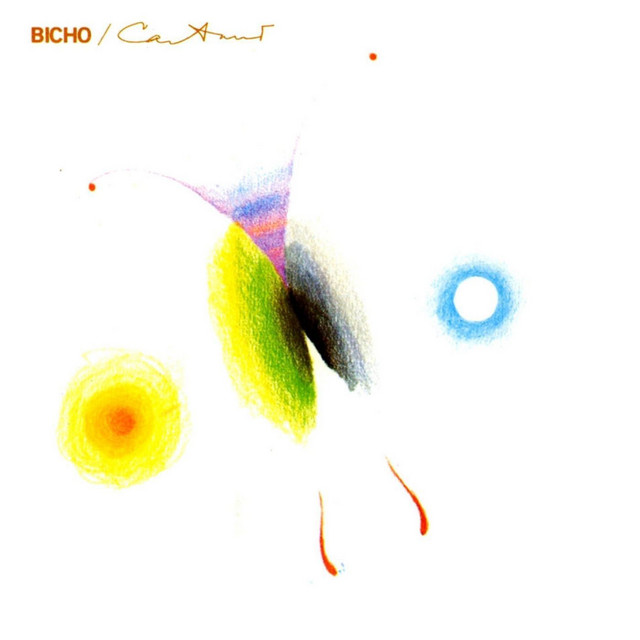
Genialidade não é um atributo qualquer. Se destinado sem a devida autoridade, corre-se o risco de se tornar algo banal, comum e frequente. Caetano Emanuel Viana Teles Veloso é um gênio. Naquilo que faz, há mais de cinco décadas, poucos(as) brasileiros(as) fizeram com tamanha excelência. Falar de Caetano é falar não só de música: é política, é sociedade, é religião, é cultura e contracultura. É o B
Videos
Live da Lítera - Caetano Veloso e o Álbum Jóia
Lítera Vestibulares
Films

Books
Letras
Caetano Veloso · 2022
Letras is a collection of poetry that compiles all the songs written by Caetano Veloso throughout his career. Essential for analysing the lyrics of the album 'Joia' and their poetic evolution.
Outras palavras: Seis vezes Caetano
Tom Cardoso · 2022
A comprehensive biography of Caetano Veloso, which reconstructs the life and work of one of Brazil's greatest artists. As an in-depth study of his career, it is fundamental for understanding the context and creation of the album 'Joia'.
Os 500 Maiores Álbuns Brasileiros de Todos os Tempos
Ricardo Alexandre · 2022
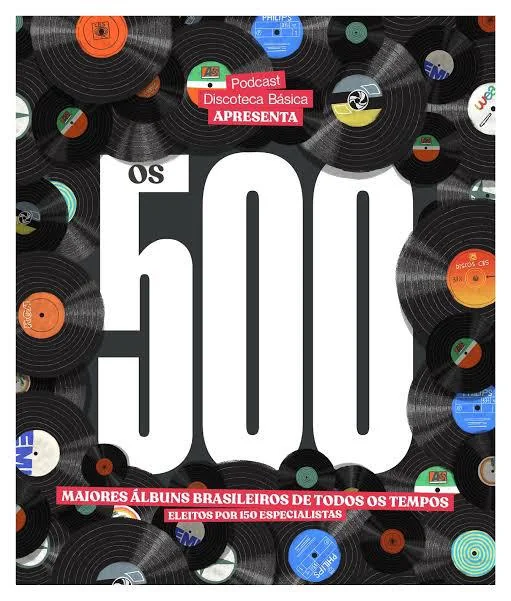
The largest Brazilian music election ever conducted: 162 specialists, spanning journalists, critics, musicians, producers and podcasters, each nominated 50 essential albums, supported by a masterlist of more than 2,000 works. Led by Ricardo Alexandre with tabulation by Sérgio Jomori, it was published in December 2022 as a 200-page hardcover book with graphic design by Fernando Pires.

Verdade tropical
Caetano Veloso · 1997
A seminal work by Caetano Veloso, in which the artist reflects on the Tropicalist movement, his personal trajectory, Brazilian culture, and his musical production. It is a crucial text for understanding the context and influences of his albums, including 'Joia'.
Analyses
Joia – Wikipedia
Wikipedia, the free encyclopaedia
Joia – The 100 Greatest Albums of Brazilian Music
Alexandre Matias · Rolling Stone Brasil
A letter of intent whispered to the ear.
Caetano Veloso - Jóia - Monkeybuzz
monkeybuzz.com.br
After a three-year period of exile in London, Caetano Veloso returned to Brazil in 1972, to a country marked by the intensification of the authoritarian and repressive aspect characteristic of the Médici government. With the intention of upholding morals and good customs, the military aimed to sweep away any trace of practices that crossed a certain line of moralism, and thus, the...
Minimalismo sagrado: contradição estética de Caetano Veloso em "Joia"
metropoles.com
Released in 1975, "Joia" marked Caetano Veloso's return after the highly experimental period with "Araçá Azul" (1973). The album, released simultaneously with "Qualquer Coisa" (1975), was polished to shine, being described as synthetic and beautiful.
Caetano Veloso voltou transcendental e desafiador em 'Jóia,' apesar de ...
rollingstone.com.br
In 1972, after observing Brazil from afar, Caetano Veloso returned to his inner self and to new horizons. Free from exile, but under the rigidity of the dictatorship, he opted for a deconstructive, transcendental art, highly attentive to the cultural expressions of the Brazilian agreste, as a means of remaining influential and challenging in an increasingly moralistic environment. The first act was the release of...