Tocar
Camerata Carioca
1983
Rankings
Why This Album Matters
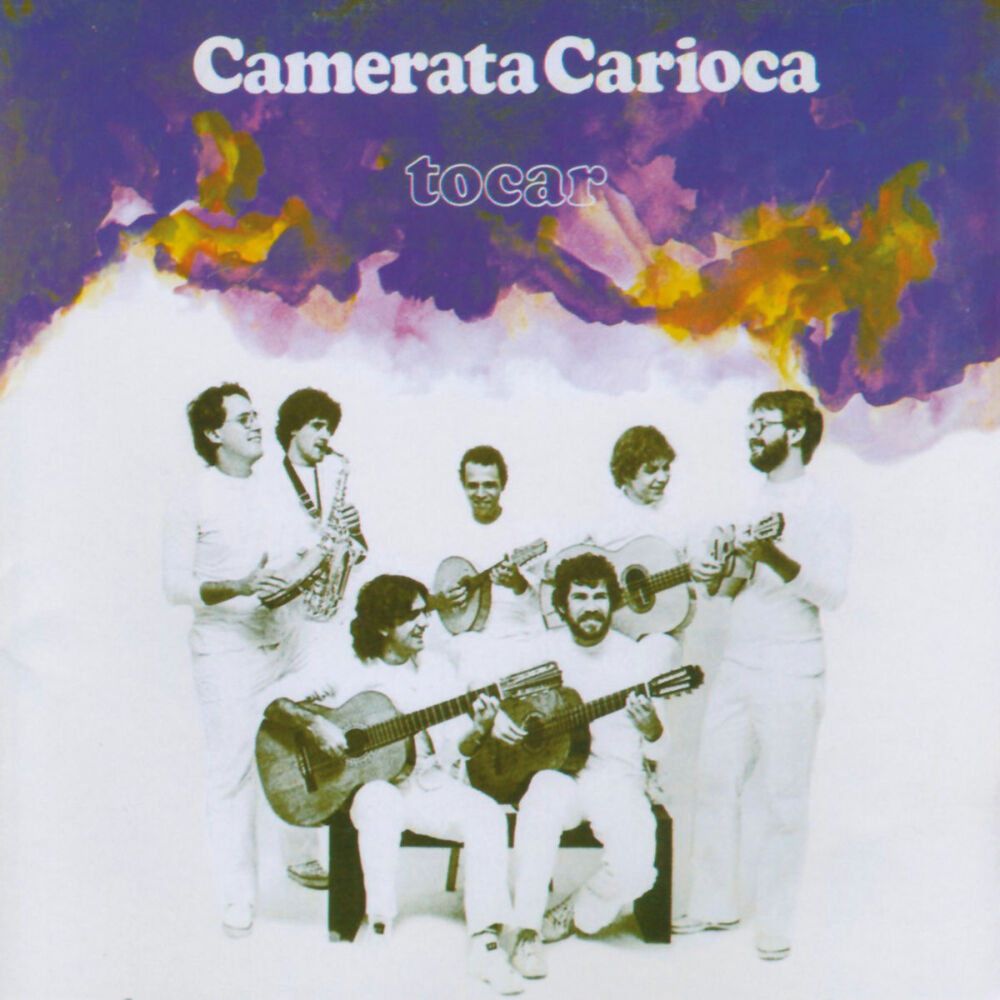
Tocar, released by Camerata Carioca in 1983, is a singular milestone in Brazilian instrumental music, notable for its innovative approach of fusing choro with erudite elements and other musical languages. The album presents a rich sonic tapestry that transcends the genre's boundaries, offering sophisticated arrangements and virtuoso execution that redefines the perception of choro. The work is a testament to the group's ability to reinterpret and expand the universe of choro, adding layers of harmonic and melodic complexity without losing the vibrant and popular essence of the style. In this work, Camerata Carioca consolidates a chamber music sound that elevates choro to the status of concert music, but with the sensitivity and warmth characteristic of Brazilian music.
Context
Formed in 1979 from Joel Nascimento's choro ensemble, Camerata Carioca emerged from a commission to Radamés Gnattali to adapt his suite "Retratos". This transcription guided the group towards a chamber configuration, blending erudite components with choro and opening new paths for the genre. Before Tocar, the group had already undertaken notable collaborations, including "Tributo a Jacob do Bandolim" in 1979 and "Vivaldi e Pixinguinha" in 1980, both with Radamés Gnattali. The 1983 formation of Camerata Carioca for this album included Joel Nascimento on mandolin, Joaquim Santos on first guitar, Maurício Carrilho on second guitar and bass guitar, Luiz Otávio Braga on 7-string guitar, Henrique Cazes on cavaquinho, Beto Cazes on percussion, and Dazinho on alto saxophone and flute. Tocar reached the public in the same year the group collaborated with Radamés Gnattali on other projects, consolidating their presence and artistic direction.
Recording
The album Tocar was released in 1983 with Polygram/Philips as the record label. The album's production was credited to Camerata Carioca itself, demonstrating the ensemble's artistic control and vision for their work. The initial release was on LP format, being subsequently reissued on CD in 2001.
Songs
The track selection on Tocar is a journey through different facets of instrumental music, highlighting Camerata Carioca's versatility. The repertoire includes works by great composers such as "Fugata" by Astor Piazzolla, which introduces a peculiar energy to the album, and "Choro de Mãe" by Wagner Tiso, with a notable arrangement by Maurício Carrilho. Choro classics are masterfully revisited, such as Pixinguinha's "Marreco Quer Água" and "Ainda Me Recordo", as well as Catulo da Paixão Cearense and Anacleto de Medeiros's "Terna Saudade (Por Um Beijo)". Radamés Gnattali's presence is notable with "Valsa Triste", "Remexendo", and "Uma Rosa Para Pixinguinha". The album is completed by weighty erudite pieces such as "Lenda do Caboclo" by Heitor Villa-Lobos and "Fuga No. 1" by Leo Brouwer, which underscore the fusion proposal and the musicians' virtuosity.
Legacy
Tocar, and Camerata Carioca in general, were fundamental to the redefinition of choro in the Brazilian musical landscape. By integrating erudite components and expanding instrumentation and arrangements, the group pioneered the 'revolutionising' of the genre, influencing the proliferation of new choro groups that followed this line of fusion between popular and erudite styles. In 1983, the year of the album's release, Camerata Carioca undertook a successful tour of Brazil's Northeast Region as part of Projeto Pixinguinha and, in the same month, was honoured with the Shell Prize at the Municipal Theatre of Rio de Janeiro, in a collaboration with Radamés Gnattali and the Municipal Theatre Symphony Orchestra. Despite the group's dissolution in 1986, the album Tocar had its relevance reaffirmed with a CD reissue in 2001, keeping it accessible to new generations and securing its place in the essential discography of Brazilian instrumental music.
Tracks
Credits
Camerata Carioca
Joaquim Santos, Luiz Otávio Braga, Maurício Carrilho, Radamés Gnattali
Branca Ramil, Ivone de Virgiliis, Liane Klein
Joaquim Santos
Maurício Carrilho
Luiz Otávio Braga
Dazinho
Henrique Cazes
Luiz Pessanha
Joel Nascimento
Beto Cazes
Luiz Pessanha
Alexandre De Souza Lima
Books
Analyses

Talabarte: Camerata Carioca
talabarte.blogspot.com
Led by the virtuoso Joel Nascimento, the Camerata Carioca ensemble released the album Tocar, a manifesto in favour of Brazilian music that brought together some of the leading names in choro and classical music in the country: in addition to Joel (mandolin), Joaquim Santos and Maurício Carrilho (guitars), Luiz Otávio Braga (7-string guitar), Henrique Cazes...
Cliquemusic : Artista : Camerata Carioca
cliquemusic.com.br
In 1982, they returned to the stage with Nara Leão in the show "Nasci para Bailar", and the following year saw the release of the LP "Tocar", featuring music by Radamés, Villa-Lobos, Pixinguinha, Wagner Tiso and others. Also in 1983, the Camerata performed at the Teatro Municipal do Rio de Janeiro alongside the Orquestra Sinfônica do Municipal.
Rodrigo Da Silva Velozo Camerata Carioca E O "Ressurgimento" Do Choro ...
repositorio.unespar.edu.br
A bibliographic and comparative analysis of the compositions "Terna Saudade" and "Ainda Me Recordo". The analysis involved the arrangements recorded by Camerata Carioca on the album "Tocar" (1983), compared with the phonograms in their 1907 versions (recording made by Banda do Corpo...
CD Camerata Carioca - Tocar (1983) - melomano.com.br
melomano.com.br
Product Description. Origin: Brazil. Format: CD. Style: Orchestral - Classical. Arrangements by Radamés Gnattali, Maurício Carrilho, Luiz Otávio Braga and Joaquim Santos. Liner Notes by Henrique Cazes. Universal 02894111982 (2001). Code: c4551. Product Condition... Home > CD > Orchestral - Classical > Camerata Carioca - Tocar (1983) CD
