Capital Inicial
Capital Inicial
1986

Rankings
Why This Album Matters
Released in 1986, Capital Inicial's debut album is a cornerstone of Brazilian rock, solidifying the band as one of the pillars of the 1980s movement. With a sound that blended punk and post-punk, the record captured the energy and urgency of the youth of the time, reverberating the urban and social anxieties of a Brazil in transition. This debut work not only introduced Capital Inicial to the wider public but also rescued and immortalised songs that were already part of the seminal repertoire of Aborto Elétrico, the band that gave rise to Capital and Legião Urbana. The intensity of its lyrics and the rawness of its arrangements ensured the album a prominent place in the national discography, making it a classic that continues to influence and serve as a reference in the music scene.
Context
Capital Inicial emerged directly from the ashes of Aborto Elétrico, a legendary punk group from Brasília, formed in the late 70s by Renato Russo, Fê Lemos and André Pretorius. After the end of Aborto Elétrico, brothers Fê and Flávio Lemos joined guitarist Loro Jones and vocalist Dinho Ouro Preto to bring Capital Inicial to life. The debut album was recorded after three years of intense activity on stage, which allowed the band to refine their compositions and present a cohesive and already live-tested repertoire. This period of gestation and the cultural effervescence of Brasília in the 80s, amidst the country's re-democratisation, were crucial for the sonic and lyrical identity that Capital Inicial would imprint on their first record.
Recording
The album Capital Inicial was recorded between January and March 1986, under the production of Bozo Barretti, who also contributed keyboards and piano to the tracks. Barretti, who would later become an official member of the band, played a fundamental role in the album's sound, released by the PolyGram label. Among the guest musicians, instrumentalists Demétrio Bezerra (alto sax), Gianni Fabra (tenor sax) and Franco Mourão (trumpet) stood out, forming a horn section present on the iconic song "Música Urbana". The album cover, often misunderstood, was designed to evoke strangeness, and Dinho Ouro Preto explained that, to understand it, one needs to turn the inlay upside down, revealing the reflection of water mixed with moss.
Songs
The album Capital Inicial is a vivid portrait of the band's songwriting vein and punk heritage. The repertoire consists of tracks that the group already performed live, including classics born during the Aborto Elétrico phase, such as the emblematic "Música Urbana", "Veraneio Vascaína" and the post-punk ballad "Fátima". Other notable songs include "Leve Desespero", which had already been released as the B-side of the band's debut single, and "Psicopata", a punk rock highlight. The lyrical weight of the album, with themes addressing urban youth and social criticism, is evident in tracks such as "Veraneio Vascaína", which, due to its forceful lyrics against the police, was censored and had its album sales restricted to those under 18 at the time.
Legacy
Since its release in August 1986, the album Capital Inicial achieved remarkable success, earning platinum disc certification with 250,000 copies sold. This commercial milestone solidified the band's position as an expressive force in national rock. The album continues to be a reference in the Brazilian music scene, with its songs maintaining relevance and resonating with new generations. The inclusion of Aborto Elétrico tracks, in turn, ensured that the history and influence of this seminal group were perpetuated, making the album a crucial link between Brasília's underground punk and the mainstream success of 80s rock.
Tracks
Credits
Marcus Vinicius
Dinho Ouro Preto
Demétrio Bezerra
Flávio Lemos
Fê Lemos
Loro Jones
Bozzo Barretti
Leo Gandelman
Gianni Fiabra
Franco Mourão
Films

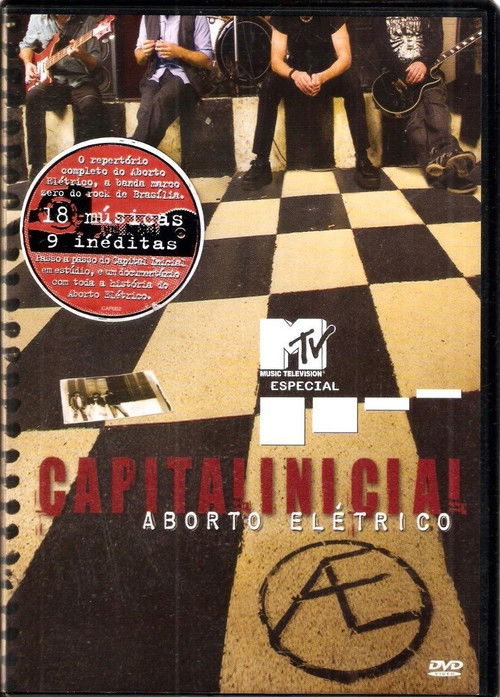
Capital Inicial - MTV Especial Aborto Elétrico
2005
MTV Special: Electrical Abortion is the album of the Brazilian rock band Capital Inicial. The album recalls the great successes of the era of Electrical Abortion band. It was released in 2005.

Minha Música, Minha Terra: Capital Inicial
2023
For Capital Inicial, two places marked their lives and careers: Brasília and São Paulo. Each location left its mark, such as the friends from those years, the first concerts in the Central Plateau, and the musical adventures in São Paulo's bars. A visit to the past, with memories of a time when everything seemed like just a dream.
Books
Analyses
Capital Inicial – Wikipedia
Wikipedia, the free encyclopaedia
O álbum de estreia do rock nacional que capa só é compreendida se ...
whiplash.net
Launched in 1986, Capital Inicial's debut album - which carries the band's name - marked a generation and consolidated the band as one of the pillars of Brazilian rock in the 1980s.

Capital Inicial (Polygram, 1986), Capital Inicial
discosessenciais.blogspot.com
Capital Inicial's debut album ends in great style with "Fátima", another song from Aborto Elétrico's repertoire. The social criticism embedded in the verses and the almost hypnotic melody transform the track into a precise commentary on Brazil's political context at the time.
Capital Inicial - Capital Inicial (1986) - musicasdonordeste.net
musicasdonordeste.net
Capital Inicial is the first studio album by the Brazilian rock band Capital Inicial.
Cadê - Capital Inicial - Capital Inicial (1986) - Monkeybuzz
monkeybuzz.com.br
In early 1986, Capital Inicial, the self-titled album, arrived in stores with great expectation caused by the national breakout of the track Música Urbana, picked from Aborto Elétrico's old repertoire, whose lyrics were finalised by Renato Russo after a long time without speaking to the Lemos brothers.