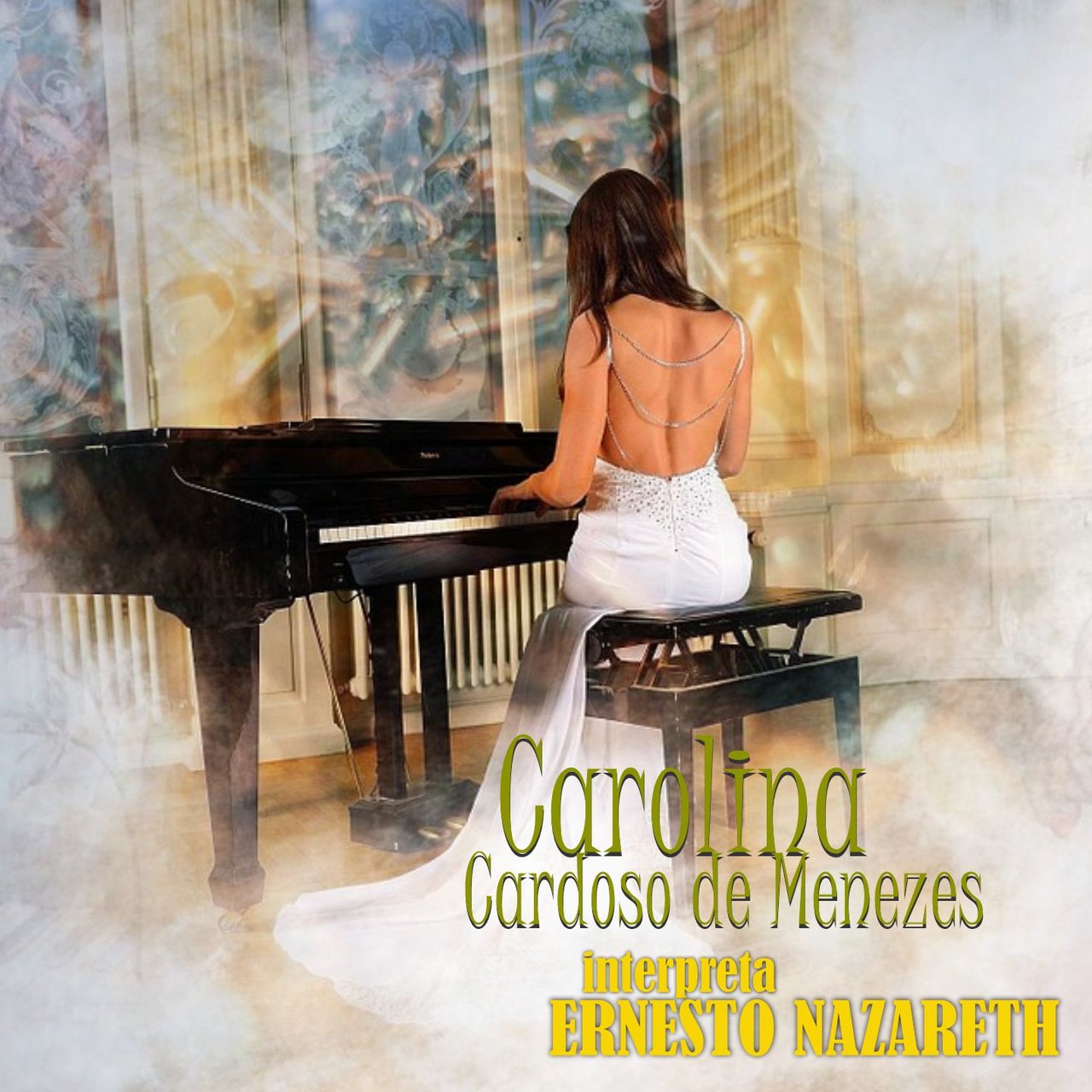
Interpreta Ernesto Nazareth
Carolina Cardoso De Menezes
1952
Rankings
Why This Album Matters
The album "Interpreta Ernesto Nazareth", released by Carolina Cardoso de Menezes in 1952 on the Sinter label, is a cornerstone of Brazilian discography and a landmark for the preservation and dissemination of Ernesto Nazareth's work. This 10-inch LP holds the historic distinction of being the first long-play record in the world entirely dedicated to the repertoire of the "Pianeiro do Brasil" (Brazil's Pianist), solidifying Nazareth's presence in the vinyl era and making his compositions accessible to a wider audience. Carolina Cardoso de Menezes, one of the most prominent Brazilian pianists of her generation, brings to Nazareth's works an interpretation that transcends mere technical execution. Known for her singular musicality and a "unique rhythmic feel", she excelled at blurring the lines between popular and classical, a characteristic that resonates deeply with the spirit of Nazareth's compositions. Carolina's work on this album not only reveres one of the greatest composers of choro and Brazilian tango, but also revitalises it with an approach that was considered bold and modern for its time, reaffirming the timelessness and the melodic and rhythmic richness of Nazareth's music.
Context
Carolina Cardoso de Menezes, born in 1913 in Rio de Janeiro, belonged to a lineage of pianists and composers, being the daughter of Oswaldo Cardoso de Menezes, a popular pianist. She began her formal piano studies at the age of 13, after years of playing by ear, and later perfected her skills at the Instituto Nacional de Música. Her career took off on the radio from 1930, where she became a constant figure, accompanying numerous singers on programmes and 78 rpm recordings. Before "Interpreta Ernesto Nazareth", Carolina had already demonstrated her appreciation and skill with Nazareth's work, performing pieces such as "Turbilhão de beijos", "Tenebroso" and "Coração que sente" at a conference about the composer in 1939. In the 1950s, Brazilian popular music was experiencing a period of effervescence and transition, with the consolidation of radio and the advent of the LP, which opened new possibilities for recording more extensive works. In this scenario, Nazareth's work, a precursor of choro and the "Brazilian tango" that blended European influences and Afro-Brazilian rhythms, was revisited by various performers, ensuring its permanence and relevance.
Recording
The album was released on the Sinter label (SLP 1007) in 1952. On it, Carolina Cardoso de Menezes performs on piano, with some tracks featuring the accompaniment of the Lyrio Panicali Orchestra, such as "Odeon" and "Garoto". Other pieces were recorded in solo piano format, showcasing the pianist's virtuosity and individual expressiveness.
Songs
The repertoire of "Interpreta Ernesto Nazareth" is composed of eight of the composer's classics, including Brazilian tangos and choros that have become an indelible part of Brazilian popular music. Notable tracks include "Odeon", "Brejeiro", "Turbilhão de beijos", "Tenebroso", "Escorregando", "Coração que sente", "Garoto", and "Escovado". Carolina's interpretation of "Odeon", for example, is recognised for its technical refinement and a particular stylistic balance, with additions and omissions that demonstrate her profound knowledge of Nazareth's work. Nazareth's melodies, intrinsically linked to the popular rhythms of his time, are highlighted by Carolina's performance, which successfully conveys the dancing yet sophisticated essence of the compositions.
Legacy
The importance of "Interpreta Ernesto Nazareth" lies primarily in its pioneering nature as the first LP entirely dedicated to the composer, which contributed significantly to the perpetuation of his work in a format of greater reach and durability. The album reinforced Carolina Cardoso de Menezes' position as one of Nazareth's greatest interpreters, with her performances praised for their modernity and expressiveness. Although specific sales data and awards from that period are difficult to trace, the album's influence manifested itself in the way Nazareth's music continued to be studied and interpreted by future generations of musicians, in both popular and classical spheres. Carolina Cardoso de Menezes herself continued to be a reference for the interpretation of choros and Brazilian tangos, being compared to great names such as the pianist Nonô by Ary Barroso. The recording became a starting point for other pianists and scholars who would dedicate themselves to Nazareth's work, cementing his place in the canon of Brazilian music.
Tracks
Analyses
Carolina Cardoso De Menezes - Interpreta Ernesto Nazareth
albumoftheyear.org
Music Reviews: Interpreta Ernesto Nazareth by Carolina Cardoso De Menezes released in 1952. Genre: Samba.
Interpreta Ernesto Nazareth by Carolina Cardoso De Menezes
besteveralbums.com
Interpreta Ernesto Nazareth is a music album by Carolina Cardoso De Menezes released in 1952. Interpreta Ernesto Nazareth is ranked 23,556th in the overall chart, 638th in the 1950s, and 34th in the year 1952. This album appears in 5 charts and has received 1 comment and 6 ratings from BestEverAlbums.com site members.
Carolina Cardoso de Menezes - Instituto Piano Brasileiro
institutopianobrasileiro.com.br
In 1952, she released the 10-inch LP "Carolina Cardoso de Menezes interpreta Ernesto Nazareth", containing eight recordings. This album holds historical importance, as it was the first LP in the world entirely dedicated to Ernesto Nazareth.
Carolina Cardoso de Menezes por Maria Teresa Madeira: lembranças vivas ...
discografiabrasileira.com.br
Incidentally, hers was the first LP entirely dedicated to the work of the main exponent of Brazilian tangos, the ten-inch "Carolina Cardoso de Menezes interpreta Ernesto Nazareth", released by Sinter in 1953.
IMMuB | Álbum - CAROLINA CARDOSO DE MENEZES INTERPRETA ERNESTO NAZARETH
immub.org
Tracks: 1. "Odeon" (Ernesto Nazareth) 2. "Brejeiro" (Ernesto Nazareth) 3. "Turbilhão de Beijos" (Ernesto Nazareth) 4. "Tenebroso" (Ernesto Nazareth) 5. "Escorregando" (Ernesto Nazareth) 6. "Coração Que Sente" (Ernesto Nazareth) 7. "Garoto" (Ernesto Nazareth) 8. "Escovado" (Ernesto Nazareth)