20 Palavras ao redor do Sol
Cátia de França
1979
Rankings
Why This Album Matters
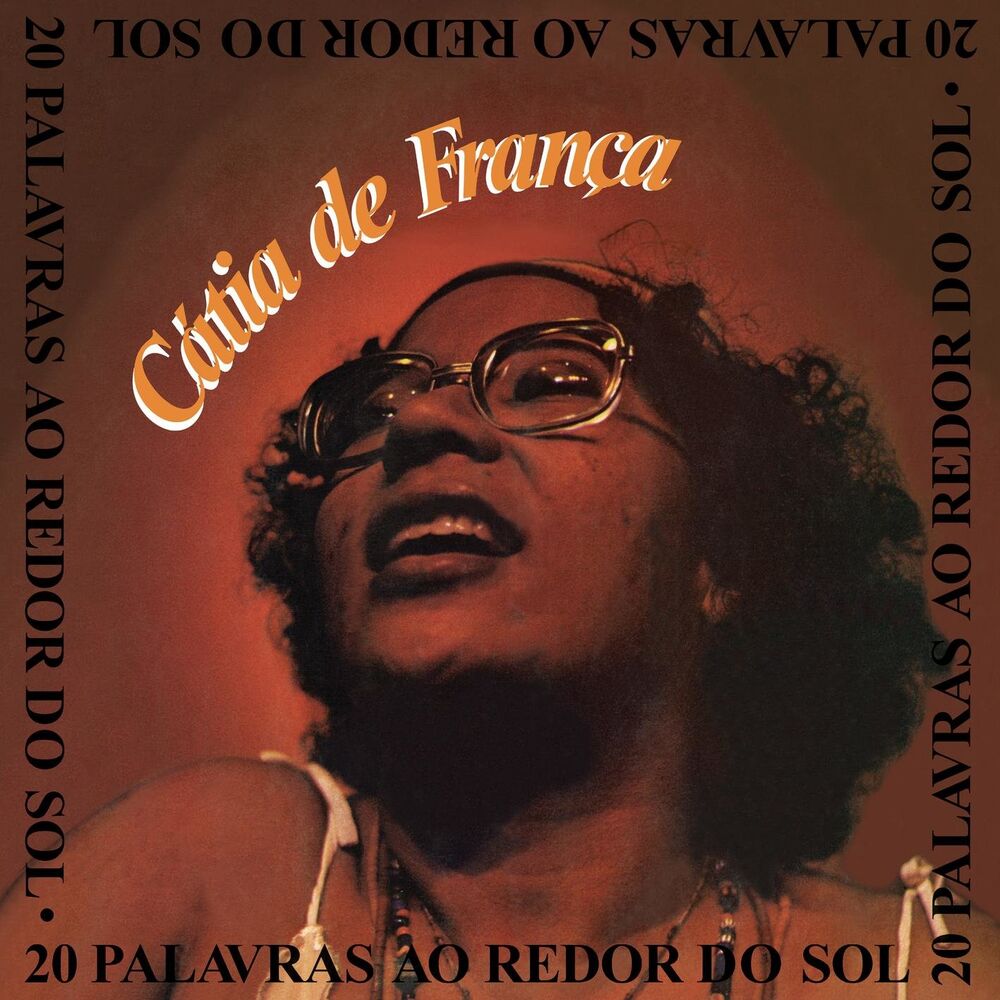
Cátia de França's debut album, 20 Palavras ao redor do Sol, released in 1979, emerges as a singular and highly relevant work in Brazilian music. Its sound is profoundly enriched by a constellation of talents, including Zé Ramalho's musical direction, arrangements, and violas, the virtuoso accordions of Dominguinhos and Sivuca, and the striking vocals of Amelinha and Elba Ramalho. Lulu Santos' participation on electric guitar and Bezerra da Silva on berimbau add diverse and expressive layers to the work's musical tapestry. Beyond the stellar cast, the album stands out for its bold lyrical proposal, with songs that draw direct inspiration from the poetry of João Cabral de Melo Neto. This fusion of literary sophistication and musical richness positions 20 Palavras ao redor do Sol as an artistic landmark, revealing the originality and depth of Cátia de França's vision since her first phonographic recording.
Recording
The production of 20 Palavras ao redor do Sol involved a dedicated team, reflecting the project's artistic ambition. Cátia de França took on the musical direction, a role she shared with Carlos Alberto Sion and Zé Ramalho, who were also responsible for production direction. The sound engineering was carefully managed by recording technicians Manoel Magalhães and Eugenio Carvalho, with the support of Pedro Moura as studio assistant. Marcelo Falcão served as musical assistant, while Alencar handled the editing and Gilson de Freitas the musical arrangements coordination, ensuring cohesion and sound quality. The graphic design and illustration were handled by Rogério Cavalcanti, with photographs by Flavio D'Alincourt, completing the album's visual identity.
Songs
The songs on 20 Palavras ao redor do Sol have a peculiar compositional basis, drawing direct inspiration from the work of the poet João Cabral de Melo Neto. This approach lends the lyrics a distinct depth and narrative character, which interact with the album's sound. The arrangements, conceived by Cátia de França and Zé Ramalho, demonstrate an artistic collaboration that shaped the musical identity of each track. The instrumentation is rich and varied, with Cátia de França taking on vocals and acoustic guitar on all tracks. Zé Ramalho contributes the 12-string guitar, while Dominguinhos and Sivuca share the accordions, and Sivuca also participates with the electric piano, adding regional textures and harmonic complexity. Chico Julien's bass, the drums of Chico Batera and Elber Bedaque, Lulu Santos' electric guitar, and Bezerra da Silva's berimbau, complemented by the backing vocals of Elba Ramalho, Amelinha, Guadalupe, and Mônica Schmit, create a diverse and captivating sonic palette.
Legacy
Following its original release in 1979, the album 20 Palavras ao redor do Sol had its relevance reasserted with a re-release in 2019. This new edition celebrated the work's fortieth anniversary, making it available in LP format, on digital platforms, and even prompting a celebratory tour. The re-release underlines the enduring recognition of Cátia de França's work and its continuous importance to Brazilian music.
Tracks
Credits
Carlos Alberto Sion, Cátia De França, Zé Ramalho
Carlos Alberto Sion, Zé Ramalho
Carlos Alberto Sion, Zé Ramalho
Marcelo Falcão
Alencar
Jorge Emilio Isaac
Eugênio Carvalho, Manoel Magalhães
Rogerio Cavalcanti
Gilson De Freitas
Flavio D'Alincourt
Videos
AS 20 PALAVRAS AO REDOR DO SOL DE CÁTIA DE FRANÇA | ALBUM REVIEW
Som de Peso
Books
Álbum 3 – 1978 a 1993
Pedro Alexandre Sanches · 2024
Part of the 'Álbum' series, which explores the history of Brazilian music through its most iconic records. This volume, 'Álbum 3', covers the period from 1978 to 1993, making a detailed analysis of '20 Palavras ao redor do Sol', a seminal 1979 album, very likely by the renowned critic Pedro Alexandre Sanches.
1979
Célio Albuquerque, Emílio Pacheco, Mehane Albuquerque, Ricardo Pugialli, Vicente Dattoli, Klaudia Alvarez, Zeca Azevedo, Crikka Amorim, José Emilio Rondeau, Ruy Godinho, Bruno Thys, Talles Colatino, Jotabê Medeiros, Nelson Augusto, Ana Lu Germano, Daniella Zupo, Juca Filho, Marcos Sabino, Walterson Sardenberg Sobrinho, Fábio Cabral de Mello, Denilson Monteiro, Marcelo Pinheiro, Paulo Cesar Figueiredo, Marcelo Ferro, Mimi Rocha, Kamille Viola, Dalwton Moura, Chris Fuscaldo, Joyce Moreno, Luiz Américo Lisboa Júnior, Gilberto Porcidonio, Leandro Gomes, Ricardo Schott, Marcelo Cabanas, Luiz Felipe Carneiro, Wagner Cosse, Ayrton Mugnaini Jr., Nivea Souza, Rodrigo Faour, Alberto Villas, André Cananéa, Braulio Neto, Dacio Malta, Lorena Calabria, Bento Araujo, Maria Carolina Rodrigues, Roberto Muggiati, Cleodon Coelho, Rodrigo Nogueira, Márcia Tauil, Juarez Fonseca, Fábio Vizzoni, Rildo Hora, Moacyr Luz, Marlon Sette, Silvio Atanes, Ricardo Moreira, José Teles, Zé Edu Camargo, Beto Feitosa, Vinícius Cunha, Danilo Casaletti, Luis Lamarão, Mauro Ferreira, Rafael Pinto Ferreira de Queiroz, Cesar Cardoso, Felipe Tadeu, Hugo Sukman, Fred Góes, Miltinho, Iso Fischer, André Diniz, Marluci Martins, Etel Frota, Madalena Salles, Lucas Vieira, Carlos Evandro Lordello, Leandro Souto Maior, Inahiá Castro, Maurício Gouvêa, Fabian Chacur, Marquinho Carvalho, Mónica Vermes, Túlio Mourão, Tito Guedes, Leila Dantas, Silvio Essinger, Flávio Mendes, Manoel Filho, Thelmo Lins, Andréia Pedroso, Luiz Carlos Sá, Mariana Mesquita, Marcos Sampaio, Carlos Eduardo Lima, Carlos Fonte Lito, Lucas Reginato, Itamar Assiere, Leonardo Lichote, Guilherme Henrique, Cláudia Menescal, Ricardo Soares, Washington Santos, Mona Gadelha, Marcos Souza, Diogo Cunha · 2023
In the book '1979 – O ano que ressignificou a MPB', 100 LPs from that era feature stories written by artists and journalists, and retrieve the memory of a year when Brazilian popular music spoke for itself. In the form of prose, review, reportage, or interview, each author lends their style to their chapter, which indicates probable in-depth coverage of '20 Palavras ao redor do Sol', Cátia de França's iconic album released that year.
Os 500 Maiores Álbuns Brasileiros de Todos os Tempos
Ricardo Alexandre · 2022
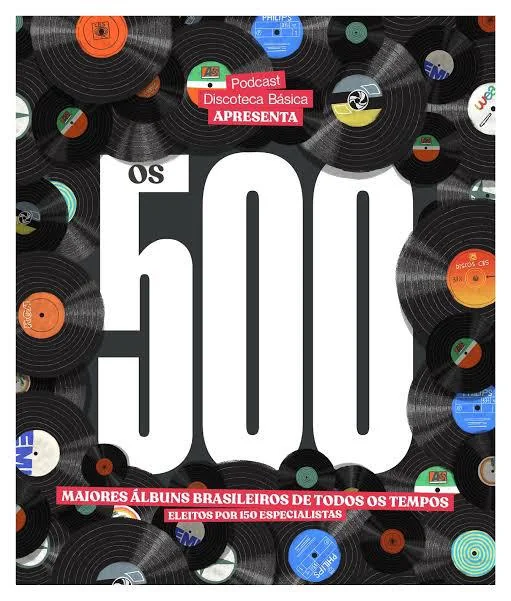
The largest Brazilian music election ever conducted: 162 specialists, spanning journalists, critics, musicians, producers and podcasters, each nominated 50 essential albums, supported by a masterlist of more than 2,000 works. Led by Ricardo Alexandre with tabulation by Sérgio Jomori, it was published in December 2022 as a 200-page hardcover book with graphic design by Fernando Pires.
Analyses
20 Palavras ao redor do Sol – Wikipedia
Wikipedia, the free encyclopaedia
Revisitando Meus Clássicos: Cátia de França - 20 Palavras ao Redor do ...
monkeybuzz.com.br
The rest is history. Here, Cátia de França revisits the creation of the songs from 20 Palavras Ao Redor do Sol (1979) and reflects on the album's impact.
20 Palavras ao redor do sol: diálogos literomusicais
revistas.uneb.br
The singer Cátia de França, in an interview, says that all her work is based on literature. Thus, our objective, in this article, is to analyse the songs from the album "20 Palavras ao redor do sol" and understand their links with literature, their literary-musical exercise.
PDF Cátia de França: vinte palavras de valentia ao redor do sol C
anppom.org.br
artistic name, Cátia de França at her mother's suggestion. Adélia took charge of teaching her daughter to read and write, but not through conventional means: she taught the girl words through music. Cátia learned and grasped syllables through melodies. In addition, her mother cultivated in her the habit of reading. Cátia, who was an only child
Cátia de França relembra a criação do clássico "20 palavras ao redor do ...
radios.ebc.com.br
The Paraíban singer and songwriter Cátia de França is this week's interviewee on Festa do Disco. An accomplished songwriter and owner of a striking voice, Cátia recalls the creation of her debut album 20 Palavras ao Redor do Sol, released in 1979.