Ideologia
Cazuza
1988
Rankings
Why This Album Matters
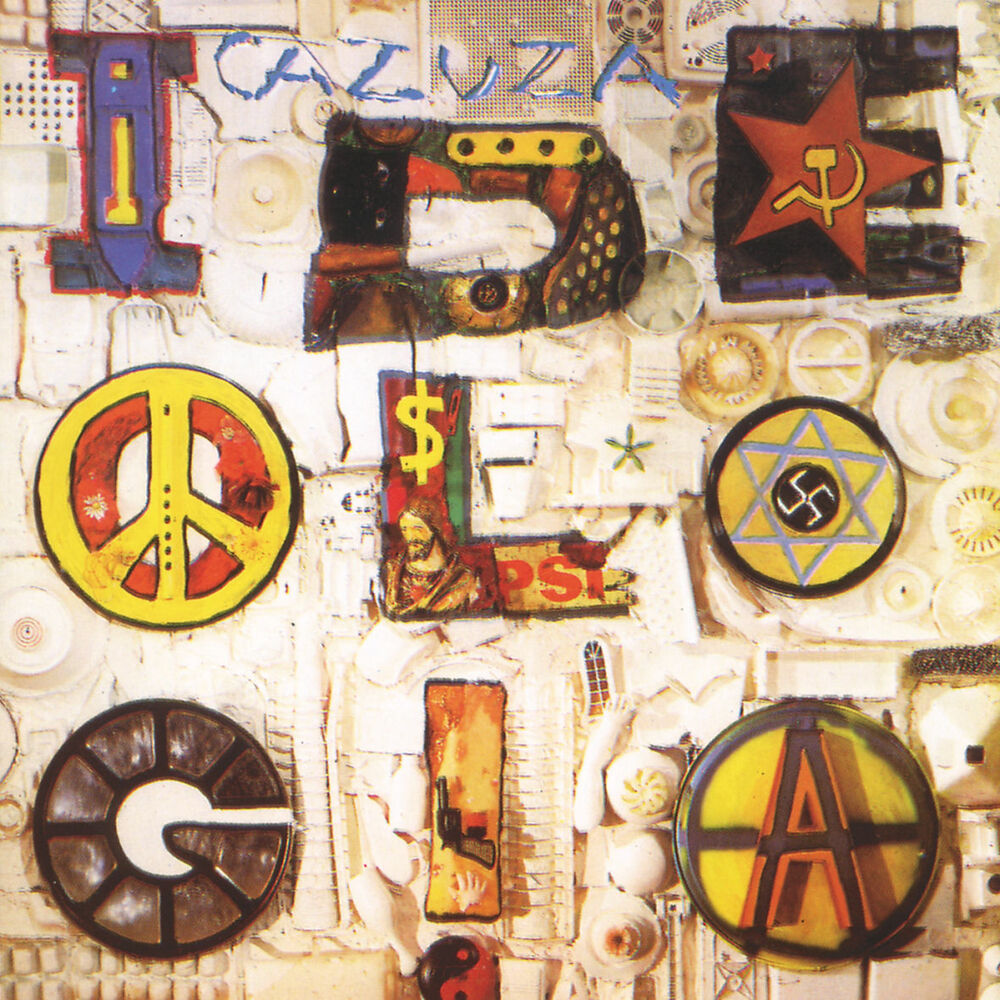
Ideologia, Cazuza's third solo album, released in 1988, is a seminal work in the artist's discography and in Brazilian music. The album stands out for its profound immersion in existential themes, where Cazuza, with brutal honesty, addresses his relationship with AIDS and the inevitability of death, transforming his personal experience into universal art. Musically, Ideologia navigates between incisive rock and the sophisticated melody of bossa nova, as evidenced by the song "Faz Parte do Meu Show", which surprises with orchestral arrangements. The album cover, which blends swastikas and Stars of David, reflects the provocation and search for meaning that permeate the entire record, consolidating Cazuza as a perceptive chronicler of his time and his own concerns. This album is a testament to Cazuza's ability to fuse personal vulnerability with social criticism, presenting a repertoire that remains relevant and touching. Its authenticity and the richness of its compositions make it a high point in the singer's career and an essential record for understanding 1980s MPB.
Context
The conception of Ideologia occurred during a period of profound personal transformation for Cazuza. In April 1987, he received an HIV diagnosis, news that would directly impact his art. Shortly after, amidst a tour, he was hospitalised due to pneumonia, a manifestation of the disease that had already appeared in 1985, albeit without the initial diagnosis. Given the ineffectiveness of treatments in Brazil, Cazuza travelled to Boston to seek assistance at a reference centre for AIDS combat. During his two-month hospitalisation, the artist intensely reflected on life, death, and the purpose of his music. Inspired by politically-charged hits like "Que País É Este?", he decided to adopt a more serious, intimate, and engaged approach in his lyrics, in addition to the romantic themes already known. Upon returning to Brazil in December 1987, visibly transformed and with renewed musical maturity, Cazuza began recording Ideologia in January of the following year, declaring he had stopped talking about "my backyard" to address his "generation".
Recording
The recordings for Ideologia began in January 1988, under the production of Ezequiel Neves and Nilo Romero. The creative and recording process featured the collaboration of a vast range of musicians and composers, highlighting the album's richness and sonic diversity. Several notable names from the Brazilian music scene participated in the conception and execution of the songs. Among the collaborators were Sandra de Sá, Ritchie, Lobão, Dé Palmeira, and Gilberto Gil, who contributed to the plurality of arrangements and sounds present on the record. The production sought to capture Cazuza's new phase, which brought a more introspective and, at the same time, politicised perspective to his lyrics, reflecting the experiences of a troubled and revealing period in his life.
Songs
The album opens with the title track "Ideologia", an acclaimed collaboration between Cazuza and Frejat. The lyrics address the search for meaning in life after disillusionment with reality, and the line "O meu prazer agora é risco de vida" is a direct echo of the singer's HIV discovery. "Ideologia" ranks among Cazuza's greatest successes, alongside "Exagerado" and "O Tempo Não Para". Other notable compositions include "Brasil", co-written with Nilo Romero and George Israel, which solidified as a declaration of love and criticism of the country, exploring its inequalities. The song "Faz Parte do Meu Show", a partnership with Renato Ladeira, is distinguished by its bossa nova-style arrangement, a notable tribute to the genre that was celebrating 30 years in 1988. The song "Blues da Piedade", with Sandra de Sá on backing vocals and Frejat on guitar, is a compassionate reflection on the lives of "squares" and people limited by routine. "Um Trem Para As Estrelas", composed by Cazuza at the invitation of Gilberto Gil, portrays the difficulties of the Brazilian worker in the 1980s in search of a better future, becoming the theme of a film of the same name.
Legacy
Ideologia was widely acclaimed upon its release, being awarded the Sharp Prize for best album. Its repercussion was immediate on Brazilian radio, with the songs "Faz Parte do Meu Show" and "Ideologia" becoming the most played of 1988. The track "Ideologia" was recognised by Rolling Stone magazine as the 83rd best Brazilian song. The album also had a strong presence in TV drama: "Faz Parte do Meu Show" was the theme for the character Solange in TV Globo's soap opera Vale Tudo, and "Brasil" was re-recorded by Gal Costa to be the opening theme of the same soap opera, with both featuring again in the 2025 remake. "Vida Fácil" also integrated the soundtracks of "Fera Radical" and, later, "Salsa e Merengue".
Tracks
Credits
Cazuza, Ezequiel Neves, Nilo Romero
Jorge Freitas, Luigi Hoffer
Márcia Alvarez
Paschoal Perrota
Marcus Adriano
Jairo Gualberto, Julinho, Marcio Gama
Luiz Guilherme D'orey
Américo Marques Pinto, José Antônio
Jorge "Gordo" Guimarães, Julinho, Marcio Gama
Julinho, Marcio Gama
Carlinhos, Charles, Luis Cláudio Coutinho
Claudio, Julinho
Jorge Barrão, Luiz Zerbini
Arthur Fróes
Flávio Colker
Podcasts
Obra-prima de Cazuza, o álbum Ideologia foi lançado em 1988, num momento em que o poeta e compositor passou a ver o mundo ao seu redor e seu próprio universo particular de outra maneira, após descobrir ser portador do HIV.Ideologia é um disco de letras intensas e surpreendentes, ao mesmo tempo em que mostra Cazuza se consolidando como intérprete de outros gêneros além do rock - e nada demonstra ma
Flash Time · Flash Time Podcast
O Flash Time chegou com o 23° episódio e com ele a história da música IDEOLOGIA de Cazuza. Da o play e confira a história e a música na íntegra.
QUER QUE EU RESENHE? · André Marx
Na resenha de hoje, Daniel Moreira fala sobre um dos melhores discos dos anos 80: Ideologia (1988), do grande Cazuza. Com certeza, um dos álbuns com o maior número de hits dos 80's. Sejam bem-vind@s ao Canal/Podcast QUER QUE EU RESENHE? e esperamos que vocês gostem.
Vinilteca · José Ono Junior e Guilherme Colpani
A turnê do disco Ideologia, do Cazuza, percorreu o Brasil e se transformou num especial para tv e num novo disco, o ao vivo O Tempo não pára, o.mais vendido da carreira do cantor. Na semana que relembramos os 30 anos da morte de Cazuza, a Vinilteca relembra este álbum tão especial. A Vinilteca é um projeto que nasceu no YouTube em 2016 e migrou para o rádio e para o podcast, com apresentação dos
Videos
CAZUZA - IDEOLOGIA (1988) | ALBUM REVIEW
Vinilteca
Cazuza - Ideologia (1988) | ALBUM REVIEW
QUER QUE EU RESENHE?
CAZUZA - Ideologia - CD - 1988 - Review - Resenha - Reseña
Fan Coleccion
significado da musica Ideologia - Cazuza - Análise da Letra #12 aniversário Cazuza
Pensando Nisso.
Geek História 016 - Cazuza e a Ideologia
Geek História
Books
Meu lance é poesia
Ramon Nunes Mello · 2024
This book explores Cazuza's poetic facet, positioning him as the 'Rimbaud of Brazilian misfortune in the 1980s, our lost decade'. The work analyses Cazuza's ability to translate the difficulties and hopes of his time into poetry, being fundamental for understanding the lyrics and lyrical impact of the album 'Ideologia'.
Os 500 Maiores Álbuns Brasileiros de Todos os Tempos
Ricardo Alexandre · 2022
The largest Brazilian music election ever conducted: 162 specialists, spanning journalists, critics, musicians, producers and podcasters, each nominated 50 essential albums, supported by a masterlist of more than 2,000 works. Led by Ricardo Alexandre with tabulation by Sérgio Jomori, it was published in December 2022 as a 200-page hardcover book with graphic design by Fernando Pires.
Brasil: Cazuza, Renato Russo e a transição democrática
Mario Luis Grangeia · 2015
This book reveals Brazil through the manifest-lyrics of Cazuza and Renato Russo. It explores how these two poets of the 1980s generation gave voice to popular desires and expectations during the transition period between dictatorship and democracy, offering an in-depth analysis of the social and political context that permeated Cazuza's work.
300 Discos Importantes da Música Brasileira
Charles Gavin, Tárik de Souza, Carlos Calado, Arthur Dapieve · 2008
Conceived by Titãs drummer and musical researcher Charles Gavin, the 434-page book brings together covers and reviews of albums released between 1929 and 2007. The texts were written by journalists Tárik de Souza, Arthur Dapieve and Carlos Calado.

Cazuza: Só As Mães São Felizes
Lucinha Araujo · 2004
In a testimony given to Regina Echeverria, in an almost confidential tone, Lucinha Araujo presents significant facts about her life with her only son, the singer and songwriter Cazuza, who died in 1990 from AIDS. 'Cazuza - Só as mães são felizes', besides providing information on Cazuza's trajectory, offers an intimate perspective on the artist.
Analyses
Ideologia – Wikipedia
Wikipedia, the free encyclopaedia
Album: Ideologia. Artist/Band: Cazuza. Year: 1988.
staimusic.com
One of his best works is the album Ideologia, a personal and introspective masterpiece, full of emotion and ideologic references. In this blog post, we will review this historic album, looking closer at the artist, the music genre, the best songs of the album, the most innovative parts, and, of course, our critics.
IDEOLOGIA (1988) Cazuza - by Luciano Siqueira
meusdozemais.substack.com
After my first contact with Cazuza on the compilation album Melhores momentos (1985), I decided to buy the LP Ideologia (1988) on Avenida Treze de Maio. It is possible that Humberto Gessinger sought inspiration from Ideologia to create the cover for Várias variáveis, released three years later.
Música Ideologia de Cazuza (significado e análise)
culturagenial.com
Ideologia is the title track of Cazuza's third solo album, released in 1988. The lyrics were written by the singer and set to music by Roberto Frejat, a friend and former bandmate from Barão Vermelho.
Das coisas que aprendi nos discos: Ideologia - Cazuza, 1988
acordacidade.com.br
Ideologia is Cazuza's third solo album, recorded three years after his departure from Barão Vermelho. It is, without doubt, an extremely important album for Brazilian rock. Cazuza openly discusses his political views, social disillusionment, his illness, and death. It is a personal album.