Meus Caros Amigos
Chico Buarque
1976

Rankings
Why This Album Matters
Released in 1976, Meus Caros Amigos is a fundamental album in Chico Buarque's discography, solidifying its place as a compendium of masterpieces that, despite their diverse origins, form a cohesive and impactful body of work. The record, which emerged at a delicate moment in Brazilian history, stands out for the artist's lyrical and melodic mastery, offering a rich sonic tapestry that blends samba, choro, and elements of Brazilian popular music. This work represents Chico Buarque's triumphant return to his solo authorial discography, after a period of intense censorship in which he was forced to explore pseudonyms and release albums as an interpreter. With a repertoire predominantly composed of themes created for film soundtracks and theatrical plays, the album demonstrates Chico's versatility and depth as a composer, delivering songs that became instant classics and remain relevant decades later.
There is a certain muffled quality in the way things are said, something that can be described as a 'surdo protesto'.
Antônio do Amaral Rocha · Rolling Stone Brasil
Context
The album Meus Caros Amigos was released in 1976, during a period of profound social and political tensions in Brazil, under the aegis of the military dictatorship. In that year, the country was living under the government of General Ernesto Geisel, who promised a "slow, gradual, and secure political opening", although repression and censorship continued to restrict freedom of expression. Chico Buarque was, at the time, one of the regime's preferred targets, with his songs and plays constantly vetoed or released only after numerous modifications. Before Meus Caros Amigos, Chico had released the album Sinal Fechado (1974), where, to circumvent censorship, he had to resort to the pseudonym Julinho da Adelaide and act as an interpreter of other composers. The release of this record marked the resumption of his authorial voice and a reunion with the public through direct compositions which were, often, metaphorically critical of the country's situation, reflecting popular discontent and the search for a breath of freedom in dark times.
Recording
The production of Meus Caros Amigos was handled by Sérgio Carvalho, for the Phonogram/Philips record labels. Recording sessions took place at the 16-channel Phonogram studio, with the expertise of technicians Ary Carvalhaes and Paulo Sérgio Fortunato on recording, and Ary Carvalhaes and Sérgio Carvalho on mixing. The album's technical credits list the participation of a constellation of renowned musicians, with arrangements primarily distributed amongst Francis Hime, Luiz Cláudio Ramos, and Perinho Albuquerque. Francis Hime was responsible for the arrangements of seven of the ten tracks, while Luiz Cláudio Ramos, who would later become Chico's musical director, signed his first complete arrangement for the artist on the track "Mulheres de Atenas". The team also included studio assistants Luis Claudio Varela and Rafael Azulay, cutting by Luigi Hoffer, assembly by Luiz Claudio Coutinho, and the visual concept of the cover by Aldo Luiz, with photographs by Orlando Abrunhosa.
Songs
The repertoire of Meus Caros Amigos is a mosaic of compositions born in different artistic contexts. The album opens with the iconic duet with Milton Nascimento on "O Que Será? (À Flor da Terra)", the theme song from the film "Dona Flor e Seus Dois Maridos" (1976), a song with a circular melody and a vibrant Cuban accent, which explores the mystery of love and life. "Mulheres de Atenas", a partnership with Augusto Boal for the play "Lisa, a Mulher Libertadora", uses female submission in Ancient Greece as a cunning metaphor to criticise the repression of the Brazilian military dictatorship. The album's title track, "Meu Caro Amigo", is an ingenious "cassette-letter" in choro rhythm, composed with Francis Hime and addressed to the playwright Augusto Boal, then exiled in Portugal. The lyrics, imbued with irony and an informal tone, communicated to Boal that "a coisa aqui tá preta" (things are bad here), a veiled reference to Brazil's difficult political and economic situation, making it one of the most important works criticising the dictatorship. Other highlights include the samba "Vai Trabalhar, Vagabundo", the theme song from Hugo Carvana's eponymous film, and the melancholic "Olhos nos Olhos", also immortalised by Maria Bethânia's voice, but here interpreted by Chico with subtle dramatic flair. "Passaredo" and "A Noiva da Cidade", both partnerships with Francis Hime for the film "A Noiva da Cidade", bring a refined sound, with the first being an ecological warning featuring arrangements that simulate birdsong, and the second a melancholic song that concludes with a children's quotation. The track "Basta um Dia" was composed for the acclaimed play "Gota d'Água", and "Corrente" presents an ingenious game of verse inversion, interpreted by many as yet another strategy by Chico to subvert censorship.

The play Calabar, censored even on the cover of its soundtrack (released as Chico canta), from 1973, led to the anthology of others' diatribes, Sinal fechado (with a short but lethal foray as a composer under the pseudonym of Julinho da Adelaide), from the following year.
Tárik de Souza · 300 Discos Importantes
Legacy
Meus Caros Amigos was an enormous success from its release, selling over 100,000 copies in just one week and surpassing the 300,000-copy mark in Brazil by 1980. The album was critically acclaimed, considered an "immediate classic" and a "true gem of Brazilian popular music". Such was its impact that Sérgio Carvalho, the producer, was elected producer of the year in 1977, driven by the record's success. Later analyses position it as one of the most important albums in Chico Buarque's career, with some critics even considering it superior to the emblematic Construção. The album's unity of meaning, even with songs of diverse origins, and the timelessness of its themes, which still resonate today, reinforce its historical and artistic value. Meus Caros Amigos maintains its place as an essential record of Chico Buarque's creativity during one of the most challenging periods in Brazil's history.
Tracks
Credits
Sérgio De Carvalho
Augusto Boal, Ruy Guerra
Augusto Boal, Chico Buarque, Francis Hime, Ruy Guerra
Luis Cláudio Coutinho
Luigi Hoffer
Ary Carvalhaes, Sérgio De Carvalho
Ary Carvalhaes, Paulo Sérgio Fortunato
Rafael Azulay
Jorge Vianna
Aldo Luiz
Orlando Abrunhosa
Films

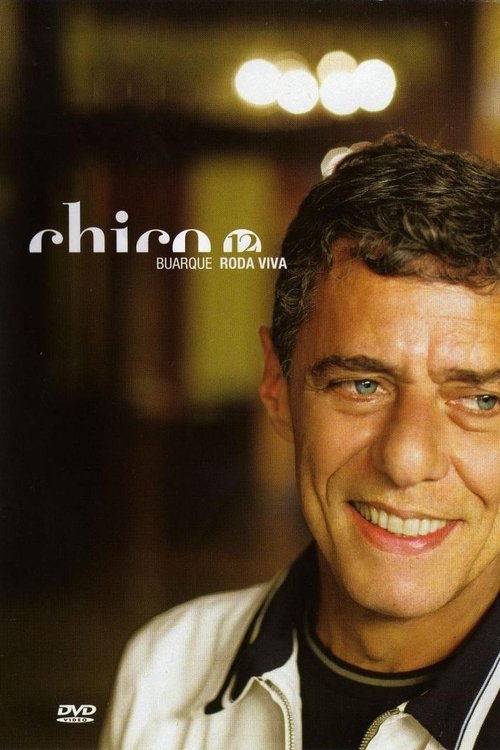
Chico Buarque - Roda Viva
2005
The 60s were very turbulent. Cultural changes, such as the behavioural revolution, political unrest and the cogs of the entertainment industry form the backdrop of this twelfth DVD in the retrospective series on Chico Buarque's work, which focuses on the composer's early career. The images show the live acclaim for A Banda (1966), Disparada (1966), Roda Viva (1967), Alegria, Alegria (1967) and Sabiá (1968). All commented on by Chico himself.
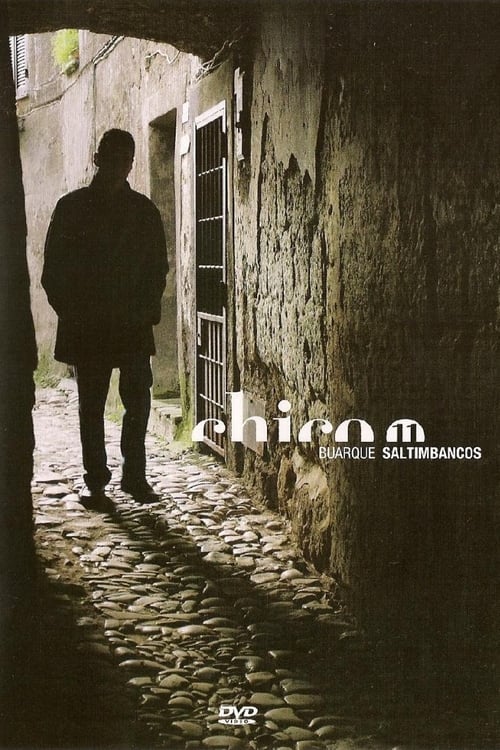
Chico Buarque - Saltimbancos
2005
"Saltimbancos", a box set from the retrospective series on Chico Buarque's work, addresses this composer's relationship with the children's world. The DVD features the soundtrack adapted by Chico from the musical Os Saltimbancos, which is indispensable in any home with children. Discover the creative process of one of Brazil's most important artists!
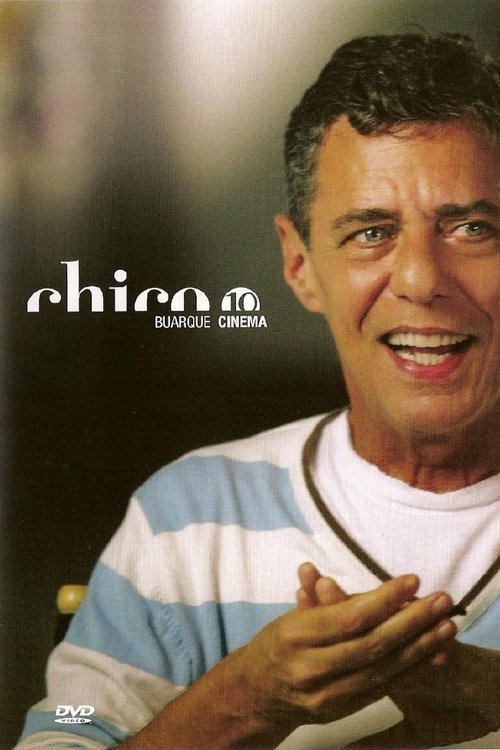
Chico Buarque - Cinema
2005
The unforgettable magic of film songs, forever etched in memory alongside the films, is the theme of this tenth DVD in the series dedicated to the work of composer Chico Buarque. Recorded in the picturesque city of Paraty, the DVD reveals the composer's fascination with cinema and the art of composing for the screen. Chico talks about his appearances in various films and teenage idols, such as Marlon Brando and Jeanne Moreau. And he sings Ela Faz Cinema, composed specially for the series.
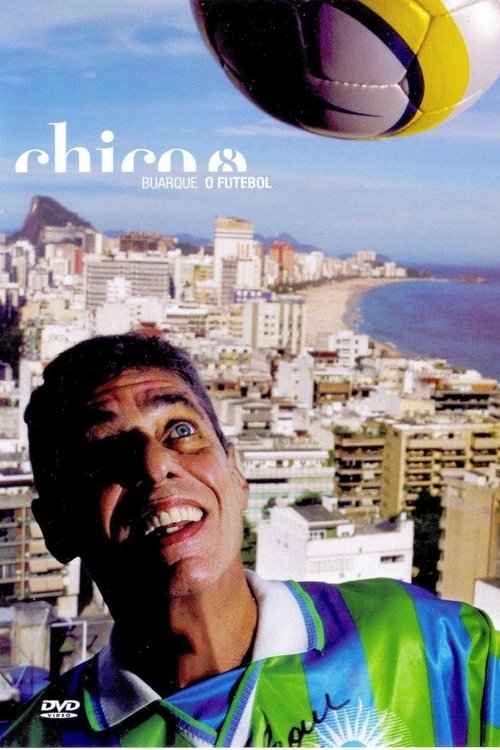
Chico Buarque - O Futebol
2005
Chico Buarque's passion for football is rivalled only by his connection to music, and sometimes it takes precedence. In this eighth DVD from the retrospective series of his work, Chico reminisces, at the Maracanã stadium, about the great stars and moving moments of Brazilian football, such as the defeat to Uruguay in the 1950 World Cup final. At Confeitaria Colombo in Rio, he performs sambas about football, and on the casual football pitch in Barra da Tijuca, he receives visits from idols Pagão and Pelé. The DVD shows the artist playing football in the cities of Santos, Rio, Lisbon, Barcelona, Paris and Budapest and also features a selection of memorable plays and goals from stars like Pelé, Garrincha, Ronaldo and Ronaldinho. It also presents a meeting with Ronaldinho in Barcelona, where the subject, as expected, was music and football.
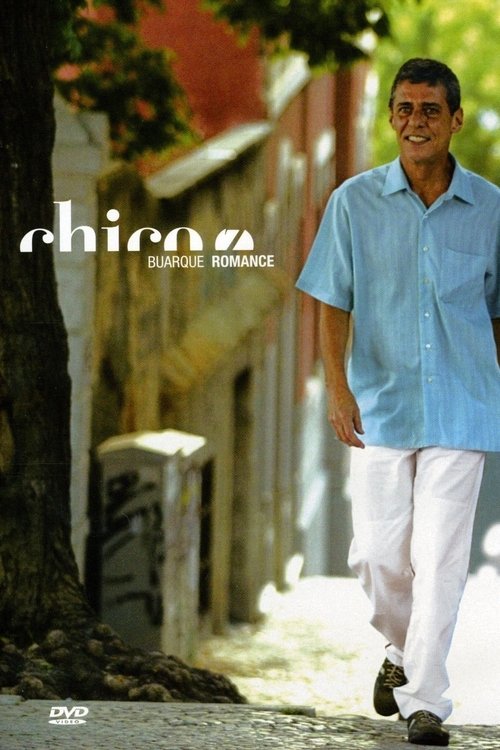
Chico Buarque - Romance
2015
Love songs are very common in Brazilian music and also in the work of Chico Buarque. Recorded in Paris, this seventh DVD in the retrospective series of the composer's work features hits such as 'Eu Te Amo', 'Atrás da Porta', 'Futuros Amantes' and 11 more songs, with appearances by Elis Regina, Daniela Mercury and Edu Lobo. Chico walks through the intimate streets of the French capital and talks about the nature of loving feelings. He confesses his joy at having inspired romances and observes that while our grandparents' generation resorted to poems to seduce, today couples exchange song verses like 'text messages'. He talks about 'piropos', which are verses made to win over the beloved woman, and says that Vinicius was a master of the genre. To illustrate, Chico composed the song 'Outros Sonhos', a beautiful 'piropo', especially for this DVD.
Books
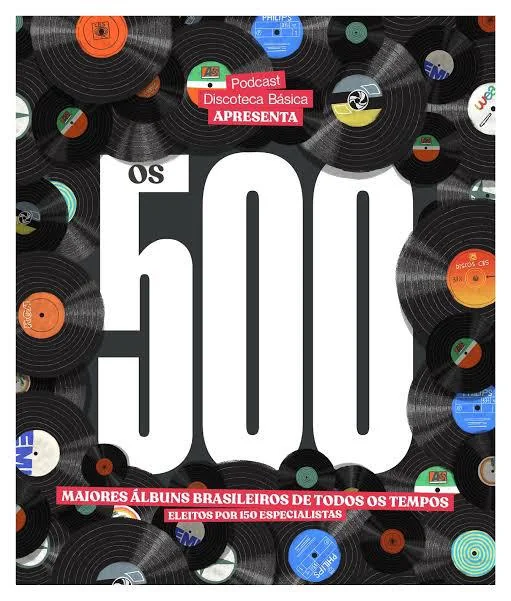
Os 500 Maiores Álbuns Brasileiros de Todos os Tempos
Ricardo Alexandre · 2022
The largest Brazilian music election ever conducted: 162 specialists, spanning journalists, critics, musicians, producers and podcasters, each nominated 50 essential albums, supported by a masterlist of more than 2,000 works. Led by Ricardo Alexandre with tabulation by Sérgio Jomori, it was published in December 2022 as a 200-page hardcover book with graphic design by Fernando Pires.
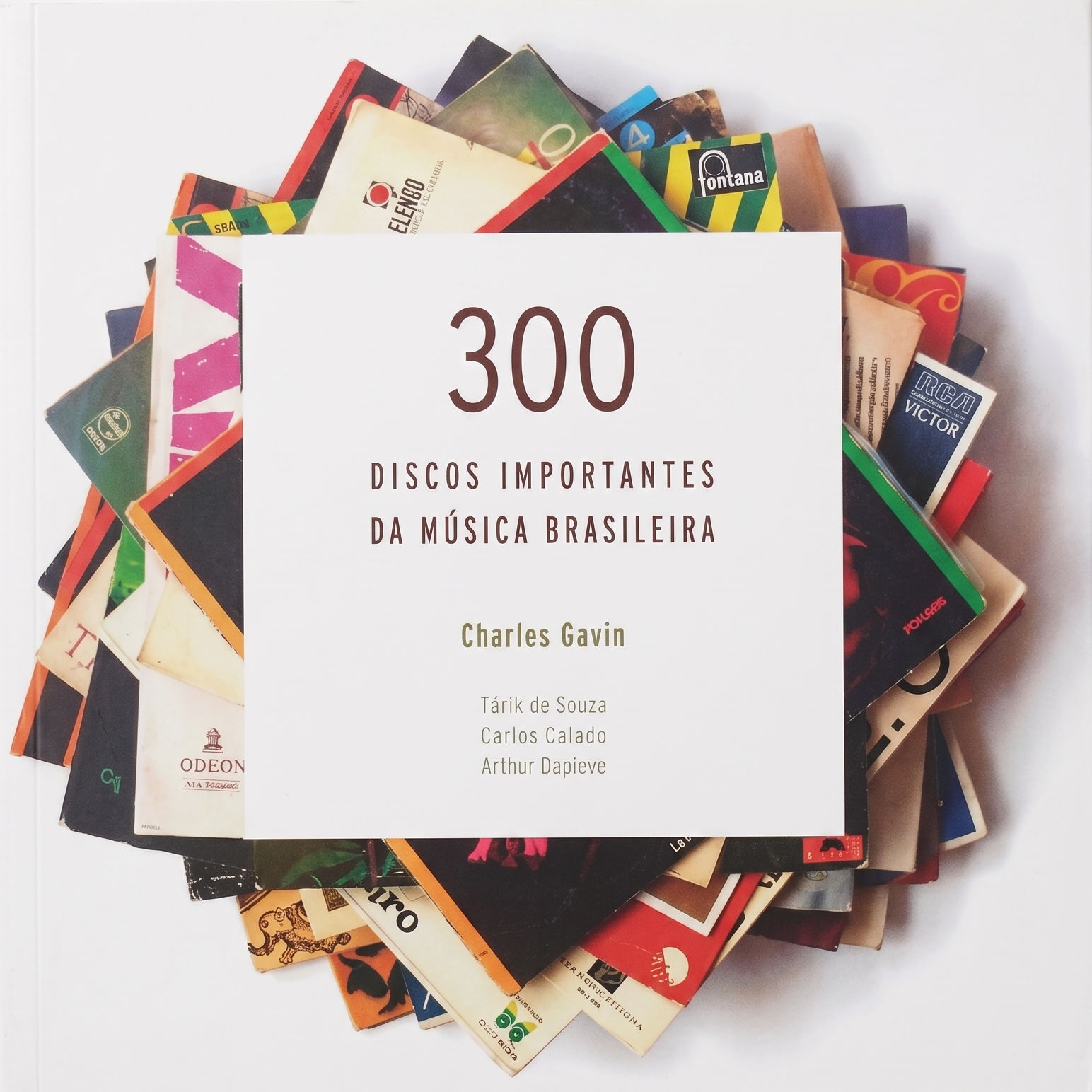
300 Discos Importantes da Música Brasileira
Charles Gavin, Tárik de Souza, Carlos Calado, Arthur Dapieve · 2008
Conceived by Titãs drummer and musical researcher Charles Gavin, the 434-page book brings together covers and reviews of albums released between 1929 and 2007. The texts were written by journalists Tárik de Souza, Arthur Dapieve and Carlos Calado.
A Imagem do Som de Chico Buarque
A Imagem do Som de Chico Buarque
Chico Buarque, Felipe Taborda · 1999
This book, created in collaboration with Chico Buarque himself, explores the visual and conceptual universe of his album covers and discography. It offers insights into the creative process and historical context of his musical production, making it an essential resource for understanding the iconography and narratives behind his work, including significant albums such as 'Meus Caros Amigos'.
Chico Buarque, letra e música
Humberto Werneck · 1989
Considered a definitive work on Chico Buarque, this book by Humberto Werneck offers an in-depth analysis of his vast musical career, focusing on his lyrics and compositions. It covers the entirety of his work, contextualising the albums and songs, and is indispensable for understanding the importance of albums like 'Meus Caros Amigos' in his artistic and political journey.
Analyses
Meus Caros Amigos – Wikipedia
Wikipedia, the free encyclopaedia
Meus Caros Amigos – The 100 Greatest Albums of Brazilian Music
Antônio do Amaral Rocha · Rolling Stone Brasil
There is a certain muffled quality in the way things are said, something that can be described as a 'surdo protesto'.

Musicology: Chico Buarque - Meus Caros Amigos 1976 - Blogger
madshoesmusicology.blogspot.com
Chico Buarque - Meus Caros Amigos 1976 Chico Buarque's tenth LP, released in 1976, in its CD reissue. The album has Milton Nascimento delivering the vocals to the important "O Que Será," later recorded by Nascimento and many other interpreters.
Chico Buarque: Meus Caros Amigos | musicalphabet
musicalphabet.com
On November 24, 1976, "Phillips" label released "Meus Caros Amigos", the 16 th Chico Buarque album. It was recorded in 1976, at "Phonogram Studios" in Rio De Janeiro, and was produced by Sérgio Carvalho.
Album: Meus caros amigos. Artist/Band: Chico Buarque. Year: 1976.
staimusic.com
In this post, we will dive deep into the album Meus caros amigos, exploring the best songs on the album, the most innovative parts, and our overall critical review. The album Meus caros amigos features a unique blend of samba, MPB (Brazilian Popular Music), and bossa nova. It was released in 1976, during a period of political turmoil in Brazil.