Aos Vivos
Chico César
1995
Rankings
Why This Album Matters
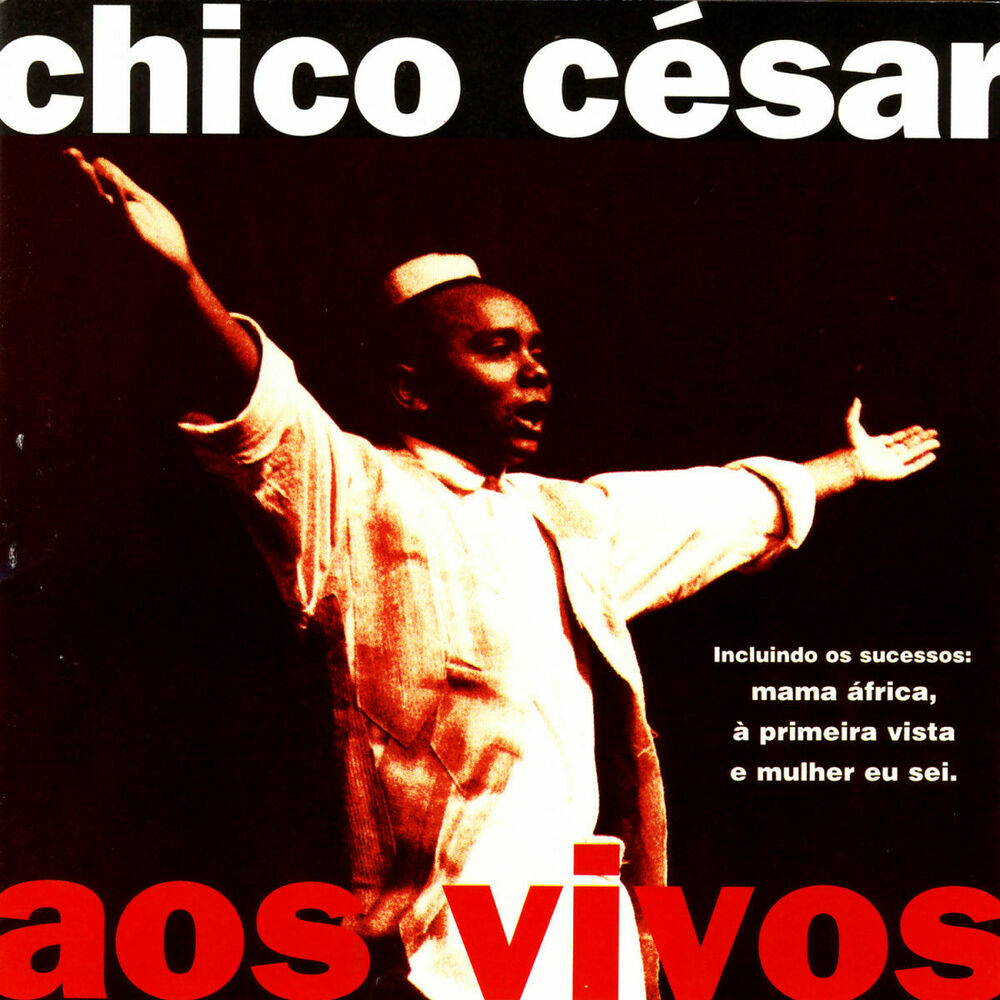
Aos Vivos, the debut album by Paraíba singer-songwriter Chico César, released in 1995, represents a fundamental milestone in 1990s Brazilian popular music. Recorded live, in an intimate voice and guitar format, the work revealed to the general public an artist of unique sensibility and visceral poetry, who had already been building a career in the alternative circuit. Its raw and stripped-back sound, laden with Northeastern influences, but open to urban and universal dialogues, distinguished him in the musical landscape of the time. Considered a harbinger of a new cultural revolution, Aos Vivos brought the Northeast into prominence and influenced a generation of musicians. Chico César, with his concrete poetry and characteristic rhythmic divisions, demonstrated on his debut the ability to move between tradition and modernity, presenting songs that would become timeless classics and define part of his artistic identity.
Context
Before Aos Vivos, Chico César, born in Catolé do Rocha, Paraíba, trod a path that led him from journalism to music. After graduating in journalism in João Pessoa, where he participated in the avant-garde poetry group Jaguaribe Carne, he moved to São Paulo at the age of 21. In the metropolis, he worked as a journalist and proofreader, whilst honing his guitar skills and accumulating compositions, performing in alternative bars and theatres, where his fusion of Northeastern elements with experimental propositions met resistance in more established circuits. In 1991, a successful tour of Germany was the catalyst for Chico César to decide to dedicate himself entirely to music. He then formed the band Cuscuz Clã, which performed at Blen Blen Club, a São Paulo nightclub, consolidating a loyal audience and preparing the ground for his phonographic debut, which would be this live album.
Recording
The recording of Aos Vivos took place in July 1994, over three nights (24, 25 and 26), at Sala Guiomar Novaes, Funarte-SP, in São Paulo. The project was conceived and executed in an atmosphere of simplicity and friendship, being the result of a partnership between Chico César and musician and producer Egídio Conde. Egídio Conde used his mobile studio, the Audiomobile, adapted in a Kombi van, to record the performances. The album's production was credited to Chico César and Egídio Conde, with Carlos Aru Minami and Conde himself as recording engineers. The album featured special appearances by singer-songwriter Lenine, who travelled by bus from Rio de Janeiro, and renowned guitarist Lanny Gordin, who postponed commitments to join the recordings.
Songs
The repertoire of Aos Vivos is a showcase of Chico César's lyrical and melodic inventiveness, featuring 14 tracks that mix original compositions with significant reinterpretations. The album opens with the striking “Beradêro”, a song that harks back to the aboio genre, a tradition of the sertão cowboys. Following this, two of his greatest successes, “Mama África” and “À Primeira Vista”, appear, presented in spontaneous versions imbued with captivating intimacy. Other original songs such as “Saharienne”, “Mulher Eu Sei” and “Clandestino” stand out, revealing the artist's poetic depth. The album also includes notable interpretations, such as “Paraíba”, by Luiz Gonzaga and Humberto Teixeira, and “Alma Não Tem Cor”, by André Abujamra. The creation of “À Primeira Vista”, for instance, took place on a bus in São Paulo, and its vocal improvisations were inspired by João Bosco, evidencing the richness of Chico César's references.
Legacy
Aos Vivos catapulted Chico César from the São Paulo cult and underground circuit to national and international recognition, establishing him as one of the most relevant voices in MPB. The album, despite being a debut work, generated songs that became instant classics. “Mama África” achieved enormous success, winning the Best MPB Music Video award at the 1997 MTV Video Music Brasil (VMB), a notable achievement for MTV Brasil. “À Primeira Vista” gained even greater prominence when it was re-recorded by Daniela Mercury and included in the soundtrack of TV Globo's soap opera “O Rei do Gado” in 1996, solidifying its popularity. Over the years, Aos Vivos has been celebrated as a landmark and a masterpiece of Brazilian music, being re-released in special editions, including vinyl, highlighting its lasting influence and the impact it had on Chico César's career and on Brazilian music as a whole, inspiring generations.
Tracks
Credits
Elaine Marin
Esther Rodrigues
Egídio Conde
Chico César
Adriana Metran, Diana Leão
Samuel Vital
Otavio Mourelo
Siomara Thomaz
Carlos "Arú" Miname
Egídio Conde
Julian Conde, Luís Leme
Luciano Pessoa, Luciano Pessoa, Siomara Thomaz
Mara Rúbia, Mara Rúbia
Podcasts

Transe Hub Podcast · Transehub
Aos Vivos, Chico César, com curadoria de Beta Vieira
PodCália · Gigola
“Na verdade, eu não tinha que vestir as músicas, eu tinha que despir as músicas. Era pensar como aquelas músicas funcionariam voz e violão, como eu ia ter o ritmo percutido, os contrapontos, as linhas de baixos e resolver ao vivo” Foi com essa linha de pensamento, que “Aos Vivos” o primeiro álbum de Chico César foi gravado em 1994 em São Paulo na Sala Guiomar Novaes.Lançado em 1995, o disco mist
Books
Analyses
Aos Vivos – Wikipedia
Wikipedia, the free encyclopaedia
Revisitando Meus Clássicos: Chico César - Aos Vivos (1995)
monkeybuzz.com.br
I made a live album – I recorded it during the '94 World Cup, a little before that – because I didn't have the money to make a studio album. Studio time back then was very expensive, and home studios were still just starting, it was something very incipient.

Aos vivos - Chico César | A música no Brasil em 1995 | Especial Copa do ...
notonlyrockandroll.wordpress.com
This album features undeniable hits like "Mama África" and "À primeira vista", as well as "Templo" and "Beradêro", which attest to a strong influence from Caetano Veloso, touches of Gilberto Gil and Raul Seixas – and an undeniable avant-garde feeling.
Chico César tem primeiro álbum, 'Aos vivos', reeditado em LP
g1.globo.com
The show was recorded and gave rise to Chico César's first album, Aos vivos, released in 1995 by the Velas record label.
Chico César, aos vivos - Canal EPraxe
e-praxe.com.br
30 years ago, I spent a good period almost daily listening to Chico César's album, Aos vivos. The CD produced such a realistic sound that when I closed my eyes, it felt like Chico César was in the same room as me, playing a guitar with astonishing speed, such was the quality of that technology at the time.