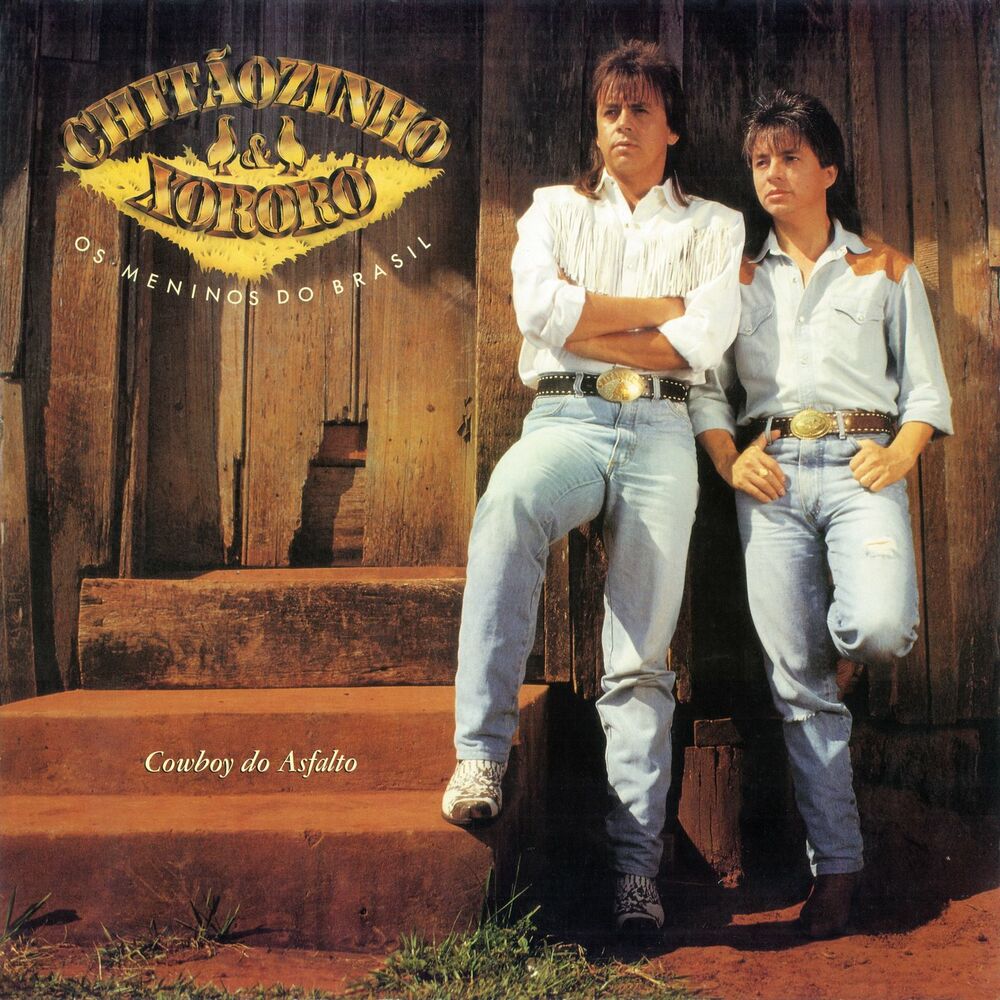
Cowboy do Asfalto
Chitãozinho & Xororó
1990
Rankings
Why This Album Matters
Cowboy do Asfalto, released in 1990, represents a fundamental landmark in Chitãozinho & Xororó's discography and in the Brazilian sertaneja music scene of the time. This fifteenth studio album consolidated the sound the duo had been exploring, an assertive fusion of traditional sertanejo with elements of pop and romantic ballads, targeting an increasingly urban audience. The work is emblematic for its ambition to transcend the rural boundaries of the genre, seeking a more polished and accessible musical aesthetic. Despite receiving mixed reviews, Cowboy do Asfalto became an undeniable commercial phenomenon, driven by songs that quickly became popular anthems. The album demonstrated the duo's ability to create captivating melodies and emotional lyrics that resonated deeply with the Brazilian public, characterised by the striking presence of the 'mariachi vocal tremolo' which was already a Chitãozinho & Xororó signature, but now applied to more elaborate and contemporary arrangements.
Context
In the late 1980s and early 1990s, sertaneja music was undergoing one of its biggest transformations, expanding its reach from a regional niche to become a national phenomenon. Chitãozinho & Xororó were already prominent figures in this movement, having paved the way for what would become known as 'sertanejo romântico'. They were pioneers in incorporating electric guitars, drums, and synthesizers, modernising the sound and attracting a new generation of listeners in the big cities. The release of Cowboy do Asfalto occurred during a period of economic and cultural effervescence in Brazil, shortly after the Plano Collor, with popular music seeking new directions. The duo had already established a solid fanbase and a reputation as innovators within the genre, becoming synonymous with success and quality. The album arrived as a high point in this trajectory of sertanejo's ascent and reinvention.
Songs
The repertoire of Cowboy do Asfalto is one of the pillars of its success, notable for a selection of songs that became instant classics. "Evidências" is, without a doubt, the jewel in the crown, a ballad that transcended the sertanejo genre and etched itself into the popular Brazilian imagination as one of the most iconic love songs ever written. Its engaging melody and universal lyrics about unwavering love ensured it a perennial place at parties, karaoke bars, and on radios throughout the country. In addition to "Evidências", the album treated the public to other notable hits, such as the title track "Cowboy do Asfalto", which reinforced the duo's identity of moving between the rural and the urban, and "É Assim Que Te Amo", another romantic ballad that followed the successful formula of a catchy melody and emotive performance. The album also included a re-recording of "Nuvem de Lágrimas", which had already been successful in 1989 sung by Fafá de Belém with the duo's participation, now presented in an exclusive version with Chitãozinho & Xororó's vocals, further solidifying its popularity.
Legacy
The impact of Cowboy do Asfalto was tremendous in the Brazilian music scene. The album not only received a platinum disc from Pro-Música Brasil for over two hundred and fifty thousand CDs ordered, but its total sales, including LPs, are estimated at up to one million copies, an impressive commercial feat for the time. Sales success was immediate, with the album leaving the factory with one million copies already ordered and reaching second place on the best-sellers charts in early 1991. Despite its immense popular and commercial success, specialist critics of the time were not always favourable. Critic Tárik de Souza, for example, gave the album only one star, describing it as the 'chaff' of sertaneja music and criticising its ambition to be 'urban-aspiring sertanejo', filled with 'pop/romantic ballads' which, according to him, retained from sertanejo 'only the duo's mariachi vocal tremolo'. He pointed out that the duo followed 'the schooled path of King Roberto Carlos' and that, even with international influences, the recurring theme was 'sadness and abandonment'. However, this negative perception did not prevent the album from becoming a classic, with songs like "Evidências" transcending generations and being recognised as one of the greatest successes in Brazilian music of all time, cementing Chitãozinho & Xororó's legacy as innovators and eternal icons of sertanejo.
Tracks
Credits
Mayrton Bahia
Eduardo Lages
Julinho Teixeira
José Homero Bettio, Paulo Debétio
Julinho Teixeira
Maria Helena
Luiz Paulo
Arthur Fróes
Ayssa Bastos, Vanessa Stepanenko
José Luiz Pederneiras
Videos
REVIEW - LP: Chitãozinho & Xororó - Cowboy do Asfalto - 1990 + COMPARAÇÃO COM OUTRO DISCO DA PHILIPS
Georg e suas mídias
Books

Os 500 Maiores Álbuns Brasileiros de Todos os Tempos
Ricardo Alexandre · 2022
The largest Brazilian music election ever conducted: 162 specialists, spanning journalists, critics, musicians, producers and podcasters, each nominated 50 essential albums, supported by a masterlist of more than 2,000 works. Led by Ricardo Alexandre with tabulation by Sérgio Jomori, it was published in December 2022 as a 200-page hardcover book with graphic design by Fernando Pires.
Cowboys do asfalto
Gustavo Alonso · 2015
A controversial book about the rise of sertaneja music and Brazilian modernisation. 'Cowboys do asfalto' is the first book to include sertanejo and sertanejo universitário in the lineage of caipira music, exploring the stories and controversies that shaped this genre and its relationship with Brazilian culture.
Analyses
Cowboy do Asfalto – Wikipedia
Wikipedia, the free encyclopaedia
Cliquemusic : Disco : COWBOY DO ASFALTO
cliquemusic.com.br
Chitãozinho & Xororó (1990) 1990 Polygram 848.189-2 Tracks 1 Evidência (Paulo Sergio Valle, José Augusto) 2 Natureza (Espelho de Deus) (Paulo Debétio, Paulinho Rezende) 3 É assim que te amo (The air that I breathe) (Hazlewood, Hammond) 4 Tô deixando você (Chico Roque, Carlos Colla) 5 Bom dia (Mário Marcos)
Cowboy Do Asfalto - Chitãozinho e Xororó - Som Bom
sombom.com.br
Cowboy Do Asfalto by Chitãozinho e Xororó lyrics, composers, videos and songs such as: Evidências, Natureza, É Assim Que Te Amo, Tô Deixando Você, Bom Dia
Tudo Sobre A Música Cowboy do Asfalto - Chitãozinho & Xororó
canalparadahits.com
The recording process for "Cowboy do Asfalto" was not very complicated, but required careful work in fusing the styles. The production aimed to bring the joyful and contagious rhythm of sertanejo, with elements that appeal to an urban atmosphere, as the protagonist lives on the road.
"Cowboy do Asfalto", o álbum que mudou a sonoridade e a história da ...
blogmusicaboa.com
It was also he who turned an album massacred by critics into an absolute classic of sertaneja music, just as he has done so many other times with works from other musical genres. "Cowboy do Asfalto" is the 15th studio album by Chitãozinho & Xororó.