Sobre Todas as Forças
Cidade Negra
1994
Rankings
Why This Album Matters
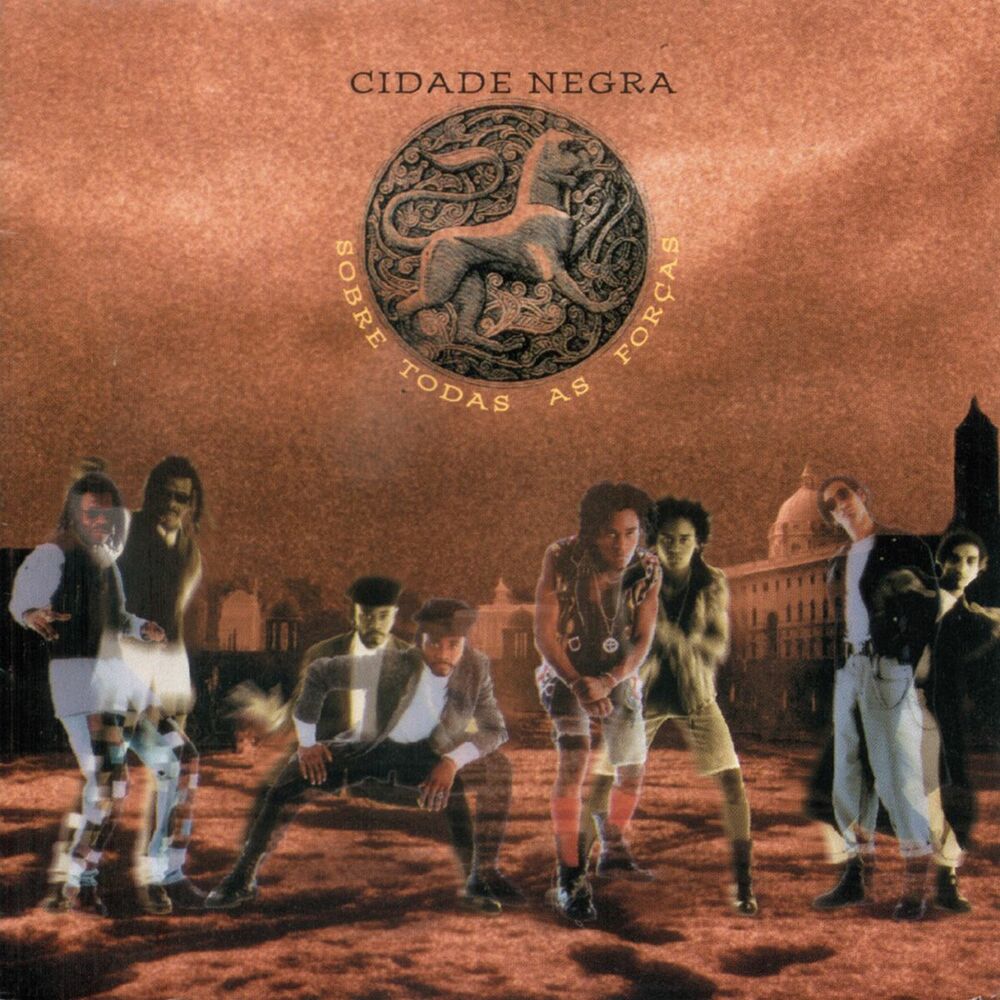
Sobre Todas as Forças, released in 1994, represents a milestone in Cidade Negra's discography and in the history of Brazilian reggae. This third studio album cemented the band's place on the music scene and marked the debut of the charismatic Toni Garrido as vocalist, bringing a new dynamic and voice to the group. The album is notable for being one of the main drivers in bringing reggae to a broader audience in Brazil, at a time when the Jamaican rhythm did not yet enjoy the widespread popularity it would later achieve. Its sound blends reggae's energy with soul and rock influences, creating an accessible and infectious style that captivated listeners from diverse musical backgrounds.
Context
Toni Garrido's arrival on vocals in 1994 was a crucial moment for Cidade Negra. Before him, the band featured Ras Bernardo, and the group had already released two albums, "Lute para Viver" (1991) and "Negro no Poder" (1992). The first achieved some success with the track "Falar a Verdade", while the second did not achieve the same commercial success. The replacement of Ras Bernardo by Toni Garrido, who came from Banda Bel, brought a more pop sensibility to the band's sound, contributing to the expansion of their fanbase and popularity. In the 90s, reggae, although present in Brazil with artists such as Gilberto Gil and Paralamas do Sucesso, who had already incorporated the rhythm into their works, still lacked a genuinely genre-focused band consistently reaching the mainstream. Sobre Todas as Forças emerged in this context, filling that gap and paving the way for greater acceptance of national reggae.
Recording
The production of Sobre Todas as Forças was handled by Liminha, an iconic figure in Brazilian music, who also contributed sampler, guitar, keyboards, drum programming, and bass keys on various tracks. The recording took place at Estúdio Nas Nuvens, with Liminha also responsible for recording and mixing, alongside other engineers such as Enrico de Paoli, Guilherme Callichio, and Vitor Farias. In addition to the core band members (Toni Garrido on vocals, Bino Farias on bass, Da Gama on guitar, and Lazão on drums), the album featured a range of guest musicians who enriched its sound. Among them, notable contributions came from Ricardo Barreto on guitar, Alex Meirelles and Enrico de Paoli on keyboards, and Marcos Suzano on percussion. The collaboration with Liminha was crucial for refining the band's sound and adapting it for greater commercial acceptance, without losing the essence of reggae.
Songs
The repertoire of Sobre Todas as Forças is rich in songs that became major hits and defined Cidade Negra's sound. Highlights include "Doutor", which alludes to unequal forms of treatment in Brazil, "Pensamento", a song that encourages reflection on a better world, and "A Sombra da Maldade". The track "Onde Você Mora?" became one of the biggest hits on the album and in the band's career, with a curious composition story. Commissioned by Liminha from Nando Reis, the song took shape after Marisa Monte suggested that Nando combine two distinct musical ideas he had presented. Initially, the track did not make a big impact on the band, but producer Liminha recognised its potential upon hearing his daughter humming the melody, sensing its beauty and ability to captivate the public. The album also features special appearances by Gabriel o Pensador on "Mucama" and Shabba Ranks, in addition to the cover version of "Querem Meu Sangue" (The Harder They Come) by Jimmy Cliff.
Legacy
Sobre Todas as Forças was a resounding public success, selling over 800,000 copies and cementing Cidade Negra as one of Brazil's leading bands. The album not only landed multiple hits on radio and MTV, such as "Doutor", "Pensamento", and "Onde Você Mora?", but was also crucial in popularising reggae on the Brazilian music scene, opening doors for the genre in the mainstream. The album's impact was so significant that it continues to be celebrated years later, recognised as one of the essential albums of the 90s in Brazilian music. Its influence extended beyond sales, altering the perception of reggae in the country and setting a standard for the sound that would come to dominate charts and soap opera soundtracks, cementing Cidade Negra's legacy as icons of the genre in Brazil.
Tracks
Credits
Liminha
Adelaide de Souza
Jaqueline Sperandio
Liminha, Vitor Farias
Enrico De Paoli, Guilherme Calicchio, Liminha, Renato Muñoz, Vitor Farias
Everaldo Andrade, Marcio Thees, Renato Muñoz
Paulo Henrique Lima
Jorge Davidson
Claudio Campos, Eli Sumida, Richard Kovacs
Carlos Nunes
Ronaldo Viana
Videos
"Sobre todas as forças" - Cidade Negra | Melhores discos brasileiros dos anos 90 | Alta Fidelidade
Alta Fidelidade
Books

Analyses
Sobre Todas as Forças – Wikipedia
Wikipedia, the free encyclopaedia

"Sobre Todas As Forças" (Epic, 1994), Cidade Negra
discosessenciais.blogspot.com
With the new vocalist, Cidade Negra released their third album, Sobre Todas As Forças, in mid-1994, now under the production of Liminha. The band was looking to reverse the poor performance of the previous album and save their future with the record label.

"Sobre Todas As Forças"(Epic, 1994), Cidade Negra
tabernanovostempos.blogspot.com
With the new vocalist, Cidade Negra released their third album, Sobre Todas As Forças, in mid-1994, now under the production of Liminha. The band was looking to reverse the poor performance of the previous album and save their future with the record label.
