Brasil Mestiço
Clara Nunes
1980

Rankings
Why This Album Matters
Brasil Mestiço, Clara Nunes' fourteenth studio album, released in August 1980, marks a significant point in the singer's career by consolidating a visual style and musical conception more deeply rooted in Afro-Brazilian culture. This work reflects a phase of artistic maturity, where Brazil's mixed-race identity is celebrated and explored with authenticity. The album stands out for its carefully elaborated aesthetic, which is evident in both the sound and Clara Nunes' image, reflecting her connection to African roots and the country's cultural richness. The visual proposal, which included a new Afro-Brazilian hairstyle suggested by her makeup artist, Guilherme Pereira, served as the basis for the album's concept. This artistic direction was further deepened after Clara's trip to Angola, which immersed the artist in a rich cultural experience. Brasil Mestiço is, therefore, a testament to Clara Nunes' ability to translate into art the multiple influences that form Brazilian identity.
Context
Before the recording of Brasil Mestiço, Clara Nunes had already adopted a new visual style that would be crucial for the album's conception. In May 1980, she participated in a show honouring Labour Day at Riocentro, at the invitation of Chico Buarque and Fernando Faro, an event that preceded her trip to Angola. This trip was an invitation from Chico Buarque for a series of performances at Projecto Kalunga, with the aim of raising funds for the construction of a hospital in Angola, which strengthened the bonds of friendship between the two artists. The relationship with Chico Buarque, which already existed due to the friendship between him and Paulo César Pinheiro, Clara's husband, deepened during this experience. This experience in Angola was fundamental in solidifying the Afro-Brazilian concept that permeates the album, directly influencing the artistic direction and thematic choices of the record.
Recording
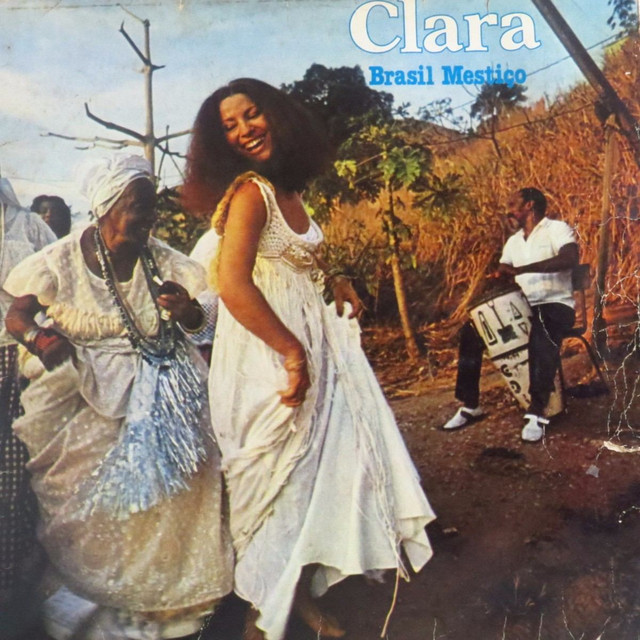
The recording of Brasil Mestiço began in July 1980, shortly after Clara Nunes' return from her significant trip to Angola. Although the repertoire was already largely defined, the singer requested a song from Chico Buarque that he had promised during the trip, resulting in "Morena de Angola", the album's opening track and one of her great successes. The album's visual elaboration was also meticulously planned to align with its concept. The cover was photographed by Wilton Montenegro on Morro da Serrinha, where Clara Nunes appears dancing jongo alongside the ialorixá Vovó Maria Joana and Mestre Darcy do Jongo, reinforcing the immersion in Afro-Brazilian culture and popular traditions.
Songs
Brasil Mestiço's repertoire features a carefully curated selection of compositions, which perfectly aligns with the proposal to celebrate Brazilian musical diversity. "Morena de Angola", composed by Chico Buarque and one of Clara Nunes' greatest hits, opens the album, while "Sem Companhia" was chosen for the soundtrack of the Rede Globo soap opera Coração Alado, ensuring widespread repercussions. Besides these, other tracks gained prominence on radio stations and visual media, with "Morena de Angola" and "Viola de Penedo" being converted into music videos for the programme Fantástico. The album explores various samba genres, including two sambas by Candeia, three by Mauro Duarte (two in partnership with Paulo César Pinheiro and one with Elton Medeiros), one by Nelson Cavaquinho and Wilson Canegal, a partido-alto by Alberto Lonato, Josias and Maceió do Cavaco, and a samba de quadra by Paraíso do Tuiuti, by Noca and Natal da Portela, demonstrating the richness and breadth of the musical selection.
Legacy
Brasil Mestiço achieved tremendous success, selling over 500,000 copies and securing Clara Nunes her seventh gold record of her career, a remarkable feat for the time. The album's impact was not limited to sales, also being recognised with the Troféu Roquette Pinto for personality of the year in music, further solidifying Clara's position as one of Brazil's great artists. The album's success culminated in the solo show "Clara Mestiça", which premiered in January 1981, directed by Bibi Ferreira with a script by Paulo César Pinheiro and Maurício Tapajós. Set in a stage design by Elifas Andreato, the show explored Brazilian popular music in its various forms, from the chants of the Craós indigenous people to samba-enredo, samba-canção, baião and coco-de-roda. "Clara Mestiça" was a huge success with both audiences and critics, remaining on stage for seven months at the Teatro Clara Nunes, in Rio de Janeiro, and for two months at the Canecão-Anhembi, in São Paulo, confirming the strength and relevance of the concept launched by the album.
Tracks
Credits
Geraldo Vespar, Lindolfo Gaya, Sivuca
Lindolfo Gaya
Paulo César Pinheiro
Renato Corrêa
Hélio Delmiro, Zé Menezes
Luizão Maia
Alceu Maia
Wilson das Neves
Jayme Araújo
Gordinho
Osmar Furtado
Nivaldo Duarte
Guilherme Reis, Roberto Castro, Sérgio Bittencourt
J.C.M., Tadeu Valério
Wilton Montenegro
Podcasts
365 LPs · Paulo Henrique de Moura
“Cantar é o único alento do trabalhador”. E é com esse canto doce de Clara Nunes que no episódio de hoje eu vou falar sobre Brasil Mestiço, álbum lançado pela cantora em 1980 pela EMI.Em julho de 1980, Clara começou a gravar Brasil Mestiço. Apesar do repertório estar fechado, ela ligou para Chico Buarque - com quem fez turnê ao lado de outros sambistas no continente africano para o projeto Kalunga
Films

Books
Um rio de música e adeus - Nos funerais midiáticos de Carmen Miranda e Clara Nunes (Rio de Janeiro, 1955 – 1983)
Maria de Fátima Rocha da Fonseca · 2025
The book is the result of master's research that addresses the media funerals of Carmen Miranda and Clara Nunes, analysing the public image and legacy of both artists in Rio de Janeiro between 1955 and 1983. As it covers the period when the album 'Brasil Mestiço' was released (1980) and is an in-depth study of Clara Nunes, it is highly relevant for understanding the context and reception of her work.
Os 500 Maiores Álbuns Brasileiros de Todos os Tempos
Ricardo Alexandre · 2022
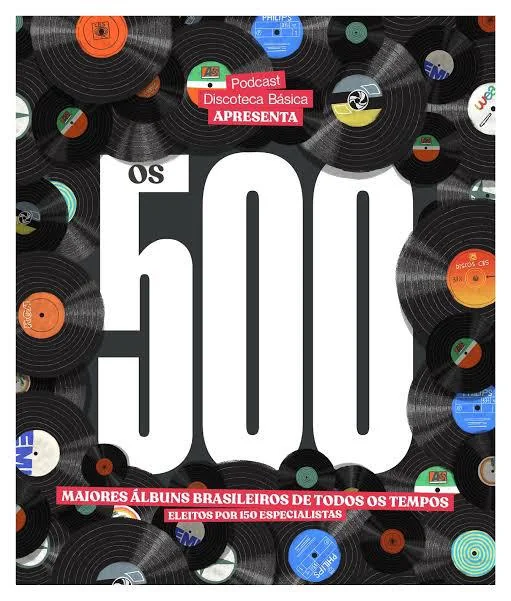
The largest Brazilian music election ever conducted: 162 specialists, spanning journalists, critics, musicians, producers and podcasters, each nominated 50 essential albums, supported by a masterlist of more than 2,000 works. Led by Ricardo Alexandre with tabulation by Sérgio Jomori, it was published in December 2022 as a 200-page hardcover book with graphic design by Fernando Pires.
Analyses
Brasil Mestiço – Wikipedia
Wikipedia, the free encyclopaedia

"Brasil Mestiço" (EMI-Odeon, 1980), Clara Nunes
discosessenciais.blogspot.com
Released on 18 August 1980, Brasil Mestiço features a diverse repertoire in which Clara, although renowned as a great samba singer, proves herself to be a versatile artist.
Brasil Mestiço: 45 anos do álbum que marcou carreira de Clara Nunes
bahia.ba
One of the essential albums for Brazilian samba, Clara Nunes's Brasil Mestiço (1942-1983), marks its 45th anniversary this Monday (18). The interpreter's fourteenth studio album was released in 1980 by EMI-Odeon, produced by Paulo César Pinheiro (with Renato Corrêa), and reflects the profound...
Especial 30 anos Clara Nunes | Brasil Mestiço (1980) - Na Mira do ...
namiradogroove.com.br
It was here that Clara Nunes best captured the difficult portrait of being Brazilian at a time when the dictatorship's repression was beginning to fade – and inflation, to rise. This is where the importance of composer Paulo César Pinheiro on the album comes in.
A força do Brasil mestiço no canto de Clara Nunes - Zona Curva
zonacurva.com.br
In an article in Jornal do Brasil, Aluízio Palmar himself was surprised upon seeing the information: 'Clara Nunes was never part of that political circle. I was surprised, but one cannot say it is a fabrication. It is clearly an official document'.