Clementina de Jesus
Clementina de Jesus
1966

Rankings
Why This Album Matters
Clementina de Jesus's self-titled debut album, released in 1966, is a fundamental landmark in Brazilian music, introducing to the wider public one of the most authentic and visceral voices of samba and Afro-Brazilian culture. At 63 years old, Clementina, affectionately known as "Rainha Quelé" and "Mom", emerged as a living guardian of ancestral rhythms and chants, translating for modernity the power of partido-alto, jongo, and work and religious songs with a moving honesty. This recording work not only launched the solo career of a singular artist, but also rescued and immortalised forms of musical expression that were at risk of being lost. Her husky and powerful voice, laden with history and emotion, became a link between Brazil's enslaved past and its present, synthesising the Afro-Brazilian identity and the genesis of urban Carioca samba.
Context
Clementina de Jesus da Silva was born in 1901 in Valença, Rio de Janeiro, and moved to the capital as a child. For over two decades, she worked as a domestic helper, living the typical life of the Carioca suburbs, the cradle of samba. Her connection to samba was long-standing, having frequented the samba circles of the Oswaldo Cruz neighbourhood and paraded in schools such as Portela and Mangueira. Her life changed in 1963, when she was "discovered" by the composer and producer Hermínio Bello de Carvalho, who invited her to participate in the show "Rosa de Ouro". The success of the performance propelled her professional career and led her to record her first solo album with Odeon in 1966, already at the age of 63.
Recording
The album Clementina de Jesus was released by the Odeon record label in 1966. The album's production featured the assistance of Hermínio Bello de Carvalho, a crucial figure in her discovery and the start of her artistic journey. Jorge Teixeira da Rocha was the recording engineer, while Z. J. Merky served as technical director. The LP cover contained notes written by Hermínio Bello de Carvalho himself.
Songs
The album's repertoire is a rich tapestry of Afro-Brazilian rhythms, including partido-alto, jongo and root sambas. Tracks such as "Piedade", "Cangoma Me Chamou", "Barracão É Seu", "Tava Dormindo" and "Orgulho, Hipocrisia (Quem Espera Sempre Alcança)" highlight the depth and authenticity of her interpretation. Songs like "Tute de Madame" and "Vinde, Vinde Companheiros" also feature on the work. The lyrics, many from oral tradition or from samba masters, are everyday anecdotes and expressions of faith and resistance, sung with the unique quality of her voice which became her trademark.
Legacy
Despite a late professional career, Clementina de Jesus became one of Brazil's most popular singers, recognised for her contribution to carnival music and her identification with the common people. The album Clementina de Jesus was the first of a solo discography that would extend to four LPs, in addition to various collaborations with big names in MPB. Her authenticity and the purity of her samba made her a sought-after figure for artists like Pixinguinha and João da Bahiana, who were eager to connect with her direct link to the roots of samba. She was celebrated by Elton Medeiros with the song "Clementina, Cadê Você?" and by Clara Nunes with "PCJ, Partido Clementina de Jesus", written by Candeia, both tributes that demonstrate the impact of her art. In 1983, she received tributes from various artists, including Paulinho da Viola, João Nogueira and Elizeth Cardoso, in a show at the Theatro Municipal do Rio de Janeiro.
Tracks
Credits
Nelson Martins Dos Santos
Hermínio Bello De Carvalho
Z. J. Merky
Jorge Teixeira Da Rocha
Reny R. Lippi
Hermínio Bello De Carvalho
Films

Books
Mulheres pretas da cultura Elza Soares, Clementina de Jesus e Dona Ivone Lara
Coletivo Narrativas Negras · 2022
Produced by Coletivo Narrativas Negras, this book explores the stories of Black Brazilian women who served as inspiration and transformed culture, focusing on figures such as Clementina de Jesus, Elza Soares and Dona Ivone Lara. It is a relevant cultural and biographical study that offers an in-depth analysis of Clementina de Jesus's trajectory, impact and representativeness in the musical and social scene, which is crucial for understanding the context of her 1966 album.
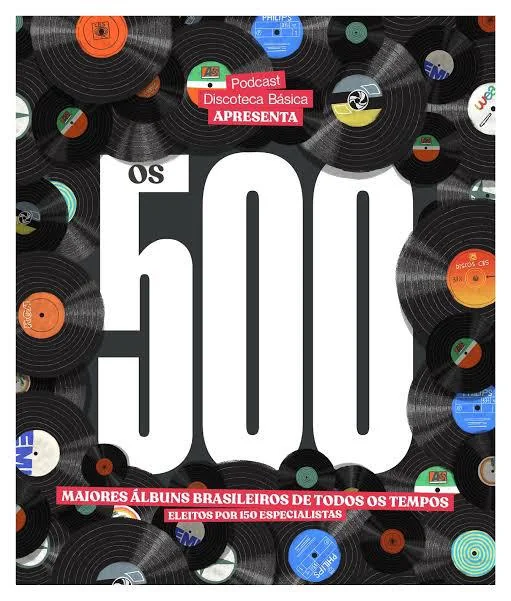
Os 500 Maiores Álbuns Brasileiros de Todos os Tempos
Ricardo Alexandre · 2022
The largest Brazilian music election ever conducted: 162 specialists, spanning journalists, critics, musicians, producers and podcasters, each nominated 50 essential albums, supported by a masterlist of more than 2,000 works. Led by Ricardo Alexandre with tabulation by Sérgio Jomori, it was published in December 2022 as a 200-page hardcover book with graphic design by Fernando Pires.
Rosa de ouro, Aracy Côrtes e Clementina de Jesus
Charles Gavin, Hermínio Bello de Carvalho, Elton Medeiros, Paulinho da Viola, Nelson Sargento · 2017
This book addresses the collective project 'Rosa de Ouro', a theatrical show that brought the informality of Rio de Janeiro's samba circles to the stage. It featured the participation of Brazilian music luminaries such as Clementina de Jesus, Aracy Côrtes, Elton Medeiros, Paulinho da Viola and Nelson Sargento. It is a fundamental work for understanding the artistic context and Clementina de Jesus's contribution at one of the most important moments of her career, contemporaneous with the release of her 1966 album.
Analyses
.jpg)
File:Clementina de Jesus (1966).jpg - Wikimedia Commons
commons.wikimedia.org
The Arquivo Nacional (in English: The Brazilian National Archives) is an institution of the Brazilian Ministry of Justice and Public Security responsible for the management and preservation of documents pertaining to the federal public administration and located in the city of Rio de Janeiro.
Discos para descobrir em casa - 'Clementina de Jesus ... - G1
g1.globo.com
Recorded under the musical direction of Nelson Martins dos Santos (1927 - 1996), Maestro Nelsinho, the album Clementina de Jesus took shape in the studio with some of Brazil's best musicians.
Discos para descobrir em casa - 'Clementina de Jesus', Clementina de ...
tvkweb.com.br
Undeterred by this luxurious accompaniment, Clementina de Jesus proved herself the mistress of the terreiro on the album's ten tracks. The album Clementina de Jesus opened with Piedade, a partido alto of unknown authorship.
PDF Negritude, tempo e política no LP Clementina de Jesus (1966)
anppom.org.br
This text analyses the first LP of Clementina de Jesus, released in 1966, and highlights some meanings of this LP and its place in the popular music field of the 1960s.
Cliquemusic : Disco : CLEMENTINA DE JESUS
cliquemusic.com.br
Clementina de Jesus (1966) 1966 Odeon MOFB 3463 Tracks 1 Piedade (Folklore) 2 Cangoma me chamou (Folklore) 3 Barracão é seu (Folklore) 4 Tava dormindo (Folklore) 5 Orgulho, hipocrisia (Paulo da Portela) 6 Coleção de passarinhos (Paulo da Portela) 7 Graças pardas (Zé da Zilda, Cartola) 8 Esta melodia (Bubu, Jamelão) 9 Tute de madame ...