O Canto dos Escravos
Clementina de Jesus, Geraldo Filme, Tia Doca
1982

Rankings
Why This Album Matters
The album O Canto dos Escravos, released in 1982, is an anthological work of inestimable value for Brazilian music, marking one of the most important and courageous recordings in national phonography. Its uniqueness lies in the audacious proposal to bring to the contemporary music scene the vissungos, ancestral chants sung by enslaved Black people in the gold mines of Minas Gerais in the 17th and 18th centuries. This was the first sonic documentation of music from the period of slavery in Brazil, conferring upon the album a pioneering and essential status in the preservation of Afro-Brazilian memory and culture. The project's richness lies not only in its documentary nature, but in the profound artistic sensibility with which Clementina de Jesus, Geraldo Filme, and Tia Doca da Portela, true Black majesties of Brazilian music, interpreted these chants. The repertoire is a powerful echo of the Bantu heritage, blending languages such as Umbundu, Kimbundu, and archaic Portuguese, and offering a musical aesthetic rooted in Central African culture. The album transcends the barrier of mere historical record, transforming into a beautiful artistic work dedicated to the preservation of the cultural traditions of enslaved Black people in Brazil, with a sonic and rhythmic ancestry impossible to ignore.
Context
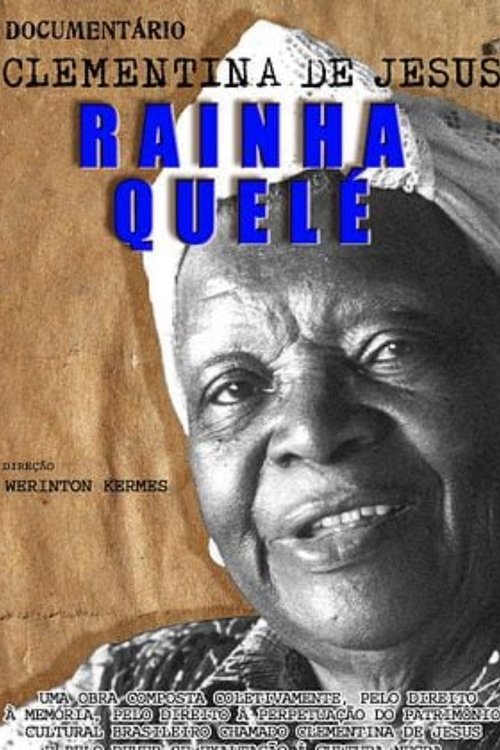
The genesis of O Canto dos Escravos dates back to the 1920s and 1930s, when Minas Gerais folklorist Aires da Mata Machado Filho undertook a meticulous collection of African songs and dialects in the Diamantina region, Minas Gerais, especially in villages such as São João da Chapada and Quartel do Indaiá. His work, motivated by the urgency to preserve traditions that were falling into oblivion with the decline of mining, culminated in the publication of the book "O Negro E O Garimpo Em Minas Gerais" in 1943, where 65 musical scores were recorded. Almost forty years later, in 1982, Gravadora Eldorado brought together a trio of Afro-Brazilian cultural icons to give voice to this heritage. Clementina de Jesus, known as Rainha Quelé and the personification of Black culture in Brazil, Geraldo Filme, a renowned São Paulo sambista and defender of traditions, and Tia Doca da Portela, a matriarch of the Velha Guarda, were the vocal pillars of this project. The participation of these artists was not random, but a recognition of their fundamental role as guardians and disseminators of the memory and musicality of enslaved Black people, with this also being Clementina de Jesus's final recording.
Recording
The album O Canto dos Escravos was released by Gravadora Eldorado in 1982, as part of the prestigious Memória Eldorado series. The project featured artistic coordination by Aluísio Falcão and musical direction and production by Marcus Vinícius de Andrade. The technical team strove to capture the essence of ancestral music with simplicity and depth. The instrumentation, intentionally minimalist, highlighted percussion as a central element, lending rhythm and power to the interpretations. Djalma Correa, Papete, and Don Bira were the percussionists responsible for creating the sonic atmosphere, using a variety of instruments such as logs, shekeres, hoes, gourds, atabaques, agogôs, caxixis, and afoxés. This choice aimed to reproduce the "generalised binary rhythms of Umbanda", such as barravento, essential for the authenticity of the vissungos. Flávio Barreira was responsible for recording and mixing, while Ariel Severino was credited with the art direction and album cover.
Songs
The album's repertoire comprises fourteen vissungos, selected from the 65 recorded by Aires da Mata Machado Filho. Vissungos are more than mere songs, they are "work songs" and rituals, a form of expression deeply rooted in the experience of the Benguela Black people, Bantu slaves brought to Brazil. These songs were chanted both in the arduous daily life of gold and diamond mines, to alleviate the suffering and fatigue of manual labour, and in magical rituals, celebrations, and even moments of mourning. The lyrics of the vissungos are a fascinating testament to the linguistic complexity of the era, mixing Umbundu and Kimbundu, African dialects, with archaic Portuguese. This fusion reflects the attempt at communication and the maintenance of cultural identity in an environment of oppression. Many of these chants expressed the harshness of "lambá" (hard labour) and a deep longing for death, while simultaneously carrying an evident religious content. Structurally, vissungos are divided into "boiado", a solo interpreted by the master, and "dobrado", a choral response from the workers, sometimes accompanied by the sounds of their own work tools.
Legacy
Since its release, O Canto dos Escravos has been consistently recognised as one of the most important sonic documents on African oral culture practised by enslaved Black people in Brazil. Its relevance endures, being considered a "gem of Brazilian phonographic history" and one of the most revealing albums of the 20th century. The album's pioneering nature, as the first sonic record of music from the time of slavery, secured it a prominent place in Brazilian musical historiography. The album's importance is such that it was re-released in CD format in 2003, more than two decades after its original LP edition, demonstrating its lasting impact and the continuous need for access to this material. The project is seen not just as historical documentation, but as an artistic work of profound sensibility that manages to evoke rich sonic and rhythmic ancestry, as well as the inevitable and terrible memories of the slavery period. It remains a crucial source for Afro-Brazilian studies and for understanding the cultural and musical resistance of Black people in Brazil.
Tracks
Credits
Clementina De Jesus, Doca, Geraldo Filme
Djalma Correa
Papete
Dom Bira
Films

Books
Analyses
O Canto dos Escravos – Wikipedia
Wikipedia, the free encyclopaedia
vinylfanatics.com - Album Reviews & Music Discovery
vinylfanatics.com
The echoes of "O Canto Dos Escravos" continue to reverberate through Brazilian music nearly five decades after its release, a testament to the raw power of three voices united in preserving the ancestral songs that built a nation. This isn't just an album—it's an archaeological dig into the soul of Brazil, unearthing melodies that survived the Middle Passage and found new life in the favelas ...
O Canto Dos Escravos: Sons De Trabalho, Música De Liberdade
omenelick2ato.com
What could be a technical extravagance, given that the adopted rhythmic base departs from the manifestation's original standard – sustained only by oral tradition – perfectly matches the lyrics and intensity of the interpretations, transforming listening to the album into a transcendental sound experience.
Herança Africana na Música dos Escravos | PDF - Scribd
pt.scribd.com
He highlights that, in the context of slaves, the instruments and the singing itself served a dual function: on the one hand, they were forms of communication and collective organisation among the enslaved; on the other, they constituted a space for cultural preservation, where African rhythms and traditions were maintained.
O Canto dos Escravos: heranças centro-africanas na música contemporânea ...
periodicos.ufcat.edu.br
The aim of this article is to analyse the historical and aesthetic dimension of the album "O Canto dos Escravos". Recorded by sambistas Geraldo Filme, Clementina de Jesus and Doca, in 1982, this album repositioned the singing of 18th-century Minas Gerais enslaved people within the contemporary music scene.