Marinheiro só
Clementina de Jesus
1973

Rankings
Why This Album Matters
Marinheiro Só, released in 1973 by Clementina de Jesus, is a work of profound relevance in Brazilian music, transcending samba by presenting a rare fusion of ancestry and modernity. The album celebrates Clementina's unmistakable voice, a deep and husky timbre that became a dynamic link between Brazil and its African roots, rescuing traditional Black chants and celebrating the authenticity of 'partido alto', a genre of which she is considered the queen. This record is particularly special for challenging clichés and expanding the frontiers of Brazilian popular music. It not only solidifies Clementina's position as a singular performer, but also demonstrates her ability to engage with different generations of composers and arrangers, creating a sonic universe that is both respectful of tradition and open to experimentation.
Context
Clementina de Jesus's artistic trajectory is notable for its late start, as she was only discovered at the age of 63 by composer and producer Hermínio Bello de Carvalho, after decades working as a domestic helper. Before her professionalisation in 1963, Clementina already carried in her musical memory a rich heritage of African experiences, 'jongueira' culture and the samba circles of Rio de Janeiro, having attended the Portela and Mangueira samba schools. The release of Marinheiro Só in 1973 occurred at a time of personal triumph for the artist, who had suffered a cerebral thrombosis in March of the same year. Two months later, she was already in the studio, demonstrating her resilience and passion for music by continuing her phonographic production.
Recording
The album Marinheiro Só was recorded by Odeon, with production by Milton Miranda and Hermínio Bello de Carvalho. The recording took place at the studio of the Museu da Imagem e do Som (MIS), where Clementina had previously contributed to Milton Nascimento's album Milagre dos Peixes. During the recording, Clementina de Jesus was accompanied by the group Nossa Samba. A notable particularity of the record is the participation of percussionist Naná Vasconcelos on the track "Taratá", where he used an Indian tabla, which may have been one of the first times the instrument was recorded in Brazil. Curiously, the original technical sheet for the record does not list the credits for the participating musicians.
Songs
The repertoire of Marinheiro Só is a rich tapestry of chants, specially dedicated to "amigo Caetano Veloso", who also arranged the title track. The record harmonises Afro-Brazilian religious chants, some in the public domain and others by acclaimed composers such as Dorival Caymmi, with compositions by a new generation of sambistas. Among the standout tracks are contributions by Paulinho da Viola, such as "Na Linha do Mar" and "Essa Nega Pede Mais". The song "Taratá" is a highlight, a work chant that Clementina transforms into an innovative musical experience, exploring a vast range of melodic nuances in her voice alongside Naná Vasconcelos' percussive layers. The album also includes the sequence "Cinco Cantos Religiosos", which reinforces the connection with spirituality and ancestry.
Legacy
Marinheiro Só, and Clementina de Jesus's entire body of work, is fundamental for the recognition and valorisation of Black culture in Brazil. The artist is widely recognised as a central figure in the rescue of traditional Black chants and in the popularisation of samba, especially 'partido alto'. Her distinctive voice influenced a generation of great samba artists, including Beth Carvalho, Clara Nunes and Martinho da Vila, who followed in her footsteps in preserving the genre's authenticity and strength. Clementina's importance was celebrated on various occasions, such as the tribute show in her honour at the Teatro Municipal do Rio de Janeiro in 1983, featuring Paulinho da Viola, João Nogueira and Elizeth Cardoso, and the theme of the Beija-Flor de Nilópolis samba school in the same year, "A Grande Constelação das Estrelas Negras". Despite starting her career late, Clementina de Jesus left a lasting legacy, remaining to this day a reference point for Brazilian music and a symbol of cultural resistance.
Tracks
Credits
Milton Miranda
Films

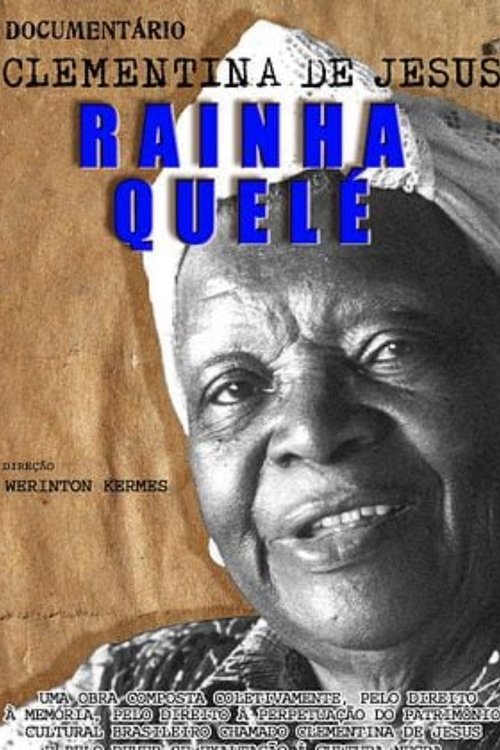
Analyses
Clementina de Jesus - Marinheiro Só - by Rafael Morettini
umcatalogo.substack.com
In "Marinheiro Só", released in 1973, Clementina de Jesus continues her path of deep reverence for Afro-Brazilian culture, but now with even more artistic maturity and expressive freedom.
Clementina de Jesus e a vanguarda ancestral de "Marinheiro Só"
volumemorto.com.br
In March 1973, Clementina de Jesus suffered a cerebral thrombosis that completely paralysed her left arm and kept her off stage for months. But that didn't stop her from making music.
Hominis Canidae: Clementina de Jesus - Marinheiro Só (1973)...
hominiscanidae.org
Queen Quelé, as she is also known, was 72 years old during the recording of this album, but age is just a detail. An authentic samba LP, with batucada, cuíca, and cavaco, but with particularities that make Clementina's third album somewhat special.
Clementina De Jesus - Marinheiro Só (1973)
musicasdonordeste.net
In 1973, five months after suffering a thrombosis that, it seemed, threatened to end her artistic career, she released the LP "Marinheiro só" on Odeon. Produced by Caetano Veloso, the LP featured the track "Marinheiro só" from popular folklore, adapted by Caetano Veloso.
Clementina de Jesus - Marinheiro Só - cenaindie
cenaindie.com
The capoeira song 'Marinheiro Só', which gives the album its name, guides a repertoire rich in batucada, cuíca, and cavaco, making it a timeless classic. A work that evokes memories of family gatherings and celebrates the strength of Brazilian identity.