Feijão com Arroz
Daniela Mercury
1996
Rankings
Why This Album Matters
Feijão com Arroz, Daniela Mercury's fourth studio album, released in 1996, represents a high point in the artist's career and in the evolution of axé music. Considered by the singer herself as an album of great complexity, it synthesises years of research and immersion in the rhythms of Carnival, the trio elétrico and Northeastern regional manifestations, elevating them to a level of high artistic and technical quality. This work not only consolidated Daniela Mercury's musical identity, but also expanded the frontiers of axé, blending it with MPB and pop elements in a sophisticated and innovative way. The album demonstrates meticulous attention to its sound, as evidenced by the dedication of up to three days to mixing a single song, resulting in rich and diverse percussive arrangements that would become a trademark.
Context
Released after the resounding success of O Canto da Cidade (1992) and the album Música de Rua (1994), Feijão com Arroz arrived at a period when axé music was experiencing its commercial peak in Brazil, but still faced a degree of scepticism outside the carnival circuit. Daniela Mercury was already established as one of the genre's biggest stars, acclaimed as the 'Queen of Axé', and this record was a confirmation of her trajectory and her artistic proposition of bringing Bahia's rhythmic richness to the national and international pop scene. The album marked a moment of maturity for the artist, who, although she had already achieved enormous popularity, sought to deepen her musical research and present a work that was both popular and artistically elaborate. In 1996, the Brazilian musical landscape was open to fusions, and Feijão com Arroz fitted into this context as a notable example of the capacity for reinvention and sophistication in Brazilian pop music.
Recording
The recording of Feijão com Arroz was a meticulous process, focused on rhythmic complexity and sound quality, as Daniela Mercury herself described, taking up to three days to mix a single track. Most of the tracks were produced by Alfredo Moura, known for his expertise in elaborate arrangements, while the song "Vide Gal" was produced by Rildo Hora. The vast instrumentation, with multiple percussion, wind, and string instruments, contributed to the album's dense and rich sound. The diversity of musicians involved, including guitarists like Pepeu Gomes on "Vide Gal", and a robust brass section, highlights the investment in a production that sought excellence and the full transposition of stage energy to the studio.
Songs
Feijão com Arroz was a hotbed of major radio hits, producing more chart-toppers than any other Daniela Mercury album, with the exception of O Canto da Cidade. The initial highlight was the song "À Primeira Vista", by Chico César, which, boosted by its inclusion in the soundtrack of the novela O Rei do Gado, became a phenomenon, reaching the top of the charts and establishing itself as one of the biggest successes of the singer's career. Other notable singles included "Nobre Vagabundo", a romantic reggae that began a cappella; "Rapunzel", a collaboration between Carlinhos Brown and Alain Tavares, which also became a huge success in Brazil and Portugal; and "Minas com Bahia", which featured the participation of Skank's vocalist, Samuel Rosa, and charted among the top twenty most played songs. The track "Feijão de Corda" also featured among the hits, reinforcing the album's musical diversity and popular appeal, which, with fifteen tracks, offered a varied and engaging repertoire.
Legacy
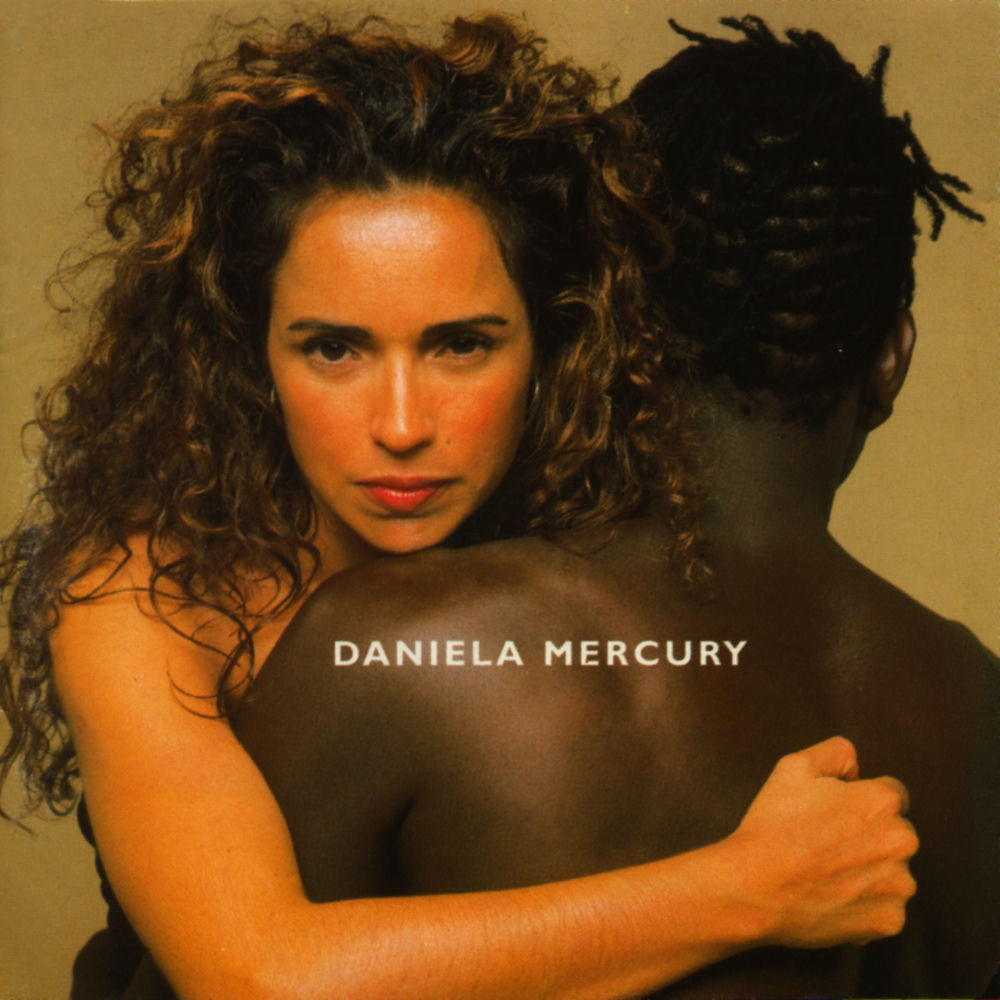
Feijão com Arroz was an enormous commercial success with lasting impact, becoming the second best-selling album of Daniela Mercury's career. In Brazil, it surpassed 800,000 copies in less than two years, being certified double platinum and ending 1997 as the fourth best-selling physical album in the country. Internationally, the album performed even more remarkably in Portugal, where it became the best-selling Brazilian record of all time, with approximately 250,000 copies and six platinum discs. This achievement definitively opened the doors of the Portuguese music market for Daniela Mercury, consolidating her as one of the most popular Brazilian artists in the country. The album cover, photographed by Mário Cravo Neto and showing the singer embracing a Black model, was voted the best in the history of Brazilian music in a Jornal da Globo poll, surpassing iconic works. Furthermore, the album received a four-and-a-half-star rating on Allmusic, making it the artist's highest-rated on the platform, which reflects its international critical recognition and its importance for the internationalisation of axé music.
Tracks
Credits
Alfredo Moura
Daniela Mercury
Cícero Assis
Jorge Simas, Paulinho Dáfilin, Pepeu Gomes, Roberto Mendes
Rowney Scott
Marcio Victor
Cesário Leony, Luciano Calazans, Tony Duarte
Wanderson Martins
Pedro Robatto
Gustavo De Dalva
Bastola
Marcos Rodrigues, Tony Mola
Cesinha, Jean Toulier, Jorge Gomes, João Goes, Ramon Cruz
Letieres Leite
Renato Costa Pinto
Oscar Mauchle
Alexandre Vargas, Alexandre Vargas, Cássio Calazans, Roseval Evangelista, Toni Augusto
Alfredo Moura
Armando Macedo
Osvaldinho Da Cuíca
Beto Rezende, Hudson, Leonardo Reis, Márcio Brasil
Ivan Huol
Orlando Costa
Ubaldo Versolato
Cristiano Rodrigues, Junior Vasconcelos, Paulo Vasconcelos
Mauricio De Souza
François De Lima, Sidnei Borgani
Heinz K. Schwebel, Nahor Gomes, Walmir De Almeida Gil
Joatan Nascimento
Books
Analyses
Feijão com Arroz – Wikipedia
Wikipedia, the free encyclopaedia

"Feijão com Arroz" (Sony Music, 1996), Daniela Mercury
discosessenciais.blogspot.com
On her fourth album, Feijão com Arroz, Daniela Mercury placed more emphasis on percussion. While on Música na Cidade, a more pop album where percussion was more in the background, on Feijão com Arroz, percussion took on a more prominent role, even sounding heavier.
Feijão com Arroz: álbum de Daniela Mercury completa 30 anos como marco ...
aratuon.com.br
Daniela Mercury's album "Feijão com Arroz" turns 30 in 2026. Released in 1996, the singer's fourth studio album is considered a classic and a watershed moment in the history of axé music.
Há 30 anos, 'Feijão com Arroz' levava o axé music da ... - Bahia.ba
bahia.ba
With Carnival 2026 around the corner, the time has come to celebrate the 30th anniversary of Feijão com Arroz by Daniela Mercury, an album that became a watershed moment in the history of axé music.
Daniela Mercury - Feijão com Arroz - Boghan Gaboott
boghan.com.br
It was the third and, to date, last album in Mercury's career to receive a Diamond Disc. Feijão com Arroz was the second best-selling album of Mercury's entire career and the one that produced the most successful songs on Brazilian radio, second only to O Canto da Cidade.