O Canto da Cidade
Daniela Mercury
1992

Rankings
Why This Album Matters
The album O Canto da Cidade, eponymous with its first single, emerges as an essential landmark in Brazilian music. Its title track, a samba-reggae with a distinctive rock feel, represents an innovative fusion that Daniela Mercury skilfully developed, incorporating pop elements and exploring a more elaborate sound, but without detaching from her Bahian roots and the genre. This more mature approach to samba-reggae allowed the song to resonate with a wider audience, maintaining its melodic originality. Lyrically, the song stands out for its simplicity and depth, serving as a homage to the people of Salvador. It articulates the city's culture through the resistance and self-affirmation of the Black population, addressing themes of prejudice and Blackness with a vibrant and proud discourse. The song is a mirror of the Brazilian soul, translating the feeling of a people seeking to affirm themselves.
Context
In 1992, Daniela Mercury had already achieved success with the "Som do Meio-Dia" project in São Paulo, which led her to sign with Sony Music. Despite her potential for national ascent, the record label resisted the artist's commitment to samba-reggae, a genre in which she was already a leading figure in Salvador. Sony pressed for a more commercial direction, suggesting the emulation of the Gipsy Kings' flamenco-pop style, leading to intense clashes and moments of frustration for the singer. In this scenario, Mercury received an amateur recording of the song "O Canto da Cidade" from Tote Gira, who was experiencing financial difficulties. Despite the demo's precariousness, the singer saw the song's potential and dedicated two months to it, modifying verses and seeking an arrangement that satisfied her, even in the face of initial scepticism from the team and the bassist himself.
Recording
The recording of the song "O Canto da Cidade" took place in July 1992 at the renowned WR studio in Salvador. Production was handled by Liminha, sent by Sony, who integrated himself with the band and was enchanted by the samba-reggae of the city's Afro-blocos. His approach was not to intervene excessively in the creative process, praising the quality of Mercury's band and the speed with which everything came together, resulting in a "very rounded" sound. Liminha maintained the song's original structure, which he considered "perfect", focusing his modifications only on keyboard timbres. His objective was to "organise axé" and make it more "radio-friendly", culminating in a sound described by Mercury as a "samba-reggae with a bit of rock influence". Despite the artist's and composer's satisfaction with the final version, Sony Music executives still hesitated to recognise it as a potential hit, considering samba-reggae an outdated trend and the lyrics "pedantic" due to their lack of understanding of its social context. However, Daniela Mercury insisted that the song be released as the album's first single.
Songs
The title track "O Canto da Cidade" stands out as a samba-reggae with a distinctive rock feel, marking one of the starting points for what would become axé. Unlike previous works, the song incorporates more elements of pop music, such as keyboards and bass, and fewer Afro-Brazilian drums. Daniela Mercury sought to develop a pop sound that retained its Bahian essence, allowing for wider identification without detracting from its roots. Its melody, considered original, contributed significantly to the song's impact. The lyrics, authored by Tote Gira and with alterations by Daniela Mercury, are remarkably simple, yet full of meaning. Inspired by the celebration of Afro-Brazilian culture, they became an ode to Salvador, celebrating its cultural values and the people who organise the carnival. Verses such as "a cor dessa cidade sou eu" and "o canto dessa cidade é meu" highlight the strong presence of the Black population and African influence in Brazilian music, serving as a powerful declaration of self-affirmation and resistance against discrimination. Mercury describes the song as a cry of Blackness, which addresses prejudice with an affirmative and easy-to-absorb discourse, capable of becoming a "canto de todas as cidades".
Legacy
"O Canto da Cidade" was not only a resounding success, but also became one of Daniela Mercury's biggest hits, consolidating her career and establishing axé throughout the national territory. The song was the third most listened to in Brazil in 1992 and even today it is one of the most re-recorded and performed. Its international repercussions, particularly its success in Latin America, demonstrate the music's ability to transcend linguistic and cultural barriers. The album and its title track are widely remembered for their omnipresence during the period of Fernando Collor de Mello's impeachment and the country's political-economic crisis. In this context, the song was interpreted as a symbol of the resurgence of national joy and self-esteem, connecting with a downtrodden public that yearned to celebrate democracy and protest against corruption. In 1992, the song was nominated for the Prêmio Sharp for best song of the year and won the Troféu Imprensa in 1993, attesting to its relevance. The music video, released on Fantástico, quickly reached the top of the Top 20 Brasil on MTV, further amplifying its reach. The legacy of "O Canto da Cidade" extends to the visibility it brought to Bahian culture and Salvador's carnival, as well as giving a voice to Black composers marginalised in the music industry. Artist Beth Carvalho even recognised that Daniela Mercury "returned samba to Brazil's feet" with this work, underlining its importance for the renewal and reaffirmation of Brazilian popular music for new generations.
Tracks
Credits
Ramiro Musotto
Daniela Mercury, Herbert Vianna, Liminha, Luiz Assis, Ramiro Musotto, William Magalhães
Liminha
Jaqueline Sperandio
Vitor Jairo
Angela Lima, Betinho Resende, Raje, Ramon Cruz, Toinho Brito, Vania Mercury
Manolo Pousada
Cesário Leony, William Magalhães
Liminha
Ramon Cruz
Ramiro Musotto
Betinho Resende
Toni Augusto
Angela Lima, Betinho Resende, Dinde, Raje, Ramiro Musotto, Ramon Cruz, Sidnei, Toinho Brito, Vania Mercury, Vitor
David Santiago, William Magalhães
Luiz Assis
Tê Nunes
Guilherme Colicchio, Marcio Paquetá
DS Produções
Théo Oliveira
Betinho Resende, Ramiro Musotto, Théo Oliveira
Ramiro Musotto
Betinho Resende, Jackson, Ramiro Musotto, Théo Oliveira
Prego
Liminha, Ramiro Musotto
Ramiro Musotto
Ramiro Musotto
Betinho Resende, Théo Oliveira
Putuca
Antoine Midani, Liminha, Paulo Junqueiro, Vitor Farias, Walter Rodrigues
Liminha, Paulo Junqueiro, Vitor Farias
Ricardo Garcia
Dinde, Sidnei
Carlos Nunes
Jorge Sampaio
Marcelo Faustini
Podcasts
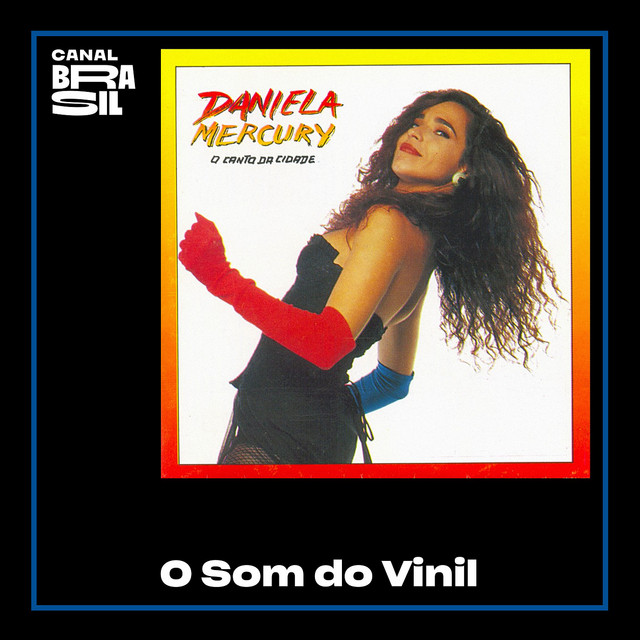
O Som do Vinil | Podcast · Canal Brasil
Espontânea, Daniela Mercury fala sobre a representação baiana e brasileira que traz no álbum “O Canto da Cidade”, de 1992. A cantora também fala que o axé é a tradução espiritual do povo afro-brasileiro.
Videos
Por Trás da Canção - "O Canto da Cidade" de Daniela Mercury - T03 EP13 (teaser)
RIO CINEMA DIGITAL
Documentário Especial Globo Daniela Mercury 1992 - O canto da Cidade
Yáskara Sidou
Books
Analyses
O Canto da Cidade – Wikipedia
Wikipedia, the free encyclopaedia

"O Canto da Cidade" (Columbia, 1992), Daniela Mercury
discosessenciais.blogspot.com
O Canto da Cidade hit stores in September 1992 and was very well received by critics. The album's first single was the title track, which became a nationwide hit.

MUSICA&SOM: Daniela Mercury - O Canto da Cidade (1992)
tabernanovostempos.blogspot.com
Released by Sony Music Brasil on 20 September 1992, with production by Liminha. The project became a success, receiving a diamond certification from the Brazilian Association of Record Producers (ABPD) for sales exceeding one million copies in Brazil.
Obra analisa disco emblemático 'O Canto da Cidade' de Daniela Mercury ...
cartacapital.com.br
One of the albums that marked Brazilian music, Daniela Mercury's O Canto da Cidade, will celebrate its 30th anniversary next year. A book analyses the album before its creation, its production process, and the outcome after being presented to the public.
Daniela Mercury - O Canto da Cidade (1992) - A História do Disco
ahistoriadodisco.com.br
As a true carnival-goer, I remembered that an axé album hadn't yet been featured on our site, so I decided to talk about the style through one of its most iconic singers. Let's review Daniela Mercury's second studio album.