Di Melo
Di Melo
1975

Rankings
Why This Album Matters
Di Melo's debut album, released on 14 January 1975, is a work of rare beauty and musical complexity that stands out as a landmark of MPB. This inaugural work by the Recife-born artist consolidated his unique style, permeated by Afro-Brazilian rhythms, funk, and psychedelia, presenting sophisticated arrangements and poetic lyrics. Its original sound made it a cult album since its release. Although it initially received more discreet recognition, its musical uniqueness and the depth of its compositions solidified its status. Today, it is widely recognised as a rarity and is intensely sought after by global collectors and DJs, which attests to its timelessness and artistic relevance. Di Melo's musical proposition proved to be ahead of its time, with the fusion of diverse elements that characterised the creative effervescence of 1970s Brazilian music.
Context
Before recording his debut album, Di Melo, a native of Recife, had moved to São Paulo in 1968, where he began to build his musical career playing in various bars across the city. It was in one of these venues, the Jogral bar, that his career reached a decisive turning point. In 1975, after one of his performances, the renowned singer Alaíde Costa introduced him to Moacir Meneghini Machado, who at the time held the position of director at the EMI-Odeon record label. Impressed with Di Melo's work, Machado promptly signed him for the recording of his first album, initiating the production of a work that would become iconic.
Recording
The production of Di Melo's album was remarkably swift, completed in just eight days, which demonstrates the energy and clarity of the artistic vision involved. The technical sheet reveals a collaboration with big names in Brazilian music, such as Heraldo do Monte on viola and acoustic guitar, and Hermeto Pascoal on flute and keyboards, contributing to the album's instrumental richness. Geraldo Vespar was responsible for the arrangements, acoustic guitar, orchestration, and conducting, while José Briamonte served as musical director and conductor. A striking detail in the album's visual conception is the cover and back cover photographs, taken by Carlos A. Duttweller. To achieve the desired effect, the studio lights were turned off and an infrared light was activated, resulting in distinctive images that complement the work's unique atmosphere.
Legacy
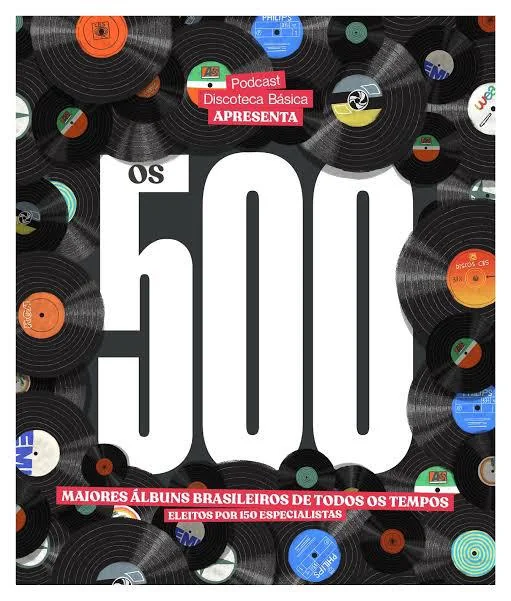
Since its release, Di Melo's album has acquired the status of a rarity, becoming a highly coveted item for record collectors and DJs worldwide. The song “A vida em seus métodos diz calma” was included in the compilation Blue Brazil 2, released in 1997, which spurred a significant rediscovery of the artist's work. In 2022, the album's importance was reaffirmed when it was elected one of the 500 greatest Brazilian music albums in a vote promoted by the podcast Discoteca Básica. Furthermore, the album made a brief appearance in the music video for “Don't Stop the Party” by the group Black Ey Peas, highlighting its recognition beyond the confines of MPB.
Tracks
Credits
José Briamonte
Geraldo Vespar
Osmar Furtado
Zilmar De Araujo
Carlos Duttweller
Videos
The 1975 - Notes on a Conditional Form ALBUM REVIEW
theneedledrop
Song Review #272: Azimüth - "Tempos Atrás" / "Melô Da Cuíca" (1975 Brazilian samba-jazz/funk)
Zaragon: JazzRockSoul Historian
Films

Books
Analyses
Di Melo – Wikipedia
Wikipedia, the free encyclopaedia
Di Melo I Amplifica Music
amplificamusic.com
Di Melo's debut album was originally released in 1975 and is a fusion of genuine Brazilian rhythms with Funk, Soul and just the right dose of psychedelia. Di Melo is one of the leading artists of Brazilian Soul Music, seen by many as talented and musically creative like his peers Jorge Ben and Tim Maia.

MUSICA&SOM: Di Melo - "Di Melo" (1975) - tabernanovostempos.blogspot.com
tabernanovostempos.blogspot.com
All of Di Melo's pioneering work is, curiously, contained in just one album, the eponymous album he produced in 1975, a landmark in the history of Brazilian pop music.
"Di Melo", um dos álbuns mais enigmáticos da música brasileira
cultura.uol.com.br
With a fusion of soul, funk, psychedelia and elements of Northeastern Brazilian music, "Di Melo" presents a unique sound, beyond the norms of the recording industry of the era. It is a timeless album, full of groove, personality and creative freedom.
Vitrola | Di Melo: Imorrível e singular - Alataj
alataj.com.br
In recent months, we haven't had album reviews of works from the last century in the Brazilian music panorama, but now we are officially back, and the first retrospective of the year in the Vitrola column features the album Di Melo, by Di Melo himself, released in 1975.