Djavan (1978)
Djavan
1978
Why This Album Matters
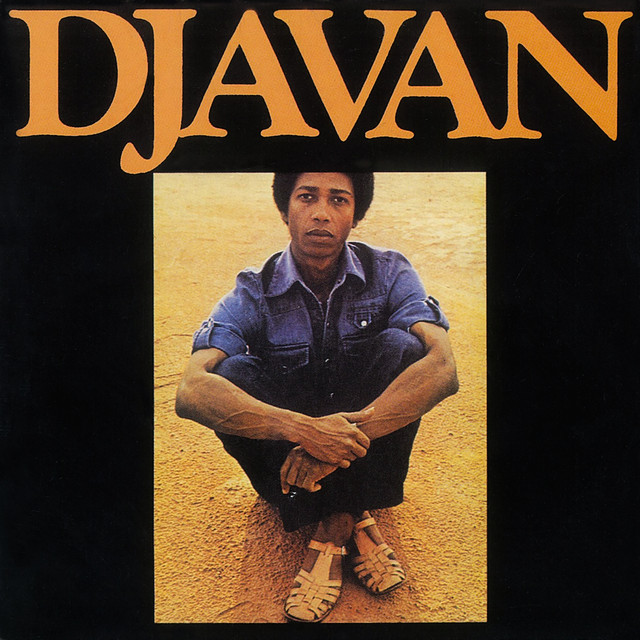
The album Djavan, released in 1978, represents a fundamental milestone in the artist's discography and in Brazilian music, consolidating Djavan's image not merely as a promising sambista, but as a composer of vast range and a complete artist. If the debut album, A Voz, o Violão, a Música de Djavan (1976), presented his talent in a surprising way, this second work served as the serene and definitive confirmation of his genius. Featuring a notable aesthetic expansion, the album stands out for its sophisticated sound and the fusion of different musical styles. Within it, Djavan masterfully blends elements of samba, jazz, blues, pop, and African music, creating a unique musical language that would become his trademark. This versatility and the originality of his compositions are essential characteristics that make the album a compulsory listen for understanding the evolution of MPB.
Context
Before the release of his eponymous 1978 album, Djavan had already taken his first steps in his musical career, which led him from the Alagoas scene to Rio de Janeiro. After a brief foray into football, he dedicated himself to music, working as a crooner in Rio nightclubs. His pleasant voice led him to record soundtracks for TV Globo soap operas, interpreting songs by other composers. In 1975, his songwriting gained prominence with the song "Fato Consumado", which placed second in Rede Globo's "Abertura" Festival. The success of "Flor de Lis" on his first album, A Voz, o Violão, a Música de Djavan (1976), paved the way for the 1978 album to reach the market with great anticipation and significant investment from the record label EMI-Odeon, which bet heavily on the new artist.
Recording
The album Djavan was recorded in 1977 and released in December 1978 by the EMI-Odeon record label. Production was handled by Mariozinho Rocha and Eduardo Souto Neto, who also acted as one of the arrangers. The recording featured a team of high-calibre musicians, who contributed to the sonic richness of the work. Among the instrumentalists, notable contributions came from Luizão Maia on electric bass, Ary Piassarollo on guitar and 12-string guitar, Hermes Contesini on percussion, and Djavan himself on acoustic guitars, craviola, percussion, and vocals. The involvement of arrangers of the calibre of Dori Caymmi, Eduardo Souto Neto, and Gilson Peranzzetta, alongside a full orchestra, demonstrates the significant investment and aesthetic ambition of the project.
Songs
The 11 tracks on the album Djavan, all written by the singer, reveal the depth and versatility of his compositions. Songs such as "Serrado" and "Numa Esquina de Hanói" highlight Djavan's musical and thematic originality, whilst "Nereci" brings a striking Afro touch in its samba breaks. The lyrics of the songs frequently explore themes such as love, nature, and everyday life, with poetic and sophisticated language. Also notable are "Cara de Índio", which was part of the soundtrack for the telenovela Aritana in 1978, and "Álibi", a song of intense expressiveness.
Legacy
The album Djavan was widely acclaimed by critics, cementing Djavan's reputation as one of the leading names in MPB and a complete composer. AllMusic magazine awarded the album 4 out of 5 stars, while the website Notas Musicais rated it 4.5 out of 5 stars, praising its diverse rhythmic range and the fusion of samba, ballad, blues, African music, and jazz with a very personal touch. Several songs from the album gained widespread repercussion. "Álibi" became a huge success in the voice of Maria Bethânia, who recorded the song on her eponymous 1978 album. "Serrado" gained a music video aired on TV Globo's Fantástico programme in 1979. Other tracks such as "Dupla Traição" were re-recorded by Nana Caymmi, and "Samba Dobrado" was performed live by Elis Regina. The song "Água" had its Italian version recorded by singer Loredana Bertè in 1985, reaching the top 40 in Italy. The album's success and positive reception confirmed that Djavan had arrived to stay on the Brazilian music scene.
Rankings
Tracks
Credits
Djavan, Eduardo Souto Neto
Dori Caymmi
Eduardo Souto Neto
Dori Caymmi, Gilson Peranzzetta
Eduardo Souto Neto
Mariozinho Rocha
Djavan
Marizinha, Regina Correia José Maria, Roberto Ribeiro, Valdir Siqueira Da Silva
Marizinha
Dominguinhos
Luizão
Alceu De Almeida Reis, Atelisa De Salles, Iberê Gomes Grosso, Marcio Mallard
Nelson Serra De Castro, Paulinho Braga, Picolé
Gilson Peranzzetta
Copinha, Danilo Caymmi, Jayme Araújo, Jorge Ferreira Da Silva, Mauro Senise
Ary Piassarollo, Hélio Delmiro
Dazinho, Djavan, Hermes Contesini, Marku, Nelson Serra De Castro, Paulinho Braga
Eduardo Souto Neto, Gilson Peranzzetta
Eduardo Souto Neto
Luizinho
Sylvio Barbosa, Walter Batista Azevedo
Geraldo Pereira Mello, Zdenek Svab
Ary Piassarollo
Djavan
Jotinha Moraes
Arlindo Penteado, Frederick Stephany, Murilo Da Silva Loures, Nathercia Teixeira
Adolpho Pissarenko, Alfredo Vidal, Andrea Osório, Carlos Eduardo Hack, GianCarlo Pareschi, Iura Ranevsky, Jorge Faini, José Alves Da Silva, José Dias De Lana, Octávio Miranda Ilha, Robert Arnaud, Salvador Piersanti, Walter Hack
Nivaldo Duarte, Sérgio Bittencourt
Franklin Garrido, Nivaldo Duarte, Toninho
Osmar Furtado
Noguchi
Fernando Carvalho
Videos
EP. 60 – Djavan 1978: The Elegance That Changed Brazilian Music
Sons e Histórias
Films

Analyses

Criatura de Sebo: Djavan - 1978
criaturadesebo.blogspot.com
Aqui está o segundo disco, com parte das suas primeiras 60 canções compostas nesse período. Sua mistura rítmica, agregando a música popular brasileira a elementos do jazz são marcas dessa fase brilhante.
Álbum Djavan — Djavan
djavan.com.br
Grandes cantoras brasileiras passaram a conhecer o artista. Divas como Maria Bethânia e Nana Caymmi, só para falar das duas mais notáveis, foram as primeiras a gravar suas obras. "Djavan", o LP, foi um avanço em termos de produção e tem a ampliação estética como marca.
Discogs

Djavan (1978) – Discogs
discogs.com