Djavan ao Vivo
Djavan
1999

Rankings
Why This Album Matters
Djavan ao Vivo, released in November 1999, marks a significant point in Djavan's discography, being his first live-recorded album. The work, a double album, celebrates 25 years of an already consolidated career, presenting a comprehensive collection of his greatest hits in performances full of energy and enhanced by the artist's stage experience. The album is a vivid portrait of Djavan's musical versatility, masterfully transitioning between the genres that made him famous, such as MPB, pop, bossa nova, and samba, also incorporating elements of funk, reggae, and jazz. In addition to revisiting classics, Djavan ao Vivo stood out for featuring two unreleased songs that quickly won over the public: "Acelerou" and "Um Amor Puro". These new compositions not only refreshed the repertoire but also demonstrated the artist's continuous ability to innovate and create relevant works, proving that his creative vein was more alive than ever. The blend of established songs with the freshness of new material contributed to the project's widespread acceptance, further solidifying Djavan's position as one of the great names in Brazilian music.
Context
In 1999, Djavan was already an artist with 25 years of a brilliant and widely respected career in Brazilian music. Since his professional breakthrough in 1975 with the song "Fato Consumado" and his debut album in 1976, he had released a series of studio albums that established him as one of the country's most original composers and performers, known for his complex harmonies and poetic lyrics. Djavan stood out for his ability to fuse diverse rhythms, such as samba, bossa nova, jazz, and African influences, creating an unmistakable style. The release of Djavan ao Vivo, therefore, was not just another album, but an important celebration of his journey, a moment of retrospective and reaffirmation of his art for an audience that had faithfully followed him for decades. The album emerged after a sequence of successful studio works, such as Bicho Solto from 1998, and represented the first live recording of his career, something awaited by his fans, which allowed the capture of the energy of his stage performances.
Recording
The album Djavan ao Vivo was recorded at the historic Teatro João Caetano, in Rio de Janeiro, in July 1999. Sound capture was carried out by a mobile recording unit from ARP/Roberto Marques, with Márcio Gama and Zorro acting as recording engineers. Djavan himself took on the album's production, demonstrating his artistic control and vision for the project. Mixing and recording engineering were handled by Márcio Gama, while Pro-Tools editing was done by Lulu Farah and Florencia Saravia. The band accompanying Djavan was composed of renowned musicians: André Vasconcellos on bass, Max Viana and João Castilho on guitars and acoustic guitars, Carlos Bala on drums, Paulo Calasans on keyboards, Marcelo Martins on saxophone and flute, Walmir Gil on trumpet and flugelhorn, and François Lima on trombone, in addition to Beth Bruno, Cecília Spyer and Flávia Virgínia on backing vocals for some tracks. Loop programming on "Acelerou" was done by Renato Fonseca, and mastering by Ricardo Garcia, from Magic Master.
Songs
Djavan ao Vivo features an extensive and carefully selected repertoire, divided into two discs, serving as an anthology of his work. The album includes 22 already established songs, such as "Samurai", "Nem um Dia", "Oceano", "Flor de Lis", "Azul", "Seduzir" and "Eu Te Devoro", which are reinterpreted with the vivacity of live performances. Critics highlighted the stylistic diversity, with the swinging samba of "Serrado" and "Flor de Lis", the melody of the ballad "Amar é Tudo" and the funk-reggae of "Azul" and "Seduzir", which is distinguished by its jazz solos. Among the tracks, "Acelerou" and "Um Amor Puro" stand out as the two unreleased compositions that quickly became radio hits. "Acelerou" was described as a fast and swinging song, while "Um Amor Puro" is a slower, blues-infused ballad. The album's second disc received special attention from critics, who emphasised pop ballads such as "Pétala", "Meu Bem-Querer" and the unreleased "Um Amor Puro". Also mentioned were the reggae "Cigano", the 'funky' tracks "Boa Noite" and "Eu Te Devoro", the melancholic "Faltando Um Pedaço", the pop/rock version of "Lilás" and the soul of "Acelerou". The song "Fato Consumado" received special mention for its acoustic guitar interpretation with a gafieira trombone at the end, revealing the richness of the live arrangements.
Legacy
Djavan ao Vivo was critically acclaimed, receiving very positive reviews. Alvaro Neder, from AllMusic, awarded 4 out of 5 stars for disc 1 and 4.5 out of 5 for disc 2, highlighting the quality and diversity of the repertoire. Mauro Ferreira, from Notas Musicais, also rated the album 4.5 out of 5 stars, underlining the "explosion of popularity and sales" that the project achieved. The album's commercial success was phenomenal, earning Djavan his first diamond record for sales exceeding 1 million copies in Brazil. Volume 1 of the CD received a double platinum certification, and volume 2 also achieved double platinum, demonstrating the scale of its success. In addition to sales success, Djavan ao Vivo was recognised with three Multishow Awards, including the categories for Best CD, Best Show, and Best Singer, consolidating its importance for both the public and the music industry. The album's tour lasted for almost three years, ensuring that Djavan concluded the century at the peak of his popularity.
Tracks
Credits
Ronaldo Viana
Mara Rabello
Djavan
Beth Bruno, Cecília Spyer, Flávia Virgínia
André Vasconcelos
Carlos Bala
João Castilho
Paulo Calasans
Samuel Betts
Mara Rabello
Max Viana
Renato Fonseca
Marcelo Martins
MacAudio
François De Lima
Walmir De Almeida Gil
Florência Saravia, Lulu Farah
Francisco Luis Russo, Marcio Gama
Ricardo Garcia
Roberto Marques
Jackson Silva, Jorge Carvalho
Enrico De Paoli
Bruno Batista
Carla Framback, Gualter Pupo, João Bonelli
Daniela Dacorso, Marcia Ramalho
Films

Books
Analyses
Djavan ao Vivo – Wikipedia
Wikipedia, the free encyclopaedia
Álbum Djavan ao Vivo — Djavan
djavan.com.br
Another unreleased song that is successful on this album is the slow, bluesy ballad, "Um amor puro". On "Djavan ao vivo", his loyal audience received another gift: Djavan's interpretation of one of his greatest successes as a composer, "Azul", released by Gal Costa in 1982.

MUSICA&SOM: Djavan - Ao Vivo (1999)
tabernanovostempos.blogspot.com
Celebrating his 25-year career, Djavan recorded and launched this live double album in 1999, entirely produced by himself and recorded at Teatro João Caetano, in Rio de Janeiro, Brazil.
"Djavan ao Vivo": relembre o 1º álbum ao vivo da carreira do cantor
alphafm.com.br
In total, there will be over 20 dates with shows in Brazil and even abroad. To warm up for the big show, relive the 1st live album from the career of the MPB giant!
Álbum Ao Vivo — Djavan
djavan.com.br
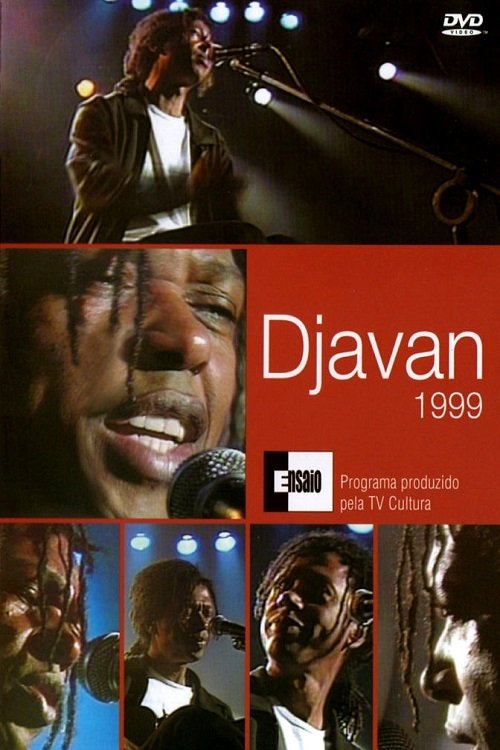
To commemorate his 25-year career, Djavan is releasing his greatest hits on DVD, filmed during the "Djavan Ao Vivo" album tour. The DVD features the singer's performances in Rio de Janeiro, and at Parque Guell, in Barcelona, Spain, where the works of the Catalan architect Antoní Gaudi are exhibited.