Canções Praieiras
Dorival Caymmi
1954

Rankings
Why This Album Matters
Canções Praieiras, released in 1954, transcends the simple status of a debut album to establish itself as a fundamental landmark in Brazilian Popular Music. In it, Dorival Caymmi, with his deep voice and the elegant simplicity of the guitar, redefines the country's musical vocabulary, focusing on a poetics that celebrates the sea, the lives of fishermen, and the rich Afro-Brazilian religiosity of Bahia. This inaugural work not only cemented Caymmi's artistic identity, but also established an aesthetic paradigm that would resonate deeply with future generations. The record is an ode to coastal culture, a testament to Caymmi's mastery in translating the essence of Bahia into melody and verse. His compositions, although rooted in the regional, achieve a universality that made him a cultural ambassador for Brazil. The simple beauty and inherent sophistication of his "canções praieiras" demonstrated that Brazilian song could be modern in its harmonic conception without abandoning its melodic and narrative traditions, directly influencing movements such as Bossa Nova and MPB in the following years.

His "Canções Praieiras" are the musical invention of the Bahian man and, why not, Brazilian.
Márcio Cruz · Rolling Stone Brasil
Context
In 1954, when Canções Praieiras was released, Dorival Caymmi was no longer a newcomer. Born in Salvador, Bahia, in 1914, the artist had moved to Rio de Janeiro in 1938, initially with plans to pursue a career in law or journalism. However, his passion for music led him to the stage and radio, where he quickly distinguished himself. Before his first LP, Caymmi already had a consolidated 16-year career, with 17 78 RPM records recorded and successful compositions, such as "O Que É Que a Baiana Tem?", which gained international prominence through Carmen Miranda's voice. The release of Canções Praieiras occurred during a period of transition in the Brazilian phonographic market, as radio, once the main vehicle for musical consumption, began to give way to the popularisation of LPs. Caymmi, who was already a renowned composer with works that permeated films and the popular imagination, took advantage of this new format to present a cohesive work, which would celebrate his homeland and Afro-Brazilian roots, consolidating his influence on Brazil's image both domestically and internationally.
Recording
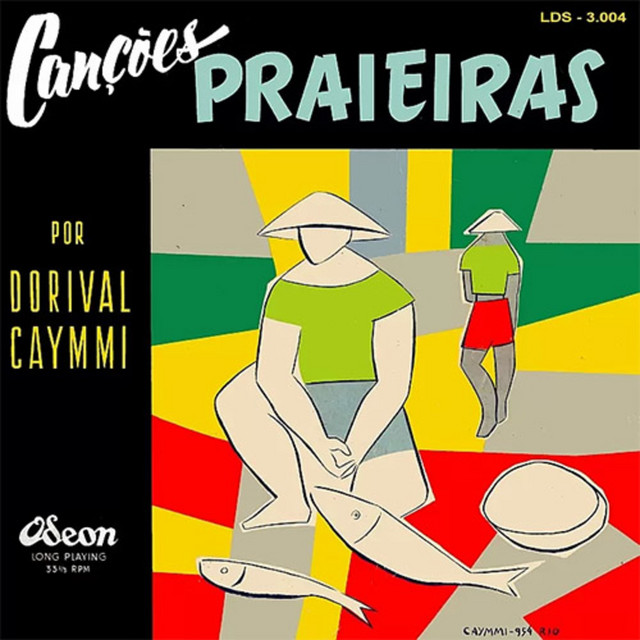
Canções Praieiras was recorded and released in 1954 by the Odeon label, presented in the then innovative format of a 10-inch LP, which was still in its popularisation phase. The album's repertoire is composed of songs that Caymmi had written and recorded previously in the 1940s, some of which had already been interpreted by other artists. For this album, however, Caymmi decided to re-record all the tracks, opting for minimalist instrumentation: just his voice and guitar. This choice lent the record an intimacy and authenticity that would become a distinctive mark. The only unreleased song on the album was "O Bem do Mar". Curiously, the LP cover was also conceived and painted by Dorival Caymmi himself, showcasing his artistic versatility.
Songs
The eight tracks on Canções Praieiras are all compositions by Dorival Caymmi, and together they form an uninterrupted thematic cycle about the universe of the sea and Bahia. Caymmi, through his impressive voice and a guitar that often emulates the circular movement of waves, explores the charms and dangers of coastal life, narrating stories of fishermen, their families, legends, and the arduous subsistence extracted from the ocean. Tracks such as "Pescaria (Canoeiro)" function as a work song, where lyrics and music intertwine to reproduce the rhythm and physical effort of the rowers, with rhythmic verses that become almost tactile. The album also delves into the dualities of the sea, presenting it both as a source of life in "Pescaria (Canoeiro)" and as the origin of loss in "A Jangada Voltou Só", which narrates the painful absence of a fisherman. In "É Doce Morrer no Mar", death is portrayed not as a frightening end, but as a serene return to the aquatic cradle. The songs delve into Afro-Brazilian roots and African-derived deities, weaving a rich regional tapestry full of legends and a particular religiosity.
Legacy
Canções Praieiras is widely recognised as an album of immense relevance in the history of Brazilian music. Rolling Stone Brazil ranked it as the 77th best album of all time, and in a survey conducted by the podcast Discoteca Básica with 162 music specialists, the album reached 28th position, being one of five Caymmi works mentioned on the list. The album is considered a "foundational album" for having reorganised the vocabulary of Brazilian popular music. Its instrumental simplicity, focused on voice and guitar, and its poetic depth, which integrated the sea, fishermen and Afro-Brazilian religiosity, established an aesthetic paradigm that would be assimilated by Bossa Nova, especially by João Gilberto, and re-signified by MPB in subsequent decades. Renowned artists such as Caetano Veloso, Gilberto Gil and Beth Carvalho cite Caymmi as a significant influence in their works, and Antônio Carlos Jobim himself described him as a "universal genius" and the greatest Brazilian composer. Caymmi's style, characterised by its "gentle and romantic colloquialism", as praised by Carlos Lyra, remains a reference for melodic, harmonic and rhythmic construction in Brazilian music.
Tracks
Credits
Dorival Caymmi
Podcasts
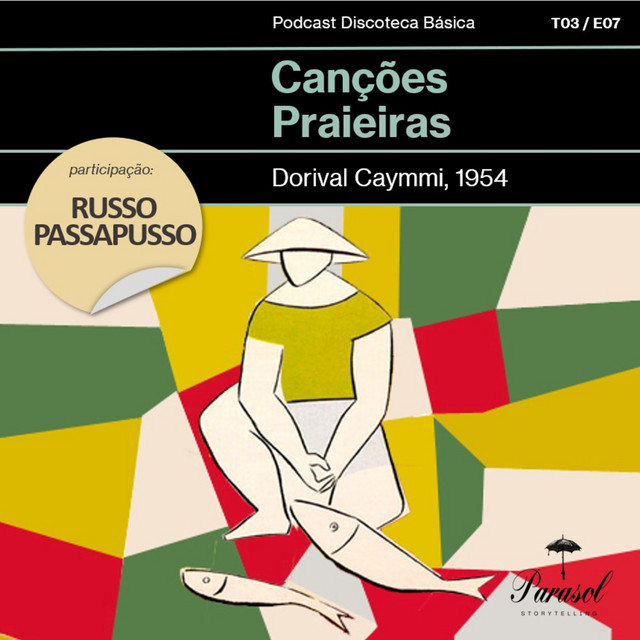
Discoteca Básica Podcast · Parasol Storytelling
O PRIMEIRO ÁLBUM DO CANTOR DOS MARES. Nos anos 50, quando o LP ainda dava os seus primeiros passos como formato de música gravada, Dorival Caymmi reuniu suas particulares canções praieiras, que misturavam a música brasileira folclórica com a música comercial. Convidado do episódio: Russo Passapusso (BaianaSystem) Assinantes do CLUBE DISCOTECA BÁSICA têm acesso a conteúdo extra. Saiba como assinar

QUER QUE EU RESENHE? · André Marx
Em seu vídeo de natal, mestre Kico Amaral resenha uma maravilha assombrosa da música universal: o Canções Praieiras do gigante Dorival Caymmi. Sejam bem-vind@s ao Canal/Podcast QUER QUE EU RESENHE? e esperamos que vocês gostem.
Lado A “Maniçoba no ar”. A voz e o tratamento hormonal do Augusto. A convidada Talita Parteka. Versos do Paulo Cesar Pinheiro sobre Dorival. Marca registrada e marca inimitável do Caymmi. Centenário próximo. A memória falhada de Nivaldo. Envolvimento do Dorival com os rádios do Rio de Janeiro. Vivência e incorporação do mar. Descendência de italianos com a mistura mulata: a origem do grande compos

Rádio UFRJ | Sonar Rio · Rádio UFRJ
Na 12ª edição do Sonar Rio, Carol Desoti e Gustavo Almeida falam sobre como foi o show do BNegão cantando Caymmi, que rolou na última sexta-feira, no pilotis do Museu de Arte do Rio. O show fez parte da programação do “MAR de Música”, iniciativa que leva apresentações musicais gratuitas para o Museu. Também conversaram com a jornalista musical Fabiane Pereira, que assina a curadoria do projeto.Com
Videos
"Canções praieiras" (Dorival Caymmi) | Álbuns Históricos (Nacional) | Alta Fidelidade
Alta Fidelidade
Dorival Caymmi - Canções Praieiras (1954) | ALBUM REVIEW
QUER QUE EU RESENHE?
Films


Dorival Caymmi: Programa Ensaio
1972
TV Cultura's programme Ensaio, recorded in 1972, welcomes Dorival Caymmi for the MPB Especial segment. The composer opens the show with his own compositions, such as "Francisca Santos das Flores", "Itapoã", "A Jangada Voltou Só", "Dois de Fevereiro", "Promessa de Pescador" and "Coqueiro de Itapoã". Following the musical opening, Caymmi talks about Salvador and his childhood. He recounts, poetically, the discovery of friendship and Zezinho, his first friend and a great influence on his involvement with music. And, like a good storyteller, he gradually reveals the plot of a ballet for which he composed songs. Created with vocals and percussion for a Russian company touring Brazil, the acts branched out into songs that became well-known, such as "Canção da Noiva".
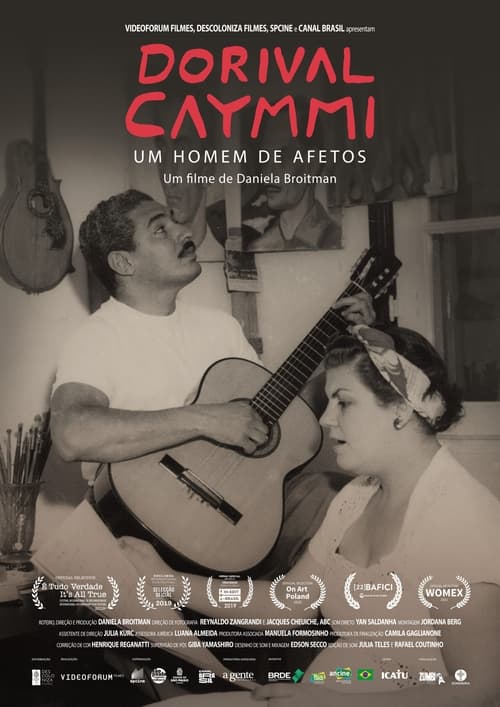
Dorival Caymmi - Um Homem de Afetos
2024
An irresistible journey through the universe of the singer and composer that revolutionized the song in Brazil and influenced generations of musicians, paving the way for movements such as Bossa Nova and Tropicália.

Nas Ondas de Dorival Caymmi
2024
The film reveals the creation of poet Dorival Caymmi's musical works with testimonies from researchers, journalists and friends who lived with him and were able to enjoy his wisdom and talent.
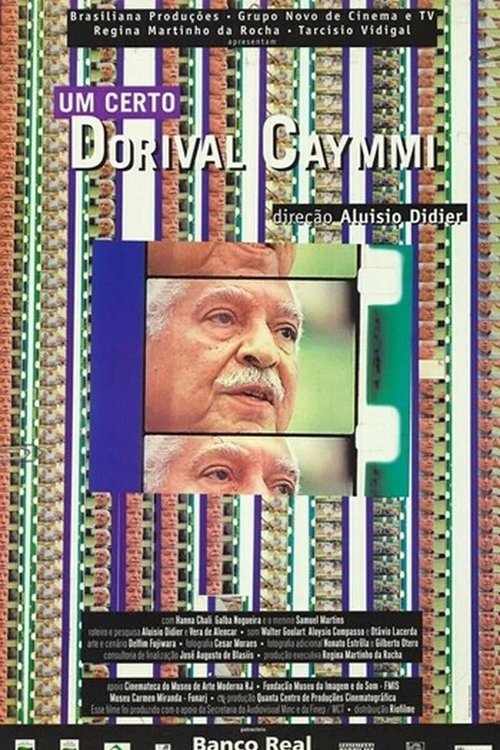
Um Certo Dorival Caymmi
2002
The life and work of the Bahian composer, from his move to Rio de Janeiro to his involvement with other forms of artistic expression like cinema and painting.
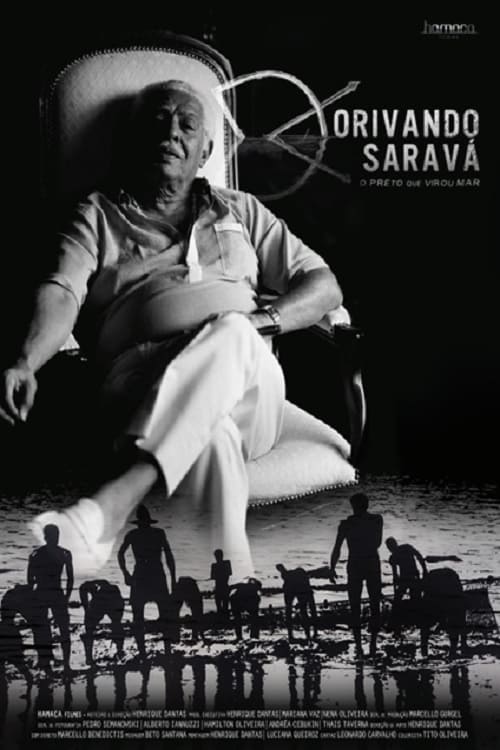
Dorivando Saravá, o Preto Que Virou Mar
2019
Singer, composer, actor and painter, Dorival Caymmi was a multiple artist, but what they may not know is his pioneering work in introducing candomblé into Brazilian popular music. Recreating in a poetic way concepts present in Caymmi's work and life, the documentary revelation of the artist from his own lines, mined in old magazines.
Books
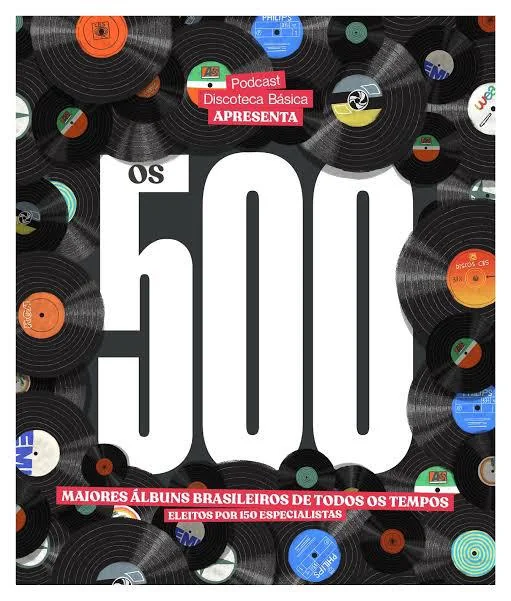
Os 500 Maiores Álbuns Brasileiros de Todos os Tempos
Ricardo Alexandre · 2022
The largest Brazilian music election ever conducted: 162 specialists, spanning journalists, critics, musicians, producers and podcasters, each nominated 50 essential albums, supported by a masterlist of more than 2,000 works. Led by Ricardo Alexandre with tabulation by Sérgio Jomori, it was published in December 2022 as a 200-page hardcover book with graphic design by Fernando Pires.
Álbum 1 - 1950 a 1972
Pedro Alexandre Sanches · 2021
This is the first part of a series that retells the history of Brazilian music through its most striking albums between 1950 and 1972. Given the release year of "Canções Praieiras" (1954) and its importance, it is highly probable that the album will be covered in depth in this volume dedicated to the records of that period.
Caymmi e a bossa nova
Stella Caymmi · 2008
In this book, Stella Caymmi explores Dorival Caymmi's influence and connection with the Bossa Nova movement. The work analyses Caymmi's poetics and his place in Brazilian musical tradition, being fundamental to understanding how albums like "Canções Praieiras" paved the way for Bossa Nova and solidified its style.

Dorival Caymmi: o mar e o tempo
Stella Caymmi · 2001
This is the most complete and acclaimed biography of Dorival Caymmi, written by his niece Stella Caymmi. The work details the artist's life and career, exploring his work in depth, including the creation and impact of fundamental albums such as "Canções Praieiras".
Analyses
Canções Praieiras – Wikipedia
Wikipedia, the free encyclopaedia
Canções Praieiras – The 100 Greatest Albums of Brazilian Music
Márcio Cruz · Rolling Stone Brasil
His "Canções Praieiras" are the musical invention of the Bahian man and, why not, Brazilian.

"Canções Praieiras" (Odeon, 1954), Dorival Caymmi
discosessenciais.blogspot.com
Despite being a very simple album, based only on voice and guitar, Dorival Caymmi managed to infuse the songs with dramatic flair and create a whole sensation that leads the listener to imagine the scenes depicted by the verses as if watching a film.

Dorival Caymmi - Canções Praieiras | 1954
discosqueouvi.blogspot.com
Ultimately, "Canções Praieiras" was the first Dorival Caymmi album I heard, and I immediately fell in love with it. Only two things were needed to compose a brilliant work: a sublime guitar and a divine voice.

Canções praieiras - Dorival Caymmi | A música no Brasil em 1954 ...
notonlyrockandroll.wordpress.com
In the same year that Brazil wore yellow for the first time at a World Cup, Dorival Caymmi made his LP debut in Brazilian music: the classic Canções Praieiras. Released by Odeon at the end of 1954, in the unusual – and still new – 10-inch format, the album did not have a conceptual slant…