Caymmi e Seu Violão
Dorival Caymmi
1959

Rankings
Why This Album Matters
Caymmi e Seu Violão, released in 1959, is a definitive milestone in Dorival Caymmi's discography, solidifying his position as one of the greatest and most original composers and interpreters of Brazilian popular music. This album stands out for its minimalist approach, presenting Caymmi solely with his voice and guitar, a choice that bared and highlighted the profundity and genius of his compositions. The simplicity of the arrangement allows the listener to connect directly with the poetic and melodic essence of the songs, many of which were already classics in his repertoire. The album is considered a masterpiece for its ability to evoke the soul of Bahia, its habits, customs, and the intimate relationship of its people with the sea, themes that have always guided Caymmi's work. The organic fusion between his powerful voice and the guitar, which is not merely an accompaniment but an intrinsic and expressive part of the musical narrative, is a testament to the artist's harmonic inventiveness. The album demonstrates the balance and perfect integration Caymmi achieved between singing and the instrument, creating a model for Brazilian voice-and-guitar song.

Caymmi's songs by themselves allow one to "see" Bahia, but they gain even greater strength in the creator's voice and on his guitar.
Toninho Spessoto · Rolling Stone Brasil
Context
In 1959, the year Caymmi e Seu Violão was released, Brazil was experiencing a period of intense cultural effervescence and modernisation, with the emergence of Bossa Nova, which that same year saw the release of João Gilberto's seminal Chega de Saudade. Dorival Caymmi, born in Salvador in 1914, was already an established name in Brazilian music, having moved to Rio de Janeiro in 1937 to attempt a career as a journalist and artist, but quickly finding success through his music. Before Caymmi e Seu Violão, the artist had already built a solid career, popularising Bahia and its characters with songs that became iconic in Carmen Miranda's voice, such as "O Que É Que a Baiana Tem?". His previous works, such as Canções Praieiras (1954) and Caymmi e o Mar (1957), had already explored maritime and Bahian themes, but the 1959 album represented a deepening and recontextualisation of these works, marking a high point in his career by presenting an essentially voice-and-guitar work.
Recording
Caymmi e Seu Violão was recorded by Odeon, one of Brazil's major record labels at the time. The album's artistic production was overseen by Aloysio de Oliveira, a prominent figure in the Brazilian phonographic industry. The recording is notable for its simplicity, with Dorival Caymmi as the sole instrumentalist, playing guitar and vocalising, sometimes adding whistling, which lends the work a rare intimacy and authenticity. The album was released in a 12-inch LP format, which, according to specialists, contributed to its greater reach and recognition compared to earlier 10-inch works, such as Canções Praieiras. The visual aspect also stood out, with cover photography by Francisco Pereira and layout developed by Cesar Villela, who brought his graphic inventiveness to the album's visual identity shortly after joining Odeon. It is important to note that the 1959 recording is considered technically superior (in capture, mixing, and mastering) to its previous versions, which further enhanced the minimalist proposition.
Songs
The repertoire of Caymmi e Seu Violão is composed of twelve songs, all authored by Dorival Caymmi, deeply rooted in the culture and landscapes of Bahia. The album's tracks revisit and expand the composer's coastal and maritime universe, including re-recordings of hits from Canções Praieiras (1954) and songs from Caymmi e o Mar (1957), now presented in stripped-back voice and guitar arrangements. Highlights include "Pescaria (Canoeiro)", "A Jangada Voltou Só", "É Doce Morrer no Mar", "O Mar", "Coqueiro de Itapoan", "A Lenda do Abaeté", "Promessa de Pescador", and "Noite de Temporal". Caymmi's lyrics are true chronicles of coastal life, addressing everything from the daily toil of fishermen and their beliefs in "Promessa de Pescador" to the melancholy and tragedy of the sea in "A Jangada Voltou Só" and "O Mar". The latter, for example, is notable for the contrast between the beauty of the melody and the narrative of loss and despair. "Noite de Temporal" closes the album with the tension of a mother waiting for her son who has gone fishing. Caymmi demonstrates mastery in transforming everyday life and natural elements into lyrical and engaging poetry, where the guitar and voice intertwine to describe and evoke the reality of the sung stories.

The basics: a composer/performer and his guitar. But, for this simple combination to transform into a timeless masterpiece, one must add the main ingredient: Dorival Caymmi.
Tárik de Souza · 300 Discos Importantes
Legacy
Caymmi e Seu Violão is universally acclaimed by critics as a masterpiece and ranks among the greatest Brazilian albums of all time. Its intimate conception, with an exclusive focus on Caymmi's voice and guitar, was a watershed moment, unequivocally proving the artist's genius in his plenitude as a composer, musician, and interpreter. Dorival Caymmi's influence, and in particular that of this album in its pure form, resonates through generations of Brazilian musicians. He is considered a precursor and a fundamental source of inspiration for Bossa Nova, and his work was praised by figures such as Antônio Carlos Jobim, who described him as a "universal genius" and Brazil's greatest composer, and by Chico Buarque, who considered him a unique and inimitable case. Artists such as Caetano Veloso and Gilberto Gil also cite Caymmi as a significant influence. The album's enduring success is evidenced not only by its critical reputation but also by countless re-editions throughout the decades, keeping alive the admiration for its timeless simplicity and profundity.
Tracks
Credits
Dorival Caymmi
Cesar G. Villela
Francisco Pereira
Films


Dorival Caymmi: Programa Ensaio
1972
The TV Cultura programme Ensaio, recorded in 1972, welcomes Dorival Caymmi for the MPB Especial segment. The composer opens the show with his own compositions, such as "Francisca Santos das Flores", "Itapoã", "A Jangada Voltou Só", "Dois de Fevereiro", "Promessa de Pescador" and "Coqueiro de Itapoã". Following the musical opening, Caymmi talks about Salvador and his childhood. He recounts, poetically, the discovery of friendship and Zezinho, his first friend and a great influence on his involvement with music. And, like a good storyteller, he gradually reveals the plot of a ballet for which he composed songs. Created with vocals and percussion for a Russian company touring Brazil, the acts broke down into songs that became well-known, such as "Canção da Noiva".
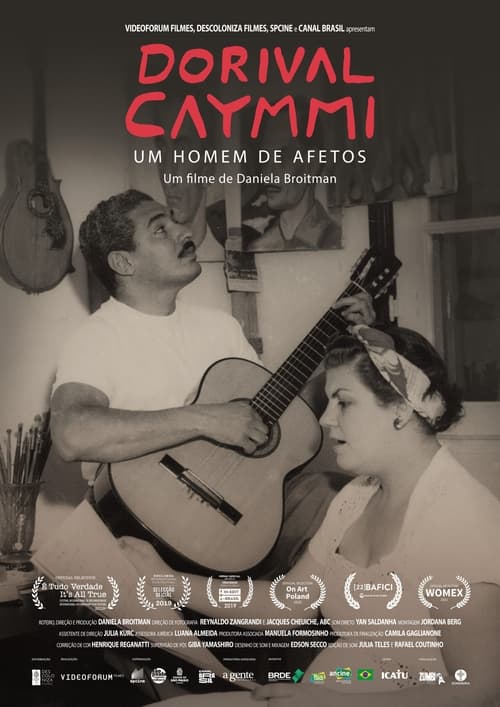
Dorival Caymmi - Um Homem de Afetos
2024
An irresistible journey through the universe of the singer and composer that revolutionized the song in Brazil and influenced generations of musicians, paving the way for movements such as Bossa Nova and Tropicália.

Nas Ondas de Dorival Caymmi
2024
The film reveals the creation of poet Dorival Caymmi's musical works with testimonies from researchers, journalists and friends who lived with him and were able to enjoy his wisdom and talent.
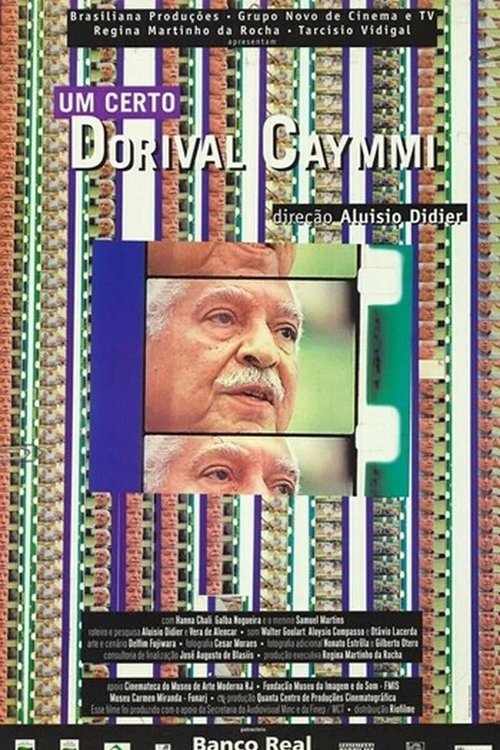
Um Certo Dorival Caymmi
2002
The life and work of the Bahian composer, from his arrival in Rio de Janeiro to his involvement with other forms of artistic expression such as cinema and painting.
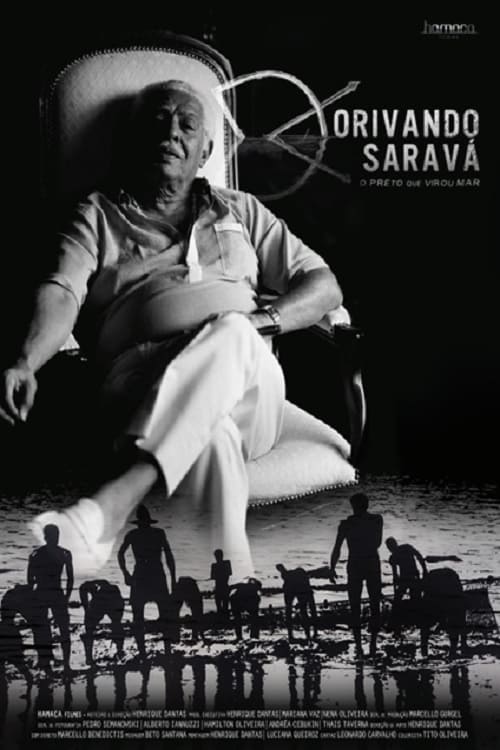
Dorivando Saravá, o Preto Que Virou Mar
2019
Singer, composer, actor and painter, Dorival Caymmi was a multiple artist, but what they may not know is his pioneering work in introducing candomblé into Brazilian popular music. Recreating in a poetic way concepts present in Caymmi's work and life, the documentary revelation of the artist from his own lines, mined in old magazines.
Books
Os 500 Maiores Álbuns Brasileiros de Todos os Tempos
Ricardo Alexandre · 2022
The largest Brazilian music election ever conducted: 162 specialists, spanning journalists, critics, musicians, producers and podcasters, each nominated 50 essential albums, supported by a masterlist of more than 2,000 works. Led by Ricardo Alexandre with tabulation by Sérgio Jomori, it was published in December 2022 as a 200-page hardcover book with graphic design by Fernando Pires.
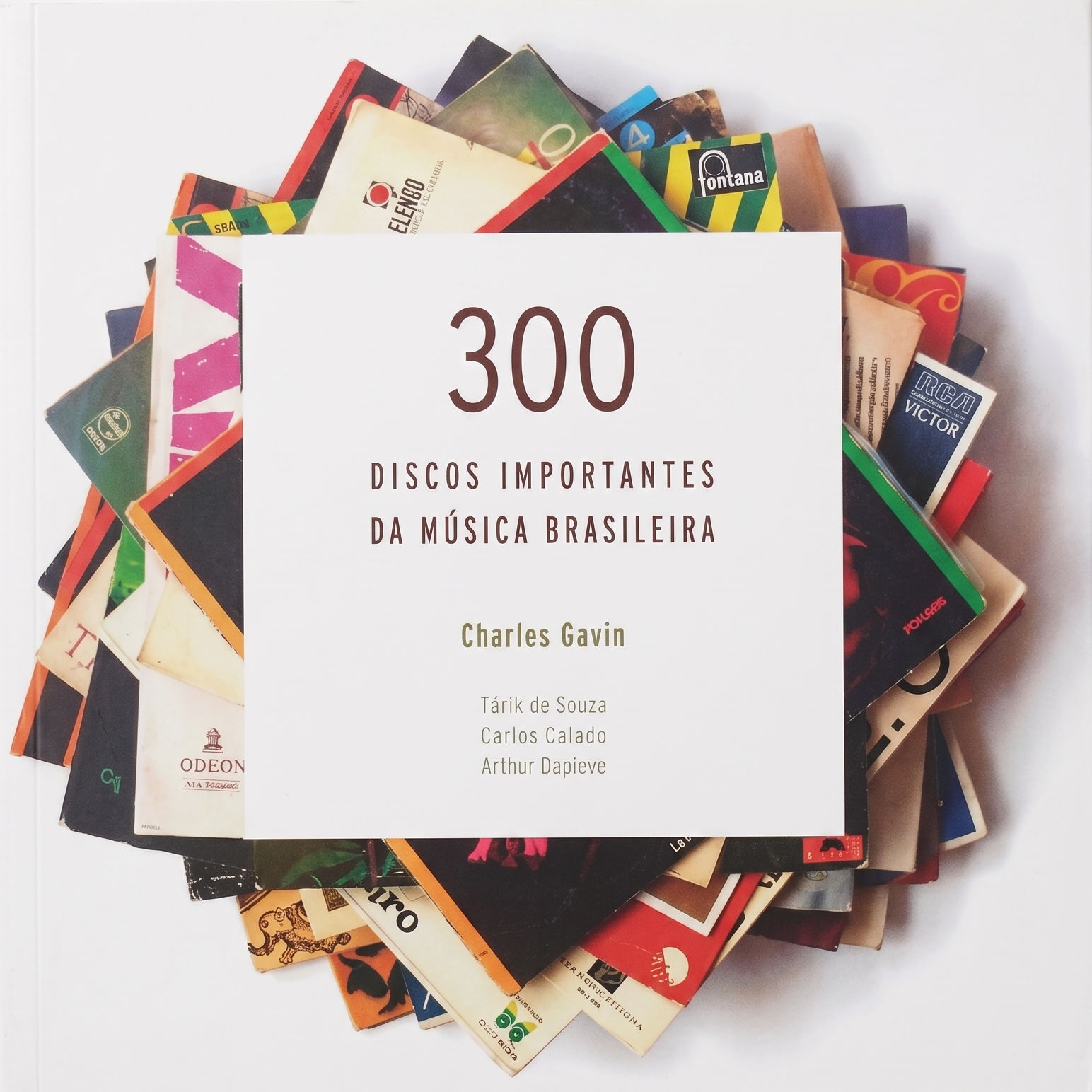
300 Discos Importantes da Música Brasileira
Charles Gavin, Tárik de Souza, Carlos Calado, Arthur Dapieve · 2008
Conceived by Titãs drummer and musical researcher Charles Gavin, the 434-page book brings together covers and reviews of albums released between 1929 and 2007. The texts were written by journalists Tárik de Souza, Arthur Dapieve and Carlos Calado.

Dorival Caymmi: o mar e o tempo
Stella Caymmi · 2001
The definitive biography of Dorival Caymmi, written by his daughter Stella Caymmi. This monumental work explores the composer's life and career, detailing his musical trajectory, the creative process of his songs, and the impact of his work on Brazilian music, providing essential context for the study of his albums and artistic periods, including 'Caymmi e Seu Violão'.
Analyses
Caymmi e Seu Violão – Wikipedia
Wikipedia, the free encyclopaedia
Caymmi e Seu Violão – The 100 Greatest Albums of Brazilian Music
Toninho Spessoto · Rolling Stone Brasil
Caymmi's songs by themselves allow one to "see" Bahia, but they gain even greater strength in the creator's voice and on his guitar.
Aquela Musica Apresenta "Caymmi e Seu Violão - 1959"
aquelamusica.com
Produced by Aloysio de Oliveira, "Caymmi e Seu Violão" is an album by Brazilian singer and composer Dorival Caymmi and was released in 1959 by the Odeon record label.
Dorival Caymmi - Caymmi e seu Violão - Ouvir todas as 12 músicas
ouvirmusica.com.br
Come and listen to "Pescaria (Canoeiro)", "A Jangada Voltou Só", "Dois de Fevereiro" and many other songs from the album Dorival Caymmi - Caymmi e seu Violão!