Sambas de Caymmi
Dorival Caymmi
1955

Rankings
Why This Album Matters
Sambas de Caymmi, released in 1955, is a seminal work that solidified Dorival Caymmi's image as one of the greatest chroniclers of the Brazilian soul. Through his compositions, the album paints a vibrant picture of Bahia, its people, its sea, and its customs, capturing the essence of its Afro-Brazilian culture and the daily lives of Salvador's fishermen and women. This record is a fundamental piece for understanding the evolution of Brazilian Popular Music (MPB), showcasing Caymmi's authorial modernity, which had been taking shape since the latter half of the 1940s. In it, the artist's melodic and lyrical simplicity blends with a subtle sophistication, marking his unique contribution to samba and song. The album is a testament to Caymmi's ability to transition between the playful and the mystical, the Carioca and the Bahian, without losing the authenticity of his voice, which would become an unquestionable reference for future generations of Brazilian musicians.
Context
The release of Sambas de Caymmi in 1955 occurred during a period of effervescence for the Brazilian phonographic market, with the consolidation of ten-inch LPs, which began to revolutionise how music was consumed. This was Caymmi's second album in this format, following Canções Praieiras, from 1954. By that point, Dorival Caymmi was already an established name in Brazilian music, with a career that began in the 1930s and led him to compose successes immortalised by names such as Carmen Miranda. In 1952, he had returned to the Odeon record label, the imprint through which he would release Sambas de Caymmi, after stints at Continental and RCA-Victor.
Recording
The album Sambas de Caymmi was recorded and released by Odeon in 1955, in the ten-inch LP format, containing eight tracks. The musical production featured arrangements by São Paulo-born pianist, arranger, and conductor Luiz Arruda Paes. Paes employed strings in most arrangements and included the participation of an uncredited vocal ensemble on the LP's back cover, which was Titulares do Ritmo. Although one critic pointed out the arrangements as “mostly somewhat saccharine and restrained”, the orchestral instrumentation marked a direction for MPB, serving as a basis for what would become the more elaborate orchestral style of the following decades.
Songs
The repertoire of Sambas de Caymmi comprises eight tracks, with all songs written by Dorival Caymmi, except for "Sábado em Copacabana" and "Não tem Solução", which were partnerships with Carlos Guinle. The songs include classics such as "Só Louco", "Nunca Mais", "Rosa Morena", "Requebre que eu dou um doce", "Vestido de Bolero", and "A Vizinha do Lado". Side A of the album presents four refined examples of the samba-canção genre, in which Caymmi demonstrates his mastery in refining the style, eliminating melodramatic excesses without shying away from themes of romantic disillusionment. Side B, however, transitions to the liveliness of more “playful” and “saucy” themes, revealing the composer's versatility and his ability to evoke different atmospheres with samba.
Legacy
Sambas de Caymmi, although it did not receive a detailedly documented critical reception at the time, established itself as a landmark in Dorival Caymmi's discography and in Brazilian music. Its relevance was reaffirmed in 2022, when a survey of 162 music specialists, conducted by the Discoteca Básica podcast, ranked the album at 340th position among the 500 greatest Brazilian albums of all time. The album was re-released on CD in 2000, allowing new generations to access this fundamental work. Caymmi's work as a whole, of which this album is an integral part, is widely recognised for having paved the way for Bossa Nova and for its influence on a vast array of artists, including Antônio Carlos Jobim, who described him as a “universal genius” and Brazil's greatest composer. Caymmi's style, with its “gentle and romantic colloquialism”, as praised by Carlos Lyra, and his ability to “architect the world” with his guitar, according to Jobim, continues to inspire names such as Caetano Veloso, Gilberto Gil, and Beth Carvalho, who cite him as a significant influence.
Tracks
Credits
Luiz Arruda Paes
Films


Dorival Caymmi: Programa Ensaio
1972
The TV Cultura programme Ensaio, recorded in 1972, welcomes Dorival Caymmi for the MPB Especial segment. The composer opens the show with his own compositions, such as "Francisca Santos das Flores", "Itapoã", "A Jangada Voltou Só", "Dois de Fevereiro", "Promessa de Pescador" and "Coqueiro de Itapoã". Following the musical opening, Caymmi talks about Salvador and his childhood. He recounts, in a poetic manner, the discovery of friendship and of Zezinho, his first friend and a great influence on his involvement with music. And, like a good storyteller, he gradually reveals the plot of a ballet for which he composed songs. Created with vocals and percussion for a Russian company touring Brazil, the acts broke down into songs that became well-known, such as "Canção da Noiva".
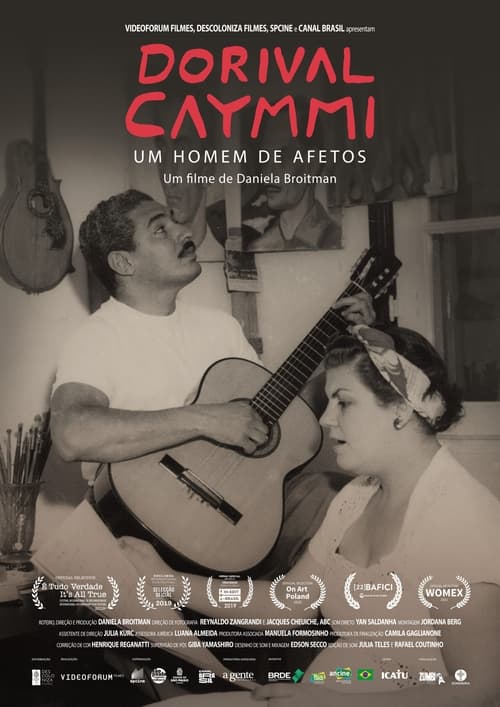
Dorival Caymmi - Um Homem de Afetos
2024
An irresistible journey through the universe of the singer and composer that revolutionized the song in Brazil and influenced generations of musicians, paving the way for movements such as Bossa Nova and Tropicália.

Nas Ondas de Dorival Caymmi
2024
The film reveals the creation of poet Dorival Caymmi's musical works with testimonies from researchers, journalists and friends who lived with him and were able to enjoy his wisdom and talent.
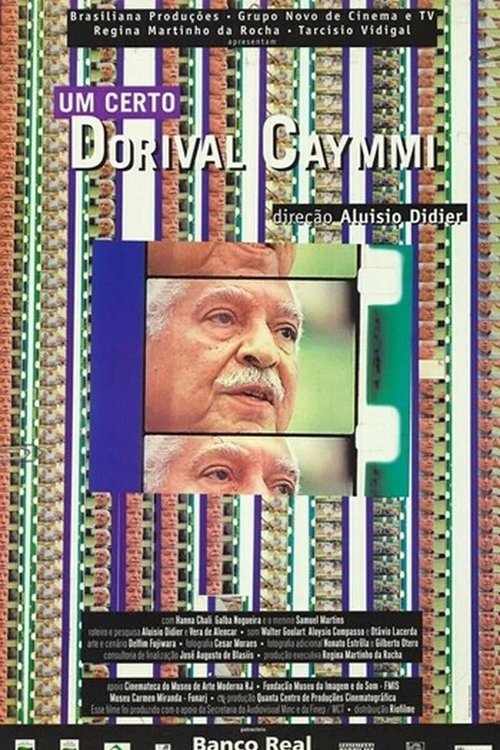
Um Certo Dorival Caymmi
2002
The life and work of the Bahian composer, from his move to Rio de Janeiro to his involvement with other forms of artistic expression such as cinema and painting.
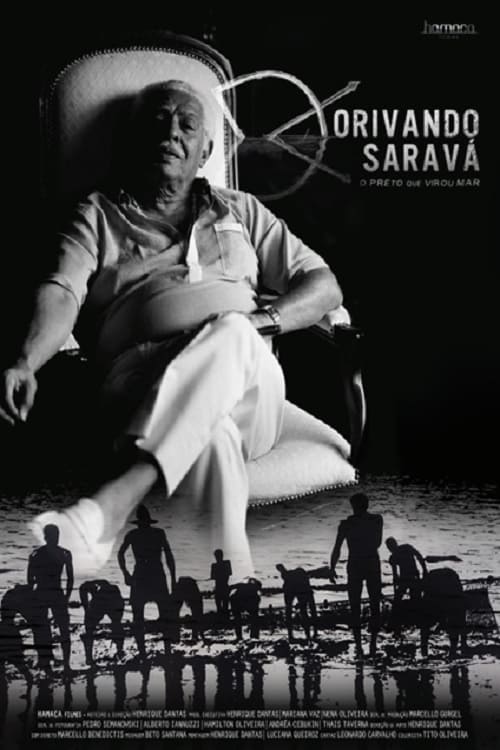
Dorivando Saravá, o Preto Que Virou Mar
2019
Singer, composer, actor and painter, Dorival Caymmi was a multiple artist, but what they may not know is his pioneering work in introducing candomblé into Brazilian popular music. Recreating in a poetic way concepts present in Caymmi's work and life, the documentary revelation of the artist from his own lines, mined in old magazines.
Books
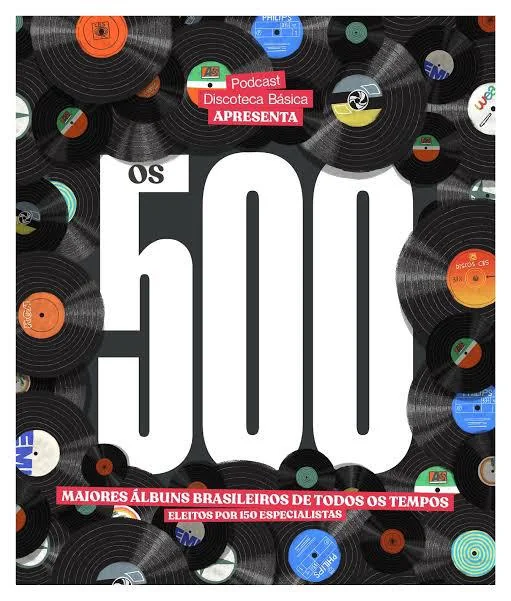
Os 500 Maiores Álbuns Brasileiros de Todos os Tempos
Ricardo Alexandre · 2022
The largest Brazilian music election ever conducted: 162 specialists, spanning journalists, critics, musicians, producers and podcasters, each nominated 50 essential albums, supported by a masterlist of more than 2,000 works. Led by Ricardo Alexandre with tabulation by Sérgio Jomori, it was published in December 2022 as a 200-page hardcover book with graphic design by Fernando Pires.

Dorival Caymmi: o mar e o tempo
Stella Caymmi · 2001
This is the definitive and most complete biography of Dorival Caymmi, written by his granddaughter, Stella Caymmi. The work explores the artist's life, career, and musical legacy, from his roots in Bahia to his consecration as one of the greatest names in Brazilian music, addressing his compositions, his influence, and, undoubtedly, detailing the periods in which he produced important albums such as 'Sambas de Caymmi'.
Analyses
Dorival Caymmi - Sambas | TheAudioDB.com
theaudiodb.com
Artist: Dorival Caymmi, Album: Sambas, MusicBrainzID: 8c7fb2bb-a627-440a-9c12-d7efbe5732bc, data, artwork, cover, cdart, spine, back cover
Discos para descobrir em casa - 'Sambas', Dorival Caymmi, 1955
g1.globo.com
Across eight tracks, Caymmi showcased his compositional modernity which, from the second half of the 1940s onwards, had emerged from the murky waters of samba-canção.

Discos para descobrir em casa - 'Sambas', Dorival Caymmi, 1955
popeartebrasil.wordpress.com
On Side B, the album Sambas swapped this intimacy for the liveliness of more boisterous themes, showing the more playful side of Caymmi's samba. It was up to the São Paulo-born pianist, arranger, and conductor Luiz Arruda Paes to orchestrate the album's eight sambas. And Paes did so lavishly.
Dorival Caymmi - Sambas (1955) | Toque Musical
toque-musicall.com
And here, in this case, I have this small LP, a wonderful and original ten-inch edition, released by Odeon in 1955. 'Sambas de Caymmi' is a classic album, featuring a repertoire that was almost entirely unreleased and which would inevitably be a huge success.

Dorival Caymmi - Sambas (1955) - BR 320
br320.blogspot.com
Artist: Dorival Caymmi Album: Sambas Year: 1955 This edition: 2000 (Re-edition in the box set 'Caymmi Amor E Mar') Record label: EMI (And...