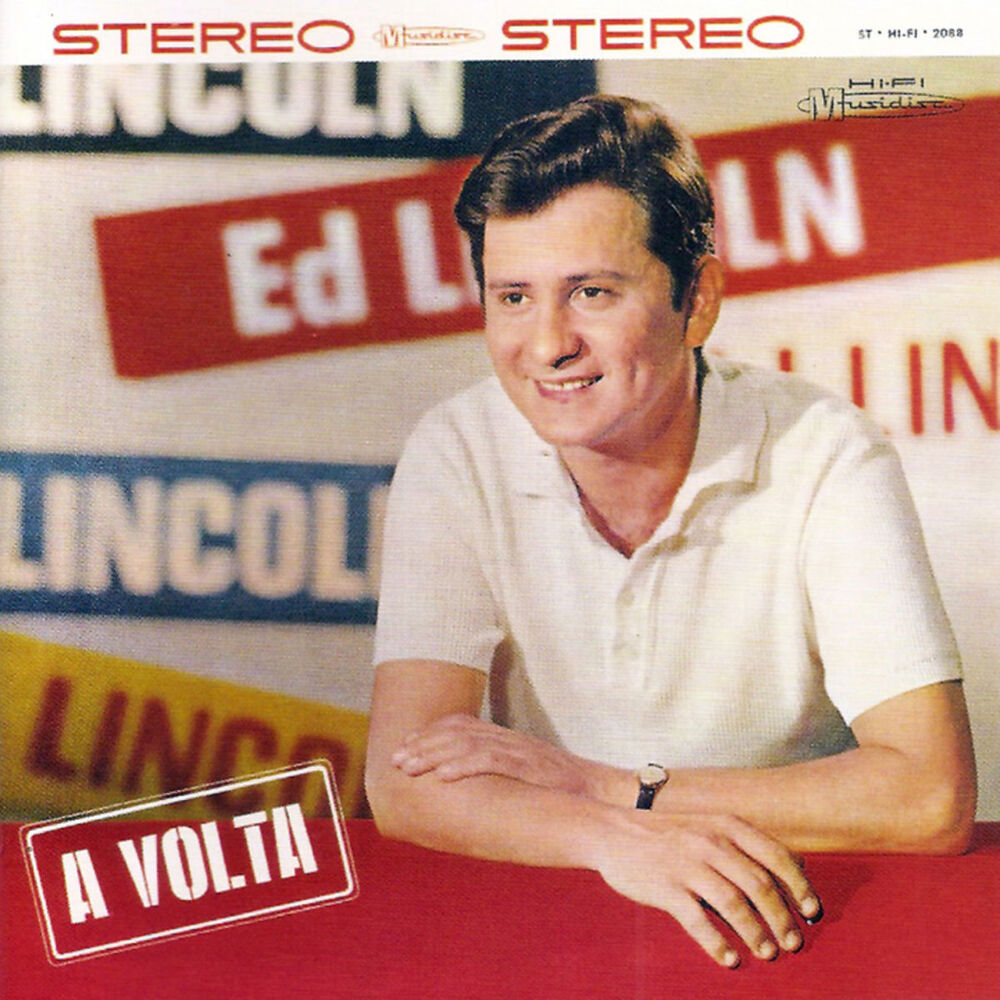
A Volta
Ed Lincoln
1964
Rankings
Why This Album Matters
A Volta, released in 1964, is a seminal work in Ed Lincoln's discography, solidifying his reputation as one of the most innovative instrumentalists and arrangers in Brazilian music. The album is a vibrant melting pot of sounds, fusing bossa nova and samba with sophisticated jazz elements and the then-emerging aesthetic of space age pop. Lincoln demonstrates his mastery of the Hammond organ and piano, creating soundscapes that are both danceable and intricately elaborated. This record is particularly special for its ability to transition between the contagious swing of samba-jazz and more elaborate harmonies, characteristic of his unique style. Ed Lincoln not only performs but also imprints his signature on each arrangement, elevating instrumental music to a level of expressiveness rare at the time. "A Volta" represents a high point in Lincoln's career, where his versatility and creativity are fully manifested, offering a rich overview of his musical vision and his invaluable contribution to instrumental MPB. It is an album that invites constant rediscovery of its details and nuances.
Context
The year 1964 was a period of effervescence and political instability in Brazil, culminating in the military coup that established the dictatorship. This scenario of social and political transformation coexisted with a rich cultural production, where bossa nova had already been established and new strands of samba and Brazilian instrumental jazz were gaining strength. Ed Lincoln, already recognised as a talented bassist in the early days of bossa nova and a fundamental organist for Brazilian jazz and space age pop, had a series of important works to his name. His previous trajectory included performances with Trio Plaza and Maestro Radamés Gnattali's Quintet, as well as having participated in the first bossa nova recording. In 1963, Lincoln suffered a car accident that sidelined him for seven months, being replaced by a young Eumir Deodato. "A Volta" marks his return to the scene, reflecting a phase of artistic maturity, even amidst a turbulent national context.
Recording
Ed Lincoln was known for his studio innovations. On previous albums, such as This is Ed Lincoln (1961), he already used recording techniques to overdub his own piano and Hammond organ lines, creating the sound of multiple musicians. Although specific details about the studio and producer of "A Volta" are not widely disclosed, the album was released by the Musidisc label, with whom Lincoln already had a contract since 1960. It is probable that the production of "A Volta" benefited from these same vanguard techniques for the time, allowing Lincoln to fully explore the textures of his instruments and arrangements. This "one-man band" approach through studio technology was crucial for the construction of his sonic identity, full of layers and grooves.
Songs
The repertoire of "A Volta" is an exemplary selection of Ed Lincoln's versatility, featuring both his own compositions and interpretations of other artists. Tracks like "Ai Que Saudade Dessa Nêga", one of Lincoln's best-known compositions, and "Palladium" (co-written with Orlandivo), stand out for their fusion of Brazilian rhythms with jazz language, featuring prominent organ and piano lines. The album also includes an interpretation of Clifford Brown's "The Blues Walk", demonstrating Lincoln's deep connection with international jazz. Other tracks such as "Na Onda do Berimbau" (Oswaldo Nunes) and "Sacy Perere" (Rildo Hora/Marcos André) illustrate Lincoln's ability to transform and enrich songs with his distinctive arrangements, full of swing and harmonic sophistication.
Legacy
Although specific details of sales or chart positions for "A Volta" in 1964 are difficult to trace, Ed Lincoln's work, including this album, is recognised as fundamental to the development of samba-jazz and Brazilian instrumental music. Lincoln's influence transcended his era; in the 1990s, some of his recordings were bootlegged and widely played by DJs in England, becoming source material for dance music tracks, with songs such as "Cochise" and "Se Você Quiser" standing out. His innovative approach to style fusion and creative use of the Hammond organ established a sound that inspired generations of musicians. Ed Lincoln's reputation as an arranger and composer, solidified by albums like A Volta, remains strong, with him being considered a pillar for Brazilian instrumental music and a precursor to sounds that would be explored by various artists in subsequent decades.
Tracks
Credits
Joselito
Nilo Sergio
Mafra
Videos
The Mars Volta - The Mars Volta ALBUM REVIEW
theneedledrop
The Mars Volta- Noctourniquet ALBUM REVIEW
theneedledrop
Books
Analyses
A Volta", de Ed Lincoln, completa 60 anos em 2024
nikita.com.br
The album "A Volta" by musician Ed Lincoln is celebrating its 60th anniversary this year. Considered the "King of Sambalanço", Ed Lincoln was one of Brazil's greatest producers in the 1960s and one of the first to popularise the genre, which gave rise to Jorge Ben's Samba Rock.

Búzios Bossa Blog: Ed Lincoln - A Volta - 1964
buziosbossablog.blogspot.com
11 - São Salvador (Durval Ferreira/Aglaê) 12 - Voltei (Ed Lincoln/Silvio César) * The album title "A Volta" was motivated by his absence from the music scene due to a car accident that took him out of circulation for almost 1 year. It's a vintage album. I think it has already been released on CD.
"A Volta", de Ed Lincoln, completa 60 anos em 2024
abcdoabc.com.br
The album "A Volta" by musician Ed Lincoln is celebrating its 60th anniversary this year. Considered the "King of Sambalanço", Ed Lincoln was one of Brazil's greatest producers in the 1960s and one of the first to popularise the genre, which gave rise to Jorge Ben's Samba Rock.

Ed Lincoln - A Volta (1964) - The Music of Parallel Realities
parallelrealitiesmusic.wordpress.com
Musidisc Hi-Fi 2088 01. Ai Que Saudade Dessa Nega (Ed Lincoln) 02. Eu Vou Também (Menininha) (Ed Lincoln / Orlandivo) 03. The Blues Walk (Clifford Brown) 04. Falaram Tanto de Você (Durval Ferreira / Orlandivo)

Fina Nostalgia: ED LINCOLN - A VOLTA (1964)
finanostalgia.blogspot.com
ED LINCOLN - A VOLTA (1964) Tags: latin jazz, mpb, sambarock