Circense
Egberto Gismonti
1980

Rankings
Why This Album Matters
Circense, released in 1980, stands as one of the most emblematic and acclaimed works in Egberto Gismonti's vast discography, consolidating his reputation as one of Brazil's most innovative and virtuous multi-instrumentalists. The album is conceived under the idea of a 'musical circus', a concept that amalgamates the universal appeal of circus art with Brazil's rich cultural identity. This narrative structure allows Gismonti to explore a vibrant fusion of contemporary jazz elements, classical music, and Brazilian folk traditions, resulting in a unique and performative sound. Gismonti demonstrates in Circense unparalleled mastery in uniting diverse musical languages, from the complexity of dodecaphonic music, which he studied in Europe, to the spontaneity of Brazilian regional rhythms. His ability to weave rich soundscapes and evocative musical narratives, utilising a vast range of instruments such as guitar (including the 10-string), piano, and voice, confers upon the album a remarkable artistic brilliance and emotional depth. Circense is not just a record, but a sensorial experience that captivates with its thematic coherence and harmonic richness, reaffirming Gismonti's lasting impact on Brazilian and world music.

Despite being appreciated worldwide, his music is still today labelled 'difficult', much like a modern Villa-Lobos.
Antônio do Amaral Rocha · Rolling Stone Brasil
Context
Before conceiving Circense, Egberto Gismonti had already built a remarkable musical career, guided by intense research and experimentation. Born in Carmo, Rio de Janeiro, in 1947, he began his piano studies at five and, by adolescence, had already mastered flute, clarinet, and guitar, furthering his studies at the Conservatório Brasileiro de Música. His restlessness led him to Paris in 1969, where he studied dodecaphonic music with Jean Barraqué and musical analysis with Nadia Boulanger, elements that would shape his sophisticated and inclusive approach to composition. The 1970s was a period of prolific output for Gismonti, in which he dedicated himself almost exclusively to instrumental music, exploring Brazilian folklore and rhythms such as frevo, baião, samba, and maracatu. He transitioned from piano to guitar, experimenting with 8 and 10-string instruments, and collaborated with important names such as Naná Vasconcelos on acclaimed albums like Dança das Cabeças (1976). Circense, recorded in 1979, thus emerges as the culmination of this exploratory phase, a mature synthesis of his diverse influences and his incessant search for a sound that was both profoundly Brazilian and internationally far-reaching.
Recording
The album Circense was written and recorded by Egberto Gismonti in 1979, with its initial release as an LP by EMI (EMI Odeon in Brazil) in 1980. Production was handled by Mariozinho Rocha, and recording and mixing engineering was conducted by Serginho and Toninho, with Nivaldo Duarte on mixing. To bring his conceptual vision of a circus to life, Gismonti gathered a stellar cast of Brazilian musicians of the time. Among the collaborators were Luiz Alves on bass, Robertinho Silva on percussion, Mauro Senise on saxophones and flute, Silvio Mehry on piano, and Pery Reis on guitar. The voices of Aleuda Malu, Dulce Bressane, and Pepê Castro-Neves added rich layers to the vocal sound. A highlight was the special participation of Indian violinist Lakshminarayana Shankar on the track "Cego Aderaldo", adding a unique international dimension to the recording. The string orchestra was conducted by Benito Juarez, who contributed to the orchestral depth of the arrangements. The album was later re-released on CD by EMI in 1988 and also by the CARMO label in 1991.
Songs
The eight tracks on Circense, all composed by Egberto Gismonti, with occasional collaborations on some lyrics, are a sonic immersion into the circus universe, with each song evoking elements and characters from this imaginary world. The opening track, "Karatê", establishes the album's performative energy, with a dynamic reminiscent of precise movements, where Gismonti's guitar skilfully interacts with Roberto Silva's drums. The song "Cego Aderaldo" is a tribute to the famous Northeastern repentista poet, and stands out for the special participation of Lakshminarayana Shankar on violin, which, alongside Gismonti's viola caipira, creates a sound with Indian raga nuances. "Mágico" intensifies the circus narrative with the inclusion of a children's choir, contributing to the atmosphere of dream and enchantment. The album's highlight is, for many, "Palhaço", a composition by Gismonti in partnership with Geraldo E. Carneiro. The track is notable for its emotional duality, combining a harmony resembling the blues with a lyrical and touching melody that unfolds in a seemingly infinite harmonic cycle, culminating in an orchestrated bridge with traces of modinha. This music transcends the comic stereotype to reveal the vulnerability and humanity behind the artist's smile. Meanwhile, "Mais que a paixão", co-written with João Carlos Pádua, closes the album with Gismonti on piano and vocals. The compositions explore Gismonti's versatility on guitar (including the 10-string), piano, and vocals, in rich arrangements that transition between samba-jazz, folk, and classical and international influences.
Legacy
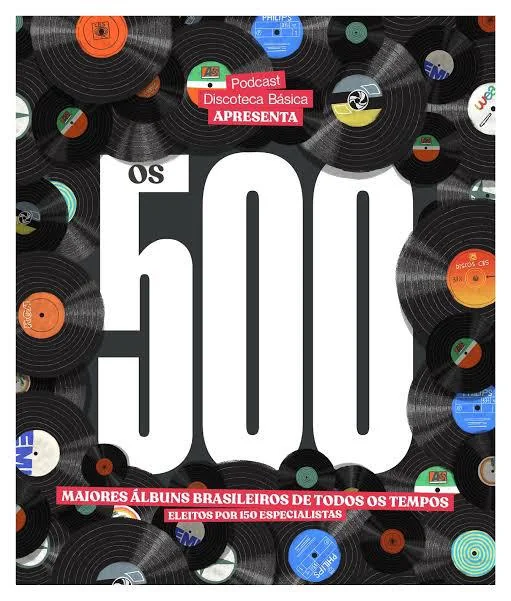
Circense quickly established itself as a landmark in Egberto Gismonti's discography and in Brazilian music in general, being widely acclaimed by critics and the public. Its importance is recognised in various specialised lists and rankings, including the 100th position on Rolling Stone Brazil magazine's list of 'The 100 Best Brazilian Albums of All Time'. In a poll conducted by the podcast Discoteca Básica, with the participation of 162 music specialists, the album ranked 102nd, reinforcing its prestige. The album received a 4.5 out of 5-star rating from Allmusic, an indication of its quality and impact. It is frequently cited as a career-defining work for Gismonti, comparable to what The Köln Concert represents for Keith Jarrett, not in style, but in its capacity to symbolise the genius of its creator. Circense solidified Gismonti's position as an artist who innovated in the fusion of acoustic timbres, rhythmic complexity, and evocative narrative, leaving a lasting legacy that continues to inspire musicians and listeners.
Tracks
Credits
Benito Juarez
Egberto Gismonti
Mariozinho Rocha
Nivaldo Duarte
Sérgio Bittencourt, Toninho
Tadeu Valério
Zé Flávio
Lizzie Bravo, Milton Montenegro, Wilton Montenegro
Books
Analyses
Circense – Wikipedia
Wikipedia, the free encyclopaedia
Circense – The 100 Greatest Albums of Brazilian Music
Antônio do Amaral Rocha · Rolling Stone Brasil
Despite being appreciated worldwide, his music is still today labelled 'difficult', much like a modern Villa-Lobos.
Album: Circense. Artist/Band: Egberto Gismonti. Year: 1980.
staimusic.com
Circense, released in 1980, is a jazz fusion album that features Gismonti on guitar and piano. It combines Brazilian rhythms with jazz, creating a distinct and electrifying sound that is instantly recognizable. The album has nine tracks, all composed and arranged by Gismonti. The use of various instruments such as drums, bass, saxophone and flute adds to the richness of the album.
Egberto Gismonti: Circense (CARMO/2) - ecmreviews.com
ecmreviews.com
Egberto Gismonti Circense Egberto Gismonti piano, electric piano, organ, guitar, flute, voice Mauro Senise saxophones, flute Roberto Silva drums, percussion Luiz Alvez acoustic bass L. Shankar violin Silvio Mehry piano Piry Reys guitar Aleuda voice, percussion Dulce Bressane voice Pepe Castro Neves voice Conductor: Benito Juarez Engineers: Serginho and Toninho Mixing: Nivaldo Duarte Producer ...

MUSICA&SOM: Egberto Gismonti - Circense (1980)
tabernanovostempos.blogspot.com
And we continue our festival of great Brazilian music, showcasing the extensive discography of the virtuoso Egberto Gismonti. This excellent album was conceived under the concept of "circus", something that is both universal and regional.