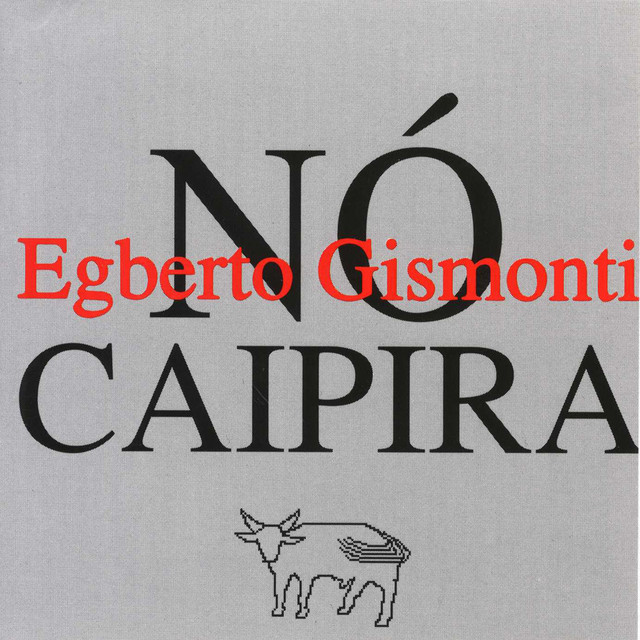
Nó Caipira
Egberto Gismonti
1978
Rankings
Why This Album Matters
Nó Caipira, released in 1978, is an unquestionable masterpiece by the Brazilian artist Egberto Gismonti, a true musical genius. The album stands out for its unique fusion of Brazilian music elements with global influences, creating a sound that transcends easy categorisation. It is a musical journey that explores Brazil's cultural richness, with a style that blends bossa, intense percussive rhythms, and the smoothness of indigenous flutes, all woven together by Gismonti's ethnic guitar phrases. This work is notable for its spiritual and mystical atmosphere, dedicated to the indigenous peoples of the Amazon, reflecting a deep connection to Brazilian roots. Gismonti demonstrates his multi-instrumental mastery, using a vast range of instruments to build complex and immersive soundscapes, solidifying his position as one of the most innovative composers and performers in MPB.
Context
Egberto Gismonti's career before Nó Caipira was already marked by a solid erudite background, having studied classical piano since the age of six and refined his knowledge in Paris with Nadia Boulanger (orchestration and analysis) and Jean Barraqué, a disciple of Schoenberg and Webern. Upon returning to Brazil, Gismonti began a process of expanding his musical perception, seeking to go beyond the classical universe. Nó Caipira represents a stylistic return, embracing organicism after the more experimental period of Trem Caipira. The title itself, which refers to the rural universe and 'caipira' culture, evokes a profound and authentic Brazil, a recurring theme in Brazilian music and arts of the time, which sought to value national identity and its interior roots.
Recording
The album Nó Caipira was released in 1978, a production by EMI-Odeon in partnership with Carmo Produções Artísticas, under Egberto Gismonti's own production. Recording and sound engineering were handled by Nivaldo Duarte, with mixing carried out at Synth Studios by Edú Mello e Souza. The original LP release was accompanied by the first issue of Jornal Caipira, which detailed the album's credits. A diverse cast of musicians contributed to the album's sound, including Zeca Assumpção on double bass, Zé Eduardo Nazário on drums and percussion, and Mauro Senise on saxophones and flutes. In addition to conventional instruments, Gismonti explored a wide variety of sound resources such as bottle, fife, bamboo grove, jaw harp, whistles, music box, kalimbas, and even a 'cathedral', showcasing his search for innovative textures and timbres. The final track, "Dança das Sombras", was recorded later, in 1979, at the Centro de Convivência Cultural de Campinas, with the participation of the Orquestra Sinfônica de Campinas, conducted by Benito Juarez.
Songs
The fourteen compositions on Nó Caipira transition between contemporary jazz and traditional Brazilian music. The opening track, "Saudações", is a tribute to João Gilberto, presenting a bossa nova with guitar and voice, marking a return to organic and melodic form. In contrast, tracks like "Nó Caipira & Zabumba" reveal dancing rhythms driven by percussion and the captivating melody of indigenous flutes, evoking a tribal and festive atmosphere. Gismonti's compositional depth is exemplified in "Selva Amazônica", an explicit homage to Heitor Villa-Lobos. This piece stands out for its combination of 12-string guitar, borrowed from Ralph Towner, and rich percussion, creating a sonic tapestry that evokes the grandeur of the forest. "Palácio de Pinturas" and "Sertão Brasileiro" are other standout tracks, with critics describing them as works that evoke powerful images and profound feelings, revealing Gismonti's ability to compose music that is simultaneously pure and complex, with elements reminiscent of classical music, but performed in an original and unique way. The CD version of the album includes the track "Dança das Sombras", which was not present on the original LP.
Legacy
Nó Caipira is widely recognised as a masterpiece by Egberto Gismonti, solidifying his reputation as one of the most innovative artists in Brazilian music. The album is classified as "world fusion music" and has been praised for its originality and beauty, with critics describing it as "pure music at its best" and an "incredible achievement". Its positive critical reception has established it as an ideal starting point for those wishing to explore the Carmo catalogue, Gismonti's label. Although exact sales data are difficult to trace, the album's longevity and its continuous appreciation indicate its lasting impact. On platforms such as Discogs, different editions of the album maintain high ratings, with averages of 4.5/5 and 5/5, and a considerable number of collectors expressing interest in owning it, demonstrating its relevance and value in the record market. Nó Caipira's influence lies in its ability to integrate diverse musical elements, from jazz to Brazilian folk music, setting a standard for instrumental and fusion music that would continue to inspire musicians and composers in subsequent decades.
Tracks
Credits
Egberto Gismonti
Mariozinho Rocha
Robertinho Silva
Mauro Senise
Zeca Assumpção
Zé Eduardo Nazario
Academia De Danças
Egberto Gismonti
Osmar Furtado
Nivaldo Duarte
Gráfio
Claudio Battaglia
Tadeu Valério, Wilton Montenegro
Wilton Montenegro
Analyses
No Caipira by Egberto Gismonti (1978) | Jazz Album | All About Jazz
allaboutjazz.com
Listen to and explore No Caipira by Egberto Gismonti, released in 1978 on Carmo. Read reviews, track listings, and discover more jazz albums on All About Jazz.
O álbum Nó Caipira, de Egberto Gismonti - Jornal GGN
jornalggn.com.br
From what I know of his discography, it's the album I like the most, but who am I to judge a work of art? You, certainly, if you haven't heard the album yet, will evaluate it (what a language we have!) much better than I can.
Cliquemusic : Disco : NÓ CAIPIRA
cliquemusic.com.br
Egberto Gismonti (1978) 1978 EMI-Odeon 064 422836 Tracks 1 Saudações (Egberto Gismonti, Paulo César Pinheiro) 2 Nó caipira: Nó caipira - Noca - Pira (Egberto Gismonti) 3 Palácio de pinturas (Egberto Gismonti) 4 Maracatu (Egberto Gismonti) 5 Frevo: Frevo - Esquenta muié (Banda de Pífano) 6 Frevo rasgado (Egberto Gismonti)

Egberto Gismonti & Academia de Danças - Nó Caipira (1978; EMI-Odeon ...
camarilhadosquatro.wordpress.com
"Nó Caipira", a strong xaxado full of percussive layers begins and leaves no stone unturned. I dare say that few Brazilian music albums begin as exuberantly as Nó Caipira.

SOM DO BOM: Egberto Gismonti - Nó Caipira [1978]
somdubaum.blogspot.com
1. Saudações 2. Nó Caipira & Zambumba 3. Noca & Garrafas 4. Pira & Bambuzal 5. Palacio de Pinturas