Elis
Elis Regina
1973
Rankings
Why This Album Matters
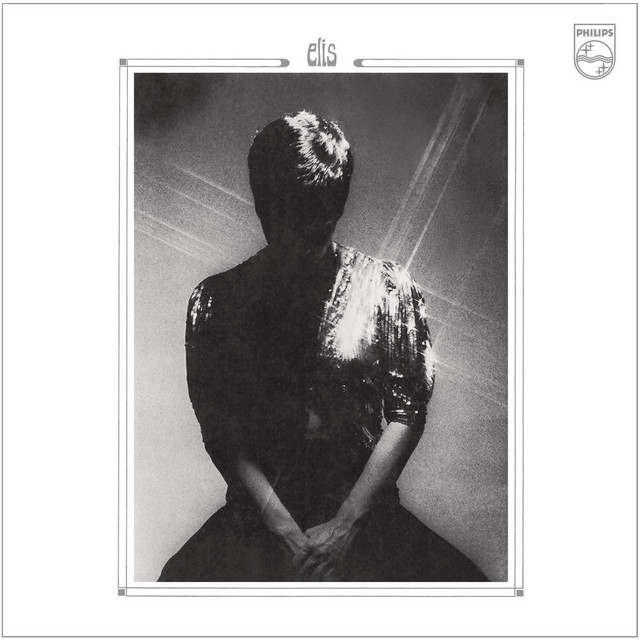
Elis, Elis Regina's eleventh studio album, released in 1973 by the Phonogram label, represents a landmark in the singer's career, solidifying her position as one of the greatest interpreters of Brazilian music. This work deepens her collaboration with maestro and arranger César Camargo Mariano, who signed the arrangements, creating a sophisticated and, at times, avant-garde sound for the MPB of the era. The album is a testament to Elis's ability to navigate different styles and moods, delivering performances that elevate the compositional material to another level, with an unmistakable vocal signature. The album is notable for its repertoire selection, which includes significant contributions from some of the most talented composers in Brazilian music. With four tracks by Gilberto Gil and another four by the duo João Bosco and Aldir Blanc, Elis offers a rich and diverse panorama of Brazilian popular music. Elis's skill in bringing life and depth to each lyric, combined with Mariano's innovative arrangements, makes this album an essential work for understanding the evolution of MPB in the 70s, transcending time with its artistic relevance.
Context
Released in 1973, the album Elis emerged during a period of intense political repression in Brazil, under the military dictatorship. In this scenario of censorship and surveillance, many artists, including Elis Regina, sought subtle, or sometimes more direct, ways to express resistance and criticism. "Pimentinha", as she was known, used her art as a vehicle for this expression, with the lyrics of "Agnus Sei" (a corruption of Agnus Dei) and "Comadre" containing subtle criticisms of the regime. The collaboration with César Camargo Mariano, who had already signed the arrangements for Elis's previous album, was consolidated, marking a new musical direction for the singer. This period represented a phase of artistic maturation, where her vocal technique and interpretive capacity reached one of their peaks, allowing her to navigate complex and meaningful repertoires within a challenging sociopolitical context for Brazil and its artists.
Recording
The recording of Elis, in 1973, took place at Estúdio Eldorado, in São Paulo, utilising the state-of-the-art technologies available at the time. Production coordination was by Roberto Menescal, while César Camargo Mariano acted as musical director and arranger. The process was supervised by a technical team that sought to capture Elis Regina's vocal depth and expressiveness, as well as the complexity of the arrangements. Despite its sophistication by 1970s standards, the original recordings were made on an analogue eight-track system. This technical limitation, common for the period, resulted in challenges such as sound leakage and noise between instruments, which sometimes caused distortions, as noted in Luizão Maia's bass and Elis's own voice. However, these characteristics are an integral part of the original sound texture, lending the album an authenticity that reflects the production techniques of that era.
Songs
The repertoire of Elis is one of its strongest points, featuring ten tracks that alternate between social criticism, romance, and cultural celebration. The album stands out as a vehicle for works by important MPB composers, with four songs by Gilberto Gil and four by the duo João Bosco and Aldir Blanc, ensuring lyrical and melodic richness. Hits like "Ladeira da Preguiça" and "Meio de Campo" demonstrate Elis's ability to transform songs into timeless classics, marked by her unique interpretation. In addition to the best-known tracks, the album contains lyrics laden with subtleties, especially in "Agnus Sei" and "Comadre", where veiled criticisms of the Brazilian military regime are perceptible, a common trait in Elis's work. The inclusion of "É Com Esse Que Eu Vou", originally a carnival samba-enredo, demonstrates the singer's versatility in appropriating different genres and imbuing them with a new artistic dimension. A particularly notable moment is the song "Folhas Secas" by Nelson Cavaquinho, which generated a controversial recording dispute with Beth Carvalho, highlighting the song's relevance and the impact of Elis's choice to include it on the album.
Legacy
The initial critical reception of Elis was complex. Although the album was commercially successful and contained songs that became great hits, Elis Regina's interpretation was, at the time, criticised for an alleged "excess of technique" at the expense of emotion, an observation that would accompany her until the release of Falso Brilhante in 1976. However, this perception would transform over time, and Elis's technical mastery would later be recognised as a fundamental element of her interpretive genius. Decades later, specialised critics re-evaluated the album with great appreciation. Alvaro Neder, from the AllMusic website, highlighted the importance of compositions by João Bosco, Aldir Blanc, and Gilberto Gil, and praised César Camargo Mariano's "fusion" character arrangements and execution, pointing out the dynamic between samba, bossa nova, and tango. The recognition of the work culminated in a re-release in March 2026, with remixed and remastered versions, supervised by João Marcello Bôscoli. This project, although it generated controversy with César Camargo Mariano regarding fidelity to the original artistic plans, reinforces the permanence and importance of Elis in the canon of Brazilian music, reaffirming its status as an essential album in Pimentinha's discography.
Tracks
Credits
César Camargo Mariano
Roberto Menescal
Joaquim Figueira
Podcasts

Arquivo Elis Regina
Criado por Fernando Faro em 1969, o programa "MPB Especial" está no ar desde a década de 70 na TV Cultura. Resgatando a memória viva da Música Popular Brasileira por meio de depoimentos de compositores e intérpretes, o programa teve Elis Regina como convidada no ano de 1973. Com 28 anos e respeitada como grande intérprete, Elis traça um panorama de sua vida e carreira contando histórias e cantando
Rádio Itacolomi
Neste episódio, levamos até você a participação de Elis Regina no programa Ensaio, exibido pela TV Cultura, em 1973. Se você quiser ouvir esse clássico da televisão cultural, é só apertar play. Agora, se você quiser ver e ouvir, basta acessar o Youtube ou mesmo comprar o DVD. É satisfação garantida.

Colunistas Eldorado Estadão · Rádio Eldorado
Sérgio Martins é jornalista e crítico musical. Ele apresenta a coluna Conversas Musicais às 3ªs, 8h, no Jornal Eldorado.See omnystudio.com/listener for privacy information.

Cultura · CBN
João Marcello Bôscoli fala sobre o 'Elis 73’, albúm que foi remasterizado 53 anos depois e chega às plataformas com nova mixagem. Learn more about your ad choices. Visit megaphone.fm/adchoices
Videos
The Controversial Remix of Elis (1973) and the Purism of MPB
RGX Education
Mexer em clássicos: preservação ou padronização? O caso do Elis 73
Para ouvir hoje 🎧
Remasterização de Elis Regina: Entre o Respeito à Obra e a Evolução do Som
Mordecai Paes
Films


Por Toda Minha Vida: Elis Regina
2006
O especial contou a vida de Elis Regina Carvalho Costa, desde que ela era uma pequena gaúcha que adorava ouvir e cantar junto com o rádio até o fim de sua vida.

Elis Regina: Falso Brilhante
2007
Elis was complete, she had all the attributes which differentiated simple artists from stars. She could enchant crowds in her albums, concerts and in video. Her music was always associated to the stage, site she mastered with brilliance. Throughout her career, these stages would open to her, from the radio days to the Montreux Jazz Festival. This film shows her magic relationship with stage and audience. And also the Bandeirantes theatre, her last stronghold. There she shone in life with her greatest success in theater, the show 'Falso Brilhante', which is also presented and entitles this film. There her body was veiled and her audience went to meet her for the last time, now for a farewell.

Elis Regina: Doce de Pimenta
2007
She mesmerised the crowd. The first sight would rapidly disappear and anyone who would get closer would also be surprised. It is not known if she did it for "beauty or precision", as Guimarães Rosa used to say. But the truth is that stereotypes would be destroyed as soon as she would fetch her followers. And revelations would unfold. Behind her suavely acute and toned voice, there was a deep tone that only few could reach. Behind her humble upbringing, there was an uncommon sensibility and intelligence. Her disguise was her irrepressible technique. Elis was pure emotion. And singing was not her final objective, she really wanted to make people happy. This film honours Elis and creates a singular portrait of Brazil's biggest star.
Elis Regina: Na Batucada da Vida
2007
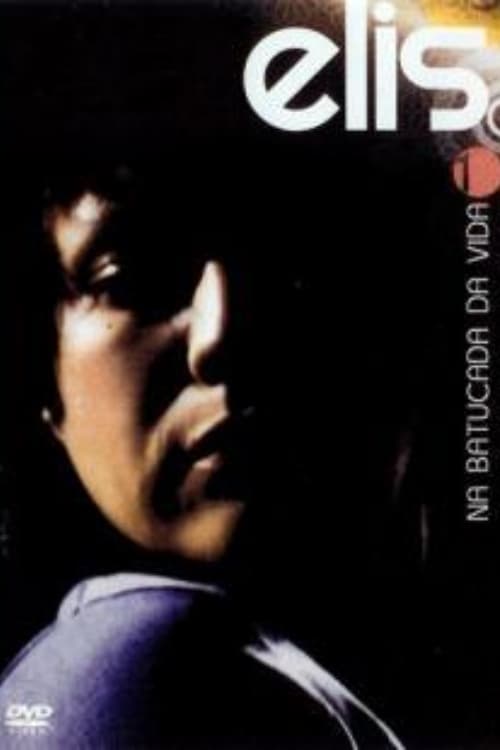
Her difficult career beginning in her hometown, Porto Alegre, was not different from her friends' stories. Elis belonged to a group of people born to win. She had the talent, she knew her potential and she just needed to face the world with courage and determination. That is exactly what she did. The result is known by everybody and it is in this film, a unique register of memorable interpretations by Elis, including the song which Elis learned with Tom Jobim and entitles the film.

Elis Regina: MPB Especial
1973
Recorded in 1973, this TV show brings Elis Regina in an 'ensaio' (improvisation). The programme aired by TV Cultura rescues the living memory of the greatest MPB star through her testimonials on composers and performers. The images are black and white and with camera close-ups, it denounces the restless, strong-willed hands of Elis.
Books
Analyses
Elis – Wikipedia
Wikipedia, the free encyclopaedia
Elis Regina, que hoje faria 81 anos, tem remixado o álbum de 1973 ... - G1
g1.globo.com
Gilberto Gil and the duo João Bosco & Aldir Blanc (1946 - 2020) dominate the repertoire of the 1973 album "Elis", with four songs by Gil and another four by the duo among the ten tracks.
Álbum 'Elis' de 1973, de Elis Regina, ganha remasterização digital em ...
oliberal.com
"Elis 73" stands out for the artist's more introspective choices, differing from the tone of songs like "Águas de Março" and "Casa no Campo" from the previous year. With the exception of the sambas "Ladeira da Preguiça" and "Meio de Campo", by Gilberto Gil, the repertoire explores dense themes.
Elis Regina: álbum de 1973 relançado em edição remasterizada
diariodoestadogo.com.br
In a new remixed and remastered version, the album "Elis", recorded in 1973 by Elis Regina, is reborn to enchant generations. With arrangements by Cesar Camargo Mariano and production by Roberto Menescal, the controversial work comes to life again and promises to move fans of the eternal singer from Rio Grande do Sul.

Elis Regina tem relançado disco de 1973 remixado e remasterizado
telestoques.wordpress.com
On the day Elis Regina would have turned 81, the album Elis 1973 arrives on platforms, with its sound updated by producer João Marcello Bôscoli (the singer's son) and sound engineer Ricardo Câmera. In the promotional material, Elis 1973 is described as 'one of the greatest MPB albums'.