Elis, Como & Porque
Elis Regina
1969

Rankings
Why This Album Matters
Elis is the eleventh studio album by Brazilian singer Elis Regina, released in 1973. It represents a significant point in her discography, being the second record to feature arrangements and musical direction by César Camargo Mariano, consolidating a notable artistic partnership. Musically, the album explores a "fusion" character, with arrangements and performances that dynamically transition between the influences of samba, bossa nova, and tango. The repertoire is enriched by compositions from great names in Brazilian music, such as Gilberto Gil, João Bosco, and Aldir Blanc, who stand out in her interpretations. Despite being a representative work, Elis initially generated discussions at the time of its release, with the singer receiving criticism for a perceived "excess of technique" and "lack of emotion" in her interpretations, a debate that, according to reports, would accompany the artist at times until her album Falso Brilhante, in 1976.
Context
The release of Elis in 1973 occurred during a period when the singer was under critical scrutiny, with questions raised about the emotion in her performances, despite her undeniable technical ability. This context of critical evaluation shaped part of the initial perception of the artist's work. In the contemporary scene, the album also fits into a moment of political tensions, and the repertoire includes subtle criticisms of the Brazilian military regime, perceptible in tracks such as "Agnus Sei" (a corruption of Agnus Dei) and "Comadre". The record was also the stage for a notorious controversy with singer Beth Carvalho, involving the recording of Nelson Cavaquinho's song "Folhas Secas", highlighting the dynamics and disputes of the phonographic market of that time.
Recording
The original recordings of Elis, made using an analogue system in the 1970s, faced technical limitations inherent to the era. The album was recorded on only eight channels, which resulted in challenges such as bleed and noise between instruments. These technical conditions caused, for example, distortions in Luizão's double bass and in Elis Regina's own voice, aspects that would be considered in attempts to update the album's sound decades later.
Songs
The album features ten tracks, presenting a notable balance between influential composers. Four songs are credited to Gilberto Gil and another four to the acclaimed duo João Bosco and Aldir Blanc, whose works come to life through Elis's voice. "Ladeira da Preguiça" and "Meio de Campo" are examples of songs from the album that became successes in the singer's voice. The record also stands out for including subtle criticisms of the Brazilian military regime in its lyrics, notably on the tracks "Agnus Sei" and "Comadre". The interpretation of "É Com Esse Que Eu Vou", which was originally a carnival samba-enredo, is another highlight in the album's repertoire. The track "Folhas Secas" has a particular history, having been recorded by Elis after she was captivated by the song in Beth Carvalho's voice, leading to a dispute between record labels and a significant episode in the careers of both artists.
Legacy
The initial critical reception of Elis was complex, marked by discussions about the singer's "excessive technique" to the detriment of emotion, an agenda that permeated her career for some years after the release. However, critics such as Alvaro Neder of AllMusic later recognised and praised the album, highlighting the quality of compositions by João Bosco, Aldir Blanc, and Gilberto Gil, and the innovation of César Camargo Mariano's "fusion" arrangements. Decades after its release, the album demonstrated its continued relevance with a remixed and remastered reissue in 2026. This project generated significant public debate, with the original pianist and arranger, César Camargo Mariano, expressing criticism about the new mix. However, Elis Regina's heirs, such as João Marcello Bôscoli and Pedro Mariano, defended the initiative, stating that the objective was to technically update the analogue recordings and that the process occurred with respect and family consensus.
Tracks
Credits
Roberto Menescal
Erlon Chaves
Armando Pittigliani
Paulo Garcez
Lincoln
Elis Regina
Videos
Elis Regina - Como É Porque (Episode 74)
Ten-Minute Record Reviews
Films

Furacão Elis
Furacão Elis
1985
Documentary about Elis Regina, presented by Marília Gabriela.
Elis & Eu
Elis & Eu
Based on the book “Elis e Eu: 11 anos, 6 meses e 19 dias com minha mãe” (Elis and I: 11 years, 6 months and 19 days with my mother), written by João Marcello Bôscoli, the film seeks to deconstruct the myth and reveal Elis as a woman, mother, and professional.

Elis
2016
The film tells the story of the energetic and pulsating singer Elis Regina since her arrival in Rio de Janeiro at age 19 until her tragic and early death. Despite all the difficulties, success comes fulminant and the life of Elis Regina gained national and international recognition, becoming undoubtedly considered today the greatest Brazilian singer of all time.

Elis Regina: Doce de Pimenta
2007
She mesmerised the crowd. The first sight would rapidly disappear and anyone who would get closer would also be surprised. It is not known if she did it for "beauty or precision", as Guimarães Rosa used to say. But the truth is that stereotypes would be destroyed as soon as she would fetch her followers. And revelations would unfold. Behind her suavely acute and toned voice, there was a deep tone that only few could reach. Behind her humble upbringing, there was an uncommon sensibility and intelligence. Her disguise was her irrepressible technique. Elis was pure emotion. And singing was not her final objective, she really wanted to make people happy. This film honours Elis and creates a singular portrait of Brazil's biggest star.
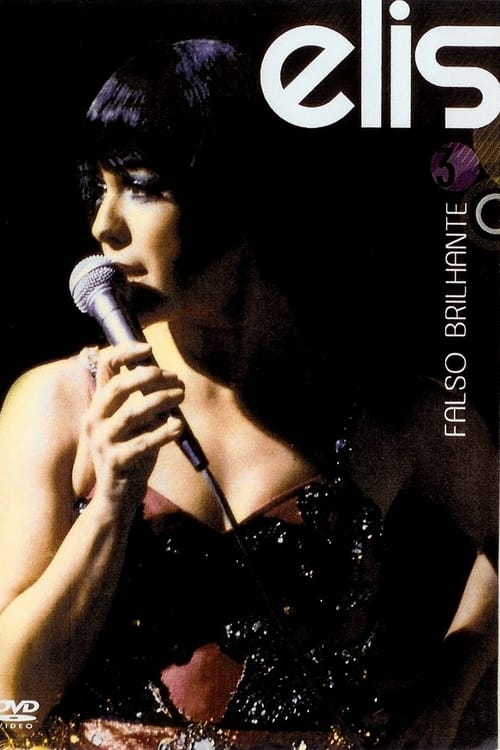
Elis Regina: Falso Brilhante
2007
Elis was complete, she had all the attributes which differentiated simple artists from stars. She could enchant crowds in her albums, concerts and in video. Her music was always associated to the stage, site she mastered with brilliance. Throughout her career, these stages would open to her, from the radio days to the Montreux Jazz Festival. This film shows her magic relationship with stage and audience. And also the Bandeirantes theatre, her last stronghold. There she shone in life with her greatest success in theater, the show 'Falso Brilhante', which is also presented and entitles this film. There her body was veiled and her audience went to meet her for the last time, now for a farewell.
Books

Analyses
Elis, Como & Porque – Wikipedia
Wikipedia, the free encyclopaedia
Elis Regina: Elis - Como & Porque | musicalphabet
musicalphabet.com
In May 1969, "Philips" label released "Elis - Como & Porque", the seventh Elis Regina album. It was recorded in 1969, and was produced by Armando Pittigliani. Personnel: Elis Regina - vocal, liner notes Antonio Adolfo - piano Wilson das Neves - drums, percussion Hermes Contesini - percussion Roberto Manescal - arrangements Erlon Chaves -…
Elis Regina - Como e Porque (1969) - Flabbergasted Vibes
flabbergasted-vibes.org
Along with her record from 1968, this is my favorite of her 1960s records. Arrangements by Roberto Menescal make this album unique in her discography. Menescal also contributes the most famous tuned he penned with friend Ronaldo Boscoli — "O Barquinho", a tune written for Nara Leão, but stolen by Maysa when she stole Boscoli from her… Elis doesn't surpass Maysa's smoky rendition ...
Como & porque - Elis Regina | Raygum
raygum.com
Como & porque, 1969 by Elis Regina. Discover album details, track listings, credits, and user ratings on Raygum.
LP ELIS REGINA 1969 Como & Porque - Banca do Rock
bancadorock.com.br
The LP "Como & Porque", released in 1969, showcases Elis Regina in a phase of growing maturity, establishing herself as the great voice of Brazilian popular music.