Vento de Maio
Elis Regina
1983

Rankings
Why This Album Matters
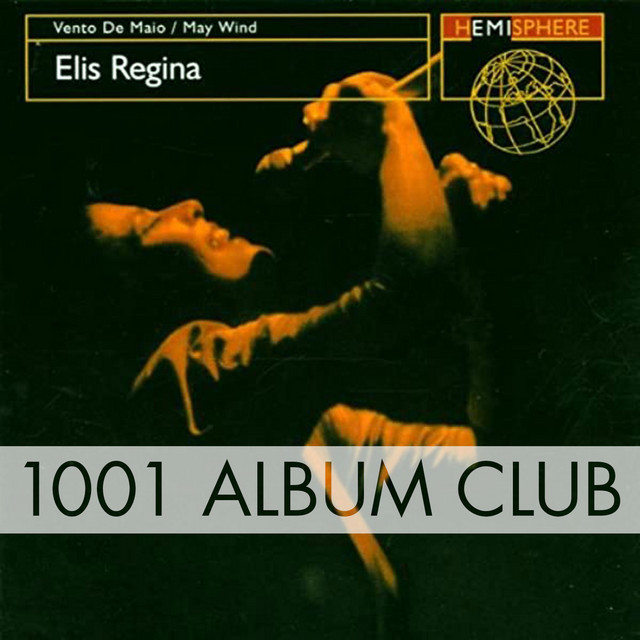
Vento de Maio, released posthumously in 1983, represents a poignant and essential testament to Elis Regina's artistic legacy. Although it is a compilation, this album brings together recordings that capture the singer's vitality and interpretive depth shortly before her premature death in 1982. It serves as a time capsule, showcasing her unique ability to navigate various genres of Brazilian Popular Music with unmistakable authenticity and passion. The record highlights Elis's vocal mastery, known for her agility, clarity, and absolute control of tones and gradations, which stand the test of time despite the production characteristics of the era. The repertoire selection illustrates the always shrewd curation of 'Pimentinha', featuring songs by great composers that would become classics in her voice, consolidating her image as one of the greatest interpreters of Brazilian music.
Context
Elis Regina tragically passed away in January 1982, aged 36, leaving an immense void in Brazilian music. Throughout her career, she was a highly significant figure, not only for her electrifying performances but also for her political engagement, positioning herself against the military dictatorship in Brazil. Her premature death shocked the country, immediately transforming her into an absent legend. The album Vento de Maio, released the year after her departure, emerged as an effort to celebrate and keep her work alive. Many of the tracks featured in the 1983 compilation were originally recorded for what would have been her last studio album, titled *Elis*, released in 1980.
Recording
As a compilation released in 1983, Vento de Maio was not recorded as a new project that year. Instead, the album brings together tracks recorded at different points in Elis Regina's career, with a large portion of the material coming from her last studio album, *Elis*, from 1980. This format allowed the EMI-Odeon label to compile and present to the public recordings that, otherwise, might have remained dispersed or less accessible.
Songs
The title track, "Vento de Maio", composed by Telo Borges and Márcio Borges from Clube da Esquina, explores the fleeting nature of a youthful romance, with metaphors of transience and acceptance of an end. Elis's interpretation is masterful, incorporating an incidental quotation from "Um Girassol da Cor do Seu Cabelo", reinforcing the emotional connection with the Clube da Esquina universe. Other album highlights include "O Que Foi Feito Devera (De Vera)", by Milton Nascimento, with whom Elis shared vocals on a melancholic and emotionally charged version, and "Se Eu Quiser Falar Com Deus", by Gilberto Gil. The compilation also features "O Trem Azul", by Lô Borges and Ronaldo Bastos, and "Aprendendo a Jogar", by Guilherme Arantes, demonstrating Elis's versatility in bringing compositions of different styles and authors to life.
Legacy
Vento de Maio, as a posthumous album, reinforced Elis Regina's stature as an essential artist in Brazilian music. Critical reception, even recognising that the production and fusion elements might sound dated, did not overshadow the timeless power of Elis's voice. The album is frequently cited as a piece that demonstrates her impressive vocal range and superior musicality. Even as a compilation, the record played an important role in keeping Elis's work present, especially during a period of national mourning. The inclusion of several well-known songs and others that would become emblematic in her voice ensured that new generations continued to discover and be moved by the singer's incomparable talent.
Tracks
Credits
César Camargo Mariano
Mayrton Bahia
Renato Corrêa
Podcasts
1001 Album Club · Birch
398 Elis Regina - Vento De Maio
Films

Furacão Elis
Furacão Elis
1985
Documentary about Elis Regina, presented by Marília Gabriela.
Elis & Eu
Elis & Eu
Based on the book “Elis e Eu: 11 anos, 6 meses e 19 dias com minha mãe”, written by João Marcello Bôscoli, the film seeks to deconstruct the myth and reveal Elis as a woman, mother, and professional.

Elis
2016
The film tells the story of the energetic and pulsating singer Elis Regina since her arrival in Rio de Janeiro at age 19 until her tragic and early death. Despite all the difficulties, success comes fulminant and the life of Elis Regina gained national and international recognition, becoming undoubtedly considered today the greatest Brazilian singer of all time.

Elis Regina: Doce de Pimenta
2007
She mesmerised the crowd. The first sight would rapidly disappear and anyone who would get closer would also be surprised. It is not known if she did it for "beauty or precision", as Guimarães Rosa used to say. But the truth is that stereotypes would be destroyed as soon as she would fetch her followers. And revelations would unfold. Behind her suavely acute and toned voice, there was a deep tone that only few could reach. Behind her humble upbringing, there was an uncommon sensibility and intelligence. Her disguise was her irrepressible technique. Elis was pure emotion. And singing was not her final objective, she really wanted to make people happy. This film honours Elis and creates a singular portrait of Brazil's biggest star.

Elis Regina: Falso Brilhante
2007
Elis was complete, she had all the attributes which differentiated simple artists from stars. She could enchant crowds in her albums, concerts and in video. Her music was always associated to the stage, site she mastered with brilliance. Throughout her career, these stages would open to her, from the radio days to the Montreux Jazz Festival. This film shows her magic relationship with stage and audience. And also the Bandeirantes theatre, her last stronghold. There she shone in life with her greatest success in theater, the show 'Falso Brilhante', which is also presented and entitles this film. There her body was veiled and her audience went to meet her for the last time, now for a farewell.
Books

Analyses
Elis Regina: Vento de Maio - JazzTimes
jazztimes.com
The production qualities and fusion-esque touches inevitably sound dated, but there's no getting around the subtle timeless power of the late Brazilian singer Elis Regina, as heard on the reissued album Vento de Maio (May Wind) (Hemisphere 235503; 48:08). The album, her only one recorded under contract to EMI, combines existing material and three unreleased tracks, and shows her impressive ...
Vento De Maio - Elis Regina - Reviews - 1001 Albums
1001albumsgenerator.com
"Vento de Maio" is a striking album by Elis Regina, released posthumously in 1984. This album is more than a mere collection of songs; it's a deep, introspective journey that showcases Regina's artistry and the breadth of Brazilian popular music (MPB).