Cantoria
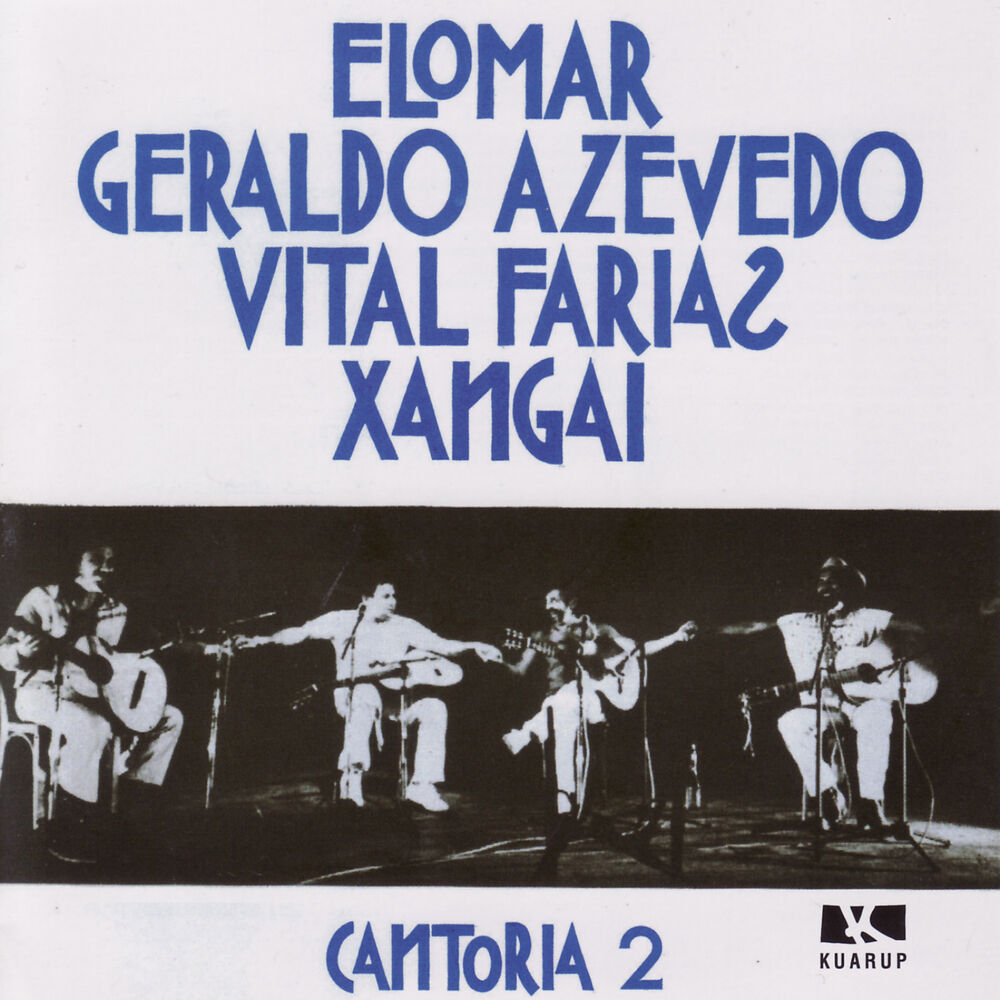
Elomar, Geraldo Azevedo, Vital Farias, Xangai
1984
Rankings
Why This Album Matters
Cantoria, released in 1984, is an emblematic album that brought together four of the most distinct and respected names in Brazilian popular music: Elomar, Geraldo Azevedo, Vital Farias and Xangai. This work stands out as a profound celebration of the traditions of the sertão and Northeastern music, delving into the richness of its stories, rhythms and poetry with singular authenticity. The album offers an immersion into the universe of 'repente', 'moda de viola' and popular singing, resonating with the roots of profound Brazil. Its sound transitions between the simple and the sublime, carrying the essence of interior music whilst revealing the sophistication and artistic maturity of its performers. The harmony of the voices and each one's skill with the guitar create a musical setting of rare beauty, where poetry and melody intertwine, providing a unique and moving auditory experience. It is a historic encounter of great creators in their purest state, presenting a fusion of erudite and popular elements of rich Brazilian music.
Context
The Cantoria project was born from a series of memorable concerts held at the Teatro Castro Alves, in Salvador, Bahia. In the early 1980s, the four artists united to present their 'cantorias' and 'cantigas', resulting in highly successful performances. Before this encounter, Elomar, Geraldo Azevedo, Vital Farias and Xangai already had individual careers marked by a deep connection to Northeastern roots, each bringing their unique particularity in composition and interpretation, which would be consolidated in this collaborative project.
Recording
The Cantoria album was recorded live in January 1984, during three memorable nights (13th, 14th and 15th) at the Teatro Castro Alves, in Salvador, Bahia. The recording was released in the same year under the title Cantoria 1 by the legendary record label Kuarup Discos. The music production was overseen by Mário de Aratanha. A notable characteristic of this work is that it is considered the first live recording made using a digital system in Brazil, giving it excellent technical quality, uncommon for live recordings of the era. The performances and, consequently, the album, stand out for the purity and simplicity of the arrangement, featuring only the four artists' voices and their respective guitars, alternating between solos, duos, trios and even quartets.
Songs
Cantoria's repertoire is a feast of compositions celebrating Northeastern culture and the richness of the Portuguese language. Among the thirteen tracks, highlights include the opening with "Desafio do Auto da Catingueira" by Elomar, featuring him on voice and guitar with Xangai, and the poetic "Sete Cantigas para Voar" by Vital Farias. Geraldo Azevedo captivates with "Novena" and Elomar gives voice to the visceral "Cantiga do Boi Incantado". The irreverence and humour are evident in "Aí D'eu Sodade (O ABC do Preguiçoso)" by Xangai, and the song "Ai Que Saudade de Ocê" by Vital Farias, became a classic. Other notable tracks include "Kukukaya (Jogo da Asa da Bruxa)" by Cátia de França, "Semente de Adão/Viramundo" and "Saga da Amazônia", which reveal the album's lyrical and melodic depth and diversity. The songs explore themes such as life in the sertão, love, longing, nature and popular traditions, with compositions that transition between melancholy and celebration, always with the skill and mastery of the four singers.
Legacy
The success of Cantoria 1 was immediate and resounding, giving rise to a series of eponymous albums, including Cantoria 2, released in 1988. The project transcended the records, transforming into a touring show that travelled through various Brazilian capitals, solidifying the quartet's work with the public. The album is widely considered a landmark in Brazilian popular music, described as a "phenomenon" for presenting "truly Brazilian" work with a strong Northeastern character. Its relevance is such that it is regarded as a "mandatory album for friendship circles of the 1980s generation up to today's poetic gatherings", influencing MPB for decades. The artistic quality of the project is compared to great visual works by Xangai, who likens it to the works of Van Gogh, Picasso and Portinari, emphasising that "everyone loves it because there is something to like. It is not a hoax. No one is there singing just to achieve success."
Tracks
Films

Books
Analyses
Cantoria 1 - theshfl.com
theshfl.com
There have been events in Brazilian music history when the usual voice-and-guitar arrangement turned into something sublime. One of these events, "Cantoria 1," is the result of a show that, in 1984, gathered Elomar, Xangai, Geraldo Azevedo, Vital Farias, and their four respective guitars — yes, their guitars deserve special attention.

Cantoria, 37 anos influenciando a música popular brasileira
multicienciaonline.blogspot.com
The second volume of the Cantoria series was released in 1988 during a concert tour by the group of singers. The album brings together songs from performances recorded at the Castro Alves theatre in 1984 that weren't included in the first project, and part of the recordings from shows performed across the country.

Criatura de Sebo: Cantoria - 1984 - Elomar - Geraldo Azevedo - Vital ...
criaturadesebo.blogspot.com
1 - Novena Vital Farias 2 - Sete cantigas para voar Vital Farias 3 - Cantiga do boi Incantado Vital Farias 5 - Kukukaya (Jogo da asa da bruxa) Cátia de França 6 - Ai que saudade d'ocê Vital Farias 7 - Ai d'eu sodade Traditional 8 - Semente de Adão - Viramundo Geraldo Azevedo - Carlos Fernando / Gilberto Gil - Capinam 9 - Cantiga do estradar Elomar 10 - Saga da Amazônia Vital Farias 11 ...
Segundo lote de reedições do acervo da Kuarup destaca 'Cantorias' 1 e 2
blognotasmusicais.com.br
The main highlights of the second re-release package are the two volumes of the Cantoria album, Kuarup's biggest sales success. It is the live recording of the show performed in January 1984 by Elomar, Geraldo Azevedo, Vital Farias and Xangai.
Cantoria, 37 anos influenciando a música popular brasileira, por Carlos ...
pretonobranco.org
The second volume of the Cantoria series was released in 1988 during a concert tour by the group of singers. The album brings together songs from performances recorded at the Castro Alves theatre in 1984 that weren't included in the first project, and part of the recordings from shows performed across the country.
