Sonhos e Memórias 1941-1972
Erasmo Carlos
1972
Rankings
Why This Album Matters
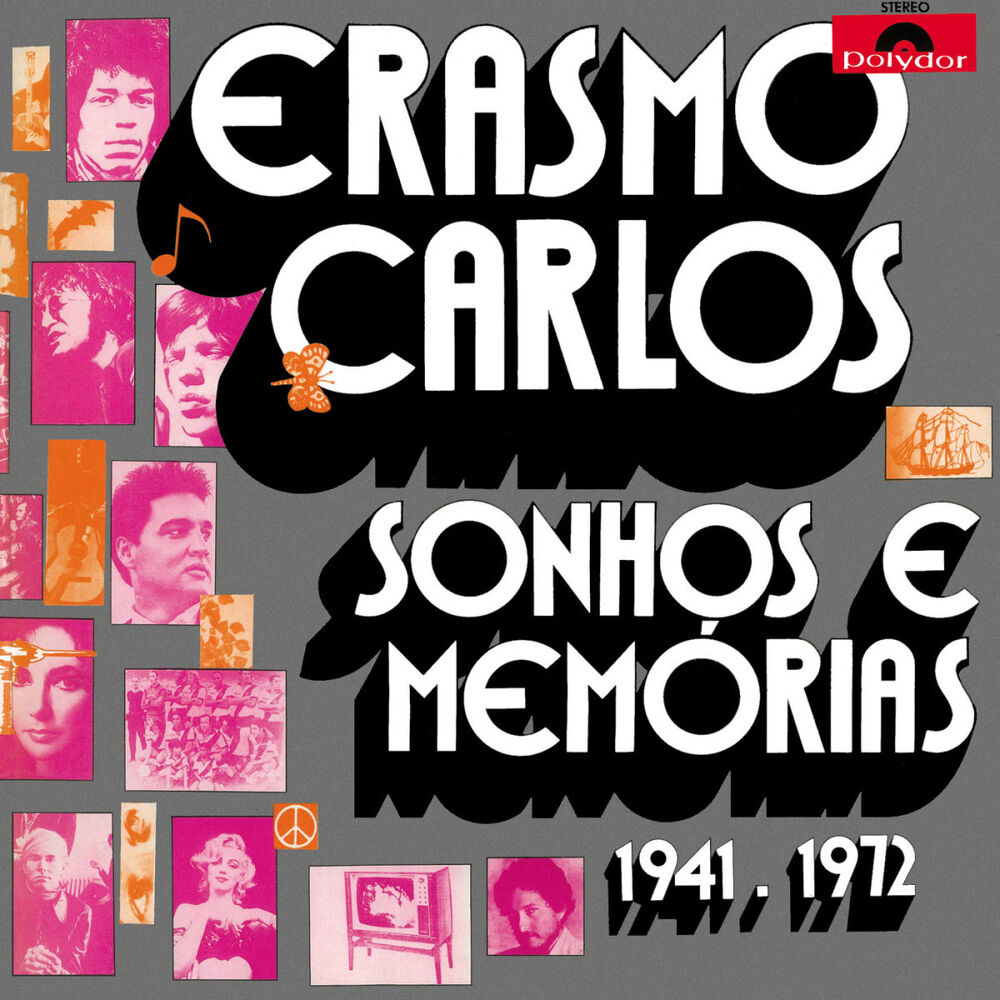
Sonhos e Memórias 1941-1972, Erasmo Carlos' eighth studio album, released in 1972, is a seminal work marking a turning point in the Tremendão's career. Distinguishing itself from his Jovem Guarda origins, the record is a deep dive into the artist's personal universe, featuring a strongly autobiographical and reflective character spanning the period from 1941 to 1972. Considered one of the most important and creative albums in his discography, it stands out for its fusion of rock, soul, jazz and singer-songwriter styles, combining Brazilian roots with contemporary and global sounds. This work is frequently described as one of Erasmo's 'gentler' albums, adorned with serene beach songs and a powerful samba-rock, resulting in the moniker of 'gentle giant' attributed by Pedro Alexandre Sanches. Its singular vision and dreamlike atmosphere make it a unique album in Brazilian music, solidifying Erasmo's status as a sophisticated singer and composer of the 70s, during a period of great artistic experimentation. The album's relevance is amplified by the fact that all twelve tracks were composed in partnership with Roberto Carlos, his main collaborator, demonstrating unparalleled creative synergy.
Context
Released in 1972, Sonhos e Memórias 1941-1972 emerged during a period of intense cultural and social effervescence in Brazil, amidst the repression of the Military Dictatorship and the enforcement of Institutional Act No. 5 (AI-5). In this scenario, Erasmo Carlos, who had been one of the pillars of Jovem Guarda, was in a phase of artistic transition and maturation, seeking to distance himself from his 'bubblegum origins' and explore new sounds and themes. The album represents the culmination of a trilogy initiated with Erasmo Carlos E Os Tremendões (1970) and Carlos, Erasmo (1971), records in which the singer already demonstrated an experimental inclination and a connection with the global counterculture of the turn of the 60s and 70s. This search for an artistic 'conscience', as Erasmo himself expressed at the time, led him to create a profoundly personal and introspective work, in contrast to the more alienated image of his earlier phase.
Recording
The album Sonhos e Memórias 1941-1972 was released by the Polydor label, known for housing the record company's most popular and rock-oriented products. Production of the album was handled by Jairo Pires and Guti Carvalho. Despite the scarcity of specific details about the recording process, the album's rich and diverse sound suggests careful work on arrangements and instrumentation. Erasmo Carlos contributed guitar and vocals, while a range of talented musicians participated, including Roberto Simonal on alto saxophone and various bassists such as Alexandre, Luizão, Pedrinho and Paulo Cesar, who also played guitar, solidifying the complex rhythmic and melodic foundation that permeates the tracks.
Songs
The songs on Sonhos e Memórias 1941-1972 are a mosaic of memories and reflections, encompassing everything from childhood memories in Tijuca, as in "Largo da 2ª Feira", to aspects of his family life, marriage and fatherhood, present in tracks such as "Grilos", "Sorriso Dela", "Sábado Morto" and "Meu Mar". Musically, the album traverses various styles, blending the direct rock 'n' roll of "Bom Dia, Rock 'n' Roll" and "É Proibido Fumar" with ballads and soulful grooves. "Mané João" stands out as a powerful samba-rock, while "Mundo Cão" surprises as a progressive tropical soul track, even becoming a film theme. The composition "Meu Mar" was described as "capoeira in space", utilising multi-track vocals, and "Minha Gente" evokes sounds of Pink Floyd from the Atom Heart Mother phase, demonstrating the album's breadth and musical experimentation.
Legacy
Despite being, at the time of its release, one of Erasmo Carlos' least commercially successful and initially underestimated albums, Sonhos e Memórias 1941-1972 is today recognised as one of the most creative, consistent and personal of his long career. Its relevance has grown considerably over time, and the album is frequently cited as a masterpiece of his discography. The record paved the way for Brazilian dream pop, influencing artists such as Lô Borges and Milton Nascimento, and its unique and experimental sound made it a reference point for Brazilian music of the 1970s. Recently, the album's re-issue by international labels such as Light in the Attic Records rescued its importance and introduced it to a global audience, consolidating its status as a fundamental work in Erasmo's transition from pop idol to sophisticated singer-songwriter.
Tracks
Credits
Guti Carvalho, Jairo Pires
Roberto E Erasmo Carlos
Fernando Adour
Erasmo Carlos
Roberto Simonal
Alexandre, Luizão, Pedrinho Medeiros
Paulo César Barros
Mamão, Paulinho Braga, Robertinho Silva
Renato Barros
Poly
Chacal, Hermes Contesini, Mono
Emílio Carrera, José Roberto Bertrami
Lafayette
Luiz Simas
Jorge Amiden
Luiz Claudio Ramos
Tavito
Joaquim Figueira
Celinho
Luciano Figueiredo
José Melo
Podcasts

QUER QUE EU RESENHE? · André Marx
Na resenha de hoje, André Marx analisa aquele que quiçá seja O grande álbum do gênio Erasmo Carlos. Sejam bem-vind@s ao Canal/Podcast QUER QUE EU RESENHE? e esperamos que vocês gostem.
Videos
SONHOS E MEMÓRIAS - ERASMO CARLOS (1972) | ALBUM REVIEW
Vinilteca
Erasmo Carlos - Sonhos e Memórias 1941 -1972 (1972) | ALBUM REVIEW
QUER QUE EU RESENHE?
Films

Books
Antes, Durante e Depois da Jovem Guarda
Abdias Lopes do Nascimento · 2026
This book covers the Jovem Guarda and the periods that preceded and succeeded it. Erasmo Carlos was a central figure of the Jovem Guarda, and his career extended through these phases. The album 'Sonhos e Memórias 1941-1972' represents an important moment in his artistic evolution, and is likely to be analysed in detail within this context.
Os 500 Maiores Álbuns Brasileiros de Todos os Tempos
Ricardo Alexandre · 2022
The largest Brazilian music election ever conducted: 162 specialists, spanning journalists, critics, musicians, producers and podcasters, each nominated 50 essential albums, supported by a masterlist of more than 2,000 works. Led by Ricardo Alexandre with tabulation by Sérgio Jomori, it was published in December 2022 as a 200-page hardcover book with graphic design by Fernando Pires.
1972-ANNI MIRABILES-MUSICAL BOX
Otávio Paiva · 2021
The book presents a musicological excavation of the year 1972, listing and analysing approximately 1,200 albums released during that period. Given the importance of Erasmo Carlos and the album 'Sonhos e Memórias 1941-1972' in the Brazilian music scene of 1972, it is highly probable that this album will be covered in detail.
Analyses
Sonhos e Memórias 1941-1972 – Wikipedia
Wikipedia, the free encyclopaedia

Erasmo Carlos - Sonhos e Memorias 1941-1972 [1972]
madshoesmusicology.blogspot.com
Sonhos e Memórias: 1941-1972 is the third in Erasmo Carlos ' classic trilogy from the early part of the decade that includes 1970's Erasmo Carlos & Os Tremendoes and 1971's Carlos, Erasmo... Unlike its predecessors, though, the singer/songwriter's hyperactive ambition here is of a more intimate variety.
Sonhos E Memórias 1941 1972 | Erasmo Carlos
erasmo-carlosns.bandcamp.com
This ain't a museum piece - it's Erasmo Carlos cutting deep with raw voice, soul grit, and that Brazilian rock swagger nobody else had back then. Dude was Jovem Guarda royalty but this album?