Cartão Postal
Evinha
1971

Rankings
Why This Album Matters
Cartão Postal, released by Evinha in 1971, stands out as a true jewel of MPB, celebrated for its innovative fusion of Brazilian flair with elements of funk and soul. The singer's sweet and impeccably tuned voice, combined with sophisticated and alluring arrangements, delivers an impeccable and irresistible sound that naturally transitions between rhythms such as boogie, bossa nova, and samba. This work, Evinha's third solo album, is considered a masterpiece by collectors and critics, notable for its plurality and musical identity. It invites the listener to delve into the transitional musical and cultural landscape of Brazil between the 60s and 70s, reflecting influences of psychedelia, soul music, and baroque pop that mark the album's sonic aesthetic and arrangements. The album not only consolidates Evinha's versatility and talent as an interpreter, but also remains relevant due to its meticulous production and the timeless quality of its songs, which continue to captivate both the public and critics.
Context
Evinha, whose birth name is Eva Correia José Maria, began her musical career as a child in the 60s, as a member of Trio Esperança, alongside her siblings Regina and Mário. The group gained notoriety through exposure on the Jovem Guarda television programme, hosted by Roberto Carlos. The Correia family is, incidentally, a source of musical talent, from which the Golden Boys also emerged. In 1968, Evinha left Trio Esperança to pursue a solo career. By 1969, she was already widely known and secured first place in both the national and international stages of the Festival Internacional da Canção with the song "Cantiga de Luciana", solidifying her position in the music scene before the release of Cartão Postal in 1971, at the age of 20.
Recording
The production of Cartão Postal was carefully crafted by Odeon, with Milton Miranda credited as producer. Arrangements and conducting were handled by Geraldo Vespar (on tracks such as "Que Bandeira" and "Esperar Pra Ver") and Orlando Silveira (on the other tracks), with Lindolfo Gaya serving as musical director. Z. J. Merky was the technical engineer, and Jorge G. and Nivaldo were the recording technicians. The album was recorded during a period of intense musical effervescence in Brazil, where MPB was consolidating itself as a modern language. The album's texture incorporates an innovative spirit in the production of the tracks, with sophisticated touches that evoke major works by Italian composers such as Ennio Morricone, creating an "easy listening" atmosphere graced by Evinha's voice.
Songs
The repertoire of Cartão Postal comprises songs by renowned musicians, such as the brothers Marcos and Paulo Sérgio Valle, Roberto Carlos and Erasmo Carlos, and Guarabyra, among other top-tier Brazilian composers. The variety of composers contributed to the diversity of musical genres present on the album. Tracks like "Que Bandeira", "Feira Moderna", and "Esperar Pra Ver" exemplify the fusion of rhythms such as boogie, soul, bossa nova, and samba, delivering identity and plurality. Evinha's interpretation of "Feira Moderna", for instance, features an arrangement so distinct from Beto Guedes' original version that it transforms it into a new song, with a string section and wind instruments leading a lighter tempo. The song "Cartão Postal" is described as a piece of rare beauty, with a sad and reflective tone. "Esperar Pra Ver" is a mid-tempo funk-soul number with impressive arrangements and a striking bassline, while "Só Quero" exudes samba-soul sounds. Even while addressing romantic themes, the album also carries political ideals in its lyrics, reflecting the transition from the 60s to the 70s.
Legacy
Cartão Postal is an LP highly coveted by MPB collectors worldwide, with copies that can reach significant values. The album has been recognised as one of the finest and most sought-after Brazilian funk-soul albums from the early 70s. Its quality and uniqueness have been reiterated by reissues, including versions remastered from the original tapes and pressed on 180g vinyl. More recently, the album gained new visibility and recognition when the rapper BK' used samples from two of its songs in his work, which led to collaborations and joint interviews, reviving Evinha's oeuvre for new generations. The track "Esperar pra Ver" was even mentioned by Questlove in a live-stream, highlighting the album's timelessness and lasting influence on the global music scene.
Tracks
Credits
Renato Corrêa
Geraldo Vespar, Orlando Silveira
Lindolfo Gaya
Milton Miranda
Z. J. Merky
Jorge Teixeira, Nivaldo Duarte
Reny R. Lippi
Joselito
Podcasts
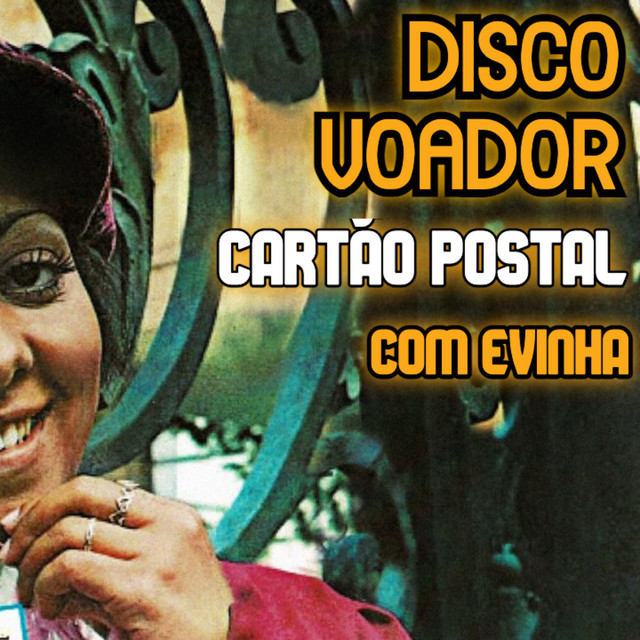
Disco Voador · Ramon Duccini
Falar de Evinha é voltar ao início dos anos 60, com o famosíssimo Trio Esperança, composto por ela e dois de seus seis irmãos. O grupo fez sucesso com "Filme Triste" e "A Festa do Bolinha" e ajudou a animar as jovens tardes de domingo daquela época. Evinha saiu do Trio para iniciar uma carreira solo e já mostrou em seus dois primeiros álbuns toda a modernidade que pautaria sua produção, além de
Videos
O Ressurgimento de um Ícone: Evinha e seu álbum Cartão Postal – Saindo do óbvio da MPB (3/3)
Matéria de Poesia – Diego Roiphe
Analyses
Vitrola Review | Evinha - Cartão Postal [Odeon] - Alataj
alataj.com.br
In 1971, at the tender age of 20, the album that would become one of the most celebrated MPB records and also one of the singer's most celebrated was released: Cartão Postal. With six tracks on side A and another six on side B, the album is considered a true masterpiece, an ideal meeting and fusion of Brazilian spirit with Funk and Soul.
Evinha - Cartão Postal (1971) - musicasdonordeste.net
musicasdonordeste.net
One of the most beautiful voices in Brazilian music at her peak, singing an impeccable repertoire. Evinha's third solo career album is a true masterpiece.
"Cartão Postal", Evinha (1971)
lucasbonetti.com.br
Tracks such as "Que Bandeira, Feira Moderna e Espera Pra Ver" deliver identity and plurality, transitioning between Bossa Nova, Samba and Soul, infused with emotion and a light swing, where singer Evinha's melodious voice provides an impeccable and irresistible sound.
Evinha - Cartão Postal (1971) | Toque Musical
toque-musicall.com
To brighten our day, I have Evinha's album here, which whenever I listen to, I associate with a beautiful Sunday morning. And today, it's a sunny Sunday here. A gift for lovers, after all, today is their day! Here we have singer Evinha on her third LP.

Evinha - Cartão Postal (1971) | Toque Musicall - Blogger
toque-music-all.blogspot.com
An album produced by Wilson Miranda, it prominently features Gilberto Gil's song, "Duplo sentido". Undoubtedly, an interpretation and arrangement that not even Gil himself could have achieved.