Água
Fafá de Belém
1977

Rankings
Why This Album Matters
Released in 1977 by the Philips record label, Água is the second studio album by the acclaimed Brazilian singer Fafá de Belém, a work that proved crucial for the consolidation of her career. Considered by many to be the best of her early phase, the album solidified the singer's artistic identity, projecting her nationally and expanding the horizons of her musical interpretation. The album is an expressive fusion of MPB with elements of Chamber Folk, Baroque Pop and Vocal Jazz, presenting a melodic sound inclined towards romanticism. With her powerful contralto voice and vast emotional range, Fafá de Belém explores themes revolving around nature, the simple life of riverine communities, tranquillity, anxieties and the multiple facets of love. The album cover, which depicts the artist by a river in modest attire, reinforces this deep connection to her Amazonian roots and the regional authenticity that defined her.
Context
The release of Água occurred during a period of effervescence for Fafá de Belém. Following her public debut in Belém in 1973 and national recognition in 1975 with the song "Filho da Bahia", the theme for the *Gabriela* telenovela, the singer had already released her first LP, Tamba-Tajá, in 1976, receiving praise from specialised critics. In the Brazilian political landscape, 1977 marked a moment of gradual 'political opening', although the country was still living under a military dictatorship. Música Popular Brasileira (MPB) of the era served as an important focus of resistance and cultural identity for the civil opposition, conveying messages of struggle, unity and hope, and Água was situated within this context with its sensitivity and repertoire.
Recording
The production of Água was overseen by Roberto Santana, a central figure who also actively participated in the repertoire selection, in conjunction with Fafá de Belém herself. Recordings took place at Estúdio Phonogram, utilising a 16-channel desk, and benefited from the expertise of technicians Luigi Hoffer, responsible for recording and cutting, and Varela Rafael Ratinho as studio assistant. Mixing was a joint effort by Roberto Santana and Luigi Hoffer. The arrangements, fundamental to the album's characteristic sound, were crafted by Chiquito Braga and Roberto Menescal. The technical specifications reveal rich orchestration, which blended regional instruments, such as rain sticks, various percussions and flutes that evoked bird song, with instruments considered more universal, such as acoustic guitar, cavaquinho, keyboard and double bass. This approach sought to connect Fafá's Amazonian roots with her desire for national projection. Notable musicians such as Vevé Calazans, Bira, Djalma, Chico Batera, Elvius and Antonio Adolfo contributed to the instrumentation, in addition to the Phonogram String Orchestra and the Ronaldo Choir.
Songs
The album Água is comprised of twelve tracks that form a lyrical and melodic panorama of the singer's identity. On Side A, notable compositions include "Pauapixuna", a beautiful song by Paulo André and Ruy Barata which opens the album with a strong Amazonian appeal, and "Araguaia", by Rinaldo Barra. The side is completed by songs such as "Leilão", "Cordas de Espinhos", "Canção Passarinho" and "Ontem ao Luar". Side B equally presents a repertoire of great impact, including two notable collaborations by Milton Nascimento and Fernando Brant: "Raça" and "Sedução", the latter being one of the album's great successes. Another landmark of the album is the bolero "Foi Assim", also by Paulo André and Ruy Barata, which became a hit. The musical selection is completed by "Cidade Pequenina", by Caetano Veloso and Roberto Menescal, "O Andarilho" and "Ave Maria dos Retirantes", reinforcing themes of nature, simple life and love, central elements of the Amazonian universe and the romantic MPB of the era.
Legacy
Água was a significant commercial success, selling around 95,000 copies, with some sources indicating sales surpassed 100,000, an achievement that definitively established her in the Brazilian music scene and cemented her national fame. The album was widely praised by critics, who saw it as confirmation of Fafá de Belém's early talent, especially after the success of her debut work. Considered her 'best work from her rustic early phase' by critics, the album achieved a good reception from the public, reflected in a score of 81 on the Album of the Year website, with one user describing it as a 'beautiful Chamber Folk album'. The longevity of its relevance is attested by its various CD reissues, including remastered versions in 1993 and 2013. The strength of Água's repertoire is such that Fafá de Belém herself revisited its songs in shows years later, demonstrating the album's lasting impact on her discography and on the memory of Música Popular Brasileira.
Tracks
Credits
Chiquito Braga, Roberto Menescal
Roberto Santana
Coro Do Ronaldo
Vevé Calazans
Chiquito Braga
Fafá De Belém, Roberto Santana
Pascoal Meirelles, Ricardo Costa
Antonio Adolfo
Orquestra De Cordas Phonogram
Bira, Chico Batera, Djalma Correa
Helvius Vilela
João Theodoro Meirelles, Nivaldo Ornelas, Odorico Vitor
Luigi Hoffer, Roberto Santana
Luigi Hoffer
Arthur Fróes
Aldo Luiz
Januário Garcia
Podcasts
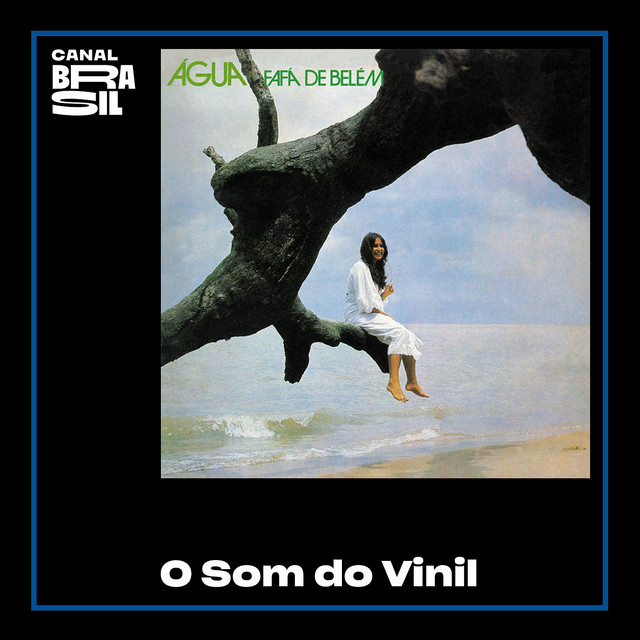
O Som do Vinil | Podcast · Canal Brasil
Uma das grandes vozes do Brasil, Fafá de Belém revela que o acaso marcou sua carreira. A cantora, que se diz tímida, conta que não pensava no tamanho do seu sucesso e analisa o emblemático álbum Água, de 1977.
Analyses
Água – Wikipedia
Wikipedia, the free encyclopaedia
Fafá de Belém - Água (1977) (Álbum Completo com Faixas Bônus)
muzicrave.com
Her first album, "Tamba Tajá", did not achieve great popular success, but sold considerably and was acclaimed by critics as one of the best albums of 1976.

Fafá De Belém - Água (1977) - BR 320
br320.blogspot.com
Fafá de Belém, born Maria de Fátima Palha de Figueiredo (Belém, 9 August 1956), is a Brazilian singer, songwriter, and actress. Fafá gained national recognition when, in 1975, the song "Filho da Bahia", sung by her, was introduced into the soundtrack of the telenovela Gabriela.

FAFÁ DE BELÉM - ÁGUA (1977 - Philips/Phonogram)
discosmusicaeinformacao.blogspot.com
FAFÁ DE BELÉM - ÁGUA (1977 - Philips/Phonogram) 01 (1A) - Pauapixuna (Paulo André Barata - Ruy Barata) 02 (2A) - Araguaia (Rinaldo Barra) 03 (3A) - Leilão (Hekel Tavares - Joracy Camargo) 04 (4A) - Cordas de Espinhos (Luiz Coronel - Marco Aurélio Vasconcellos) 05 (5A) - Canção Passarinho (Luiz Violão) 06 (6A) - Ontem Ao Luar
Cliquemusic : Disco : ÁGUA
cliquemusic.com.br
Fafá de Belém (1977) 1977 Phonogram 6349 324 Tracks 1 Pauapixuna (Ruy Barata, Paulo André) 2 Araguaia (Rinaldo Barra) 3 Leilão (Joracy Camargo, Hekel Tavares) 4 Cordas de espinhos (Marco Aurélio Vasconcellos, Luiz Coronel) 5 Canção passarinho (Luiz Violão) 6 Ontem ao luar (Catullo da Paixão Cearense) 7 Raça (Milton Nascimento ...