Cantar
Gal Costa
1974

Rankings
Why This Album Matters
Released in 1974, Cantar is Gal Costa's fifth solo album and represents a notable inflection point in her discography. Moving away from the Tropicalist effervescence and the more experimental and 'explosive' works that had established her in previous years, such as Fa-Tal - Gal a Todo Vapor and Índia, this album marked the singer's return to a more intimate, gentle, and João-Gilbertian sound. The work stands out for its elegance and refinement, featuring delicate and sophisticated arrangements that underscore Gal's vocal mastery. It is a work that prioritises 'music over attitude', reaffirming Gal Costa's bossa nova inclination, which was presented to the public on her debut album with Caetano Veloso, Domingo. Cantar is today considered one of the most intricate and elaborate works of her career, blending elements of MPB, Tropicalismo, and psychedelic folk in a singular manner.

"Canção que Morre no Ar" is the only track with orchestral accompaniment, and it is where Gal's voice shines.
Antônio do Amaral Rocha · Rolling Stone Brasil
Context
Before Cantar, Gal Costa had established herself as one of the most avant-garde and provocative voices in Brazilian Popular Music. Since her participation in Tropicalismo, she had released a series of high-impact albums and shows, which consolidated her as an icon for the young and modern public, eager for attitude and experimentation. Works such as Fa-Tal - Gal a Todo Vapor (1971) and Índia (1973) were known for their raw energy and artistic audacity. Cantar thus emerged as a surprise for many of her fans, indicating a transition from the more radical phase to a more introspective and melodically rich sound. This album reflected a search for new expressive paths, prioritising delicacy and musical depth over performative explosiveness.
Recording
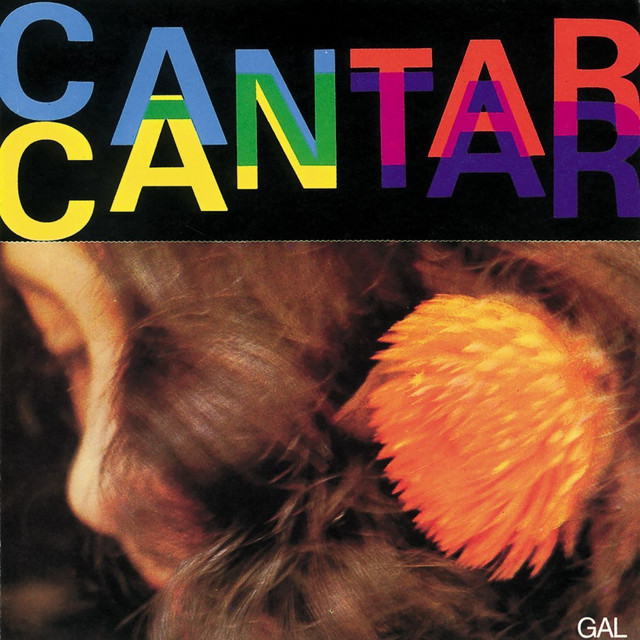
The album Cantar was produced by Caetano Veloso, a partnership that had already yielded notable results in Gal's career, and by Perinho Albuquerque. The album's production was described as 'immaculate and crystalline', demonstrating meticulous care with the sound and arrangements. On the technical team, João Moreira and Paulinho Chocolate served as sound engineers, with Joaquim Figueira responsible for mixing. The cover photography was by Tereza Eugênia and the design, signed by Rogério Duarte, completed the project's visual aesthetic. The album featured special appearances by renowned musicians, such as Gilberto Gil, who played guitar on the opening track "Barato Total", and João Donato, who contributed piano to "A Rã" and "Chululu".
Songs
Cantar presents a repertoire that, despite the new sonic direction, still featured songs by composers associated with Gal's previous phase, such as Jorge Mautner and Péricles Cavalcanti. The track list reveals a constellation of MPB talents, including compositions by Gilberto Gil ("Barato Total"), Caetano Veloso ("Lua, Lua, Lua, Lua", "Flor do Cerrado", "Joia"), and João Donato ("A Rã", "Flor de Maracujá", "Até Quem Sabe"). Some tracks stand out for their particularity, such as the experimental "Lua, Lua, Lua, Lua" and the 'raga' "Joia", both by Caetano Veloso, which feature short lyrics and recall the Tropicalist manifesto-album Panis et Circensis. "Canção Que Morre no Ar", by Carlos Lyra and Ronaldo Bôscoli, exhibits an orchestral arrangement, while "Até Quem Sabe", by João Donato and Lysias Ênio, is presented in an intimate arrangement for solo piano and voice, with a one-minute dénouement considered one of Gal's most beautiful and haunting moments. "Lágrimas Negras", by Jorge Mautner and Nelson Jacobina, delves into 'lunatic' guitar jazz. "Flor do Cerrado" is described as a brief treatise on life, death, and the beauty that can exist behind them.
Legacy
At the time of its release in 1974, Cantar did not achieve the expected commercial success, and the singer's audience, accustomed to her more transgressive side, did not 'take to it', nor did the accompanying show. Contrary to the initial public reception, the album was widely acclaimed by specialised critics, who recognised Gal's change in artistic direction. Over time, Cantar consolidated its status as an important work, being elected by the Brazilian edition of Rolling Stone magazine as the 91st best Brazilian album of all time. Currently, it is seen as a work that defines the diversity of Gal Costa's career, one of the most refined and intricate of her trajectory.
Tracks
Credits
Caetano Veloso, Perinho Albuquerque
Gal Costa
João Moreira, Paulinho Chocolate
Joaquim Figueira
Rogério Duarte
Thereza Eugenia
Podcasts
Brazuca Sounds on Patreon · Leandro Vignoli
In this episode, we celebrate the 50-year release of "Cantar" by Gal Costa. Unlike her two previous works, the live album Fa-Tal, and the masterpiece album "India", this is a more soft, calm, kind of reaffirmation of Gal Costa's and her early bossa nova style - before Tropicalia sex-symbol. Produced by Caetano Veloso and several tracks arranged by João Donato, it was a massive commercial failure i
PodCália · Gigola
Nesse segundo episódio especial, Daniel e Gigola conversam sobre o 5° álbum de Gal Costa, “Cantar”, de 1974.
Films

Gal - from Tropicalism to the Present Day
2006
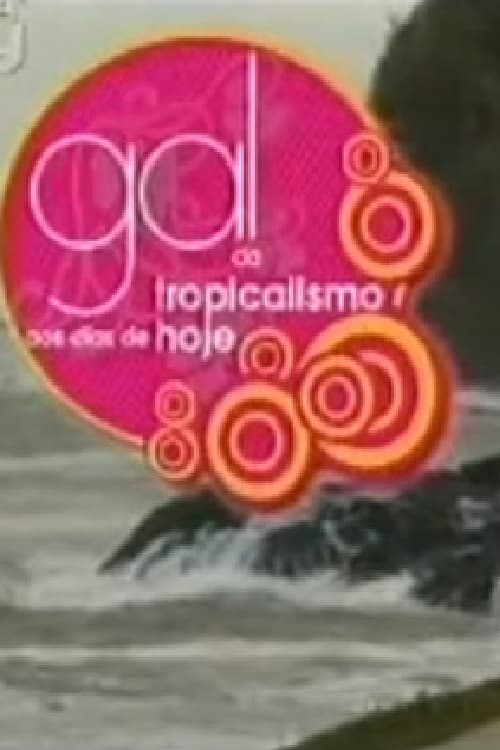
The film has Gal's career as its guiding principle, drawing a parallel with the movement of which the singer was the muse and one of the main interpreters, and reaching the present day.
Gal Costa: Programa Ensaio
2005
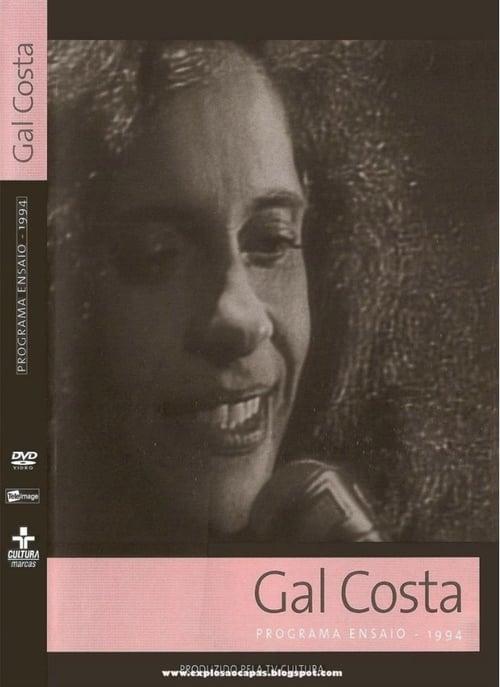
In this DVD, recorded in 1994, the Bahian singer, an MPB diva, gives a long interview, discussing her career, the tropicalismo movement, and her musical partners and composers throughout more than 35 years in the business. Gal performs her greatest hits, accompanied by Luiz Brazil (acoustic guitar), Jacques Morelenbaum (cello) and Marçal (percussion).
Books
Analyses
Cantar – Wikipedia
Wikipedia, the free encyclopaedia
Cantar – The 100 Greatest Albums of Brazilian Music
Antônio do Amaral Rocha · Rolling Stone Brasil
"Canção que Morre no Ar" is the only track with orchestral accompaniment, and it is where Gal's voice shines.

Zero G Sound : Gal Costa - Cantar (1974)
zerosounds.blogspot.com
Freitag, 15. März 2024 Gal Costa - Cantar (1974) "Cantar" is the fifth solo album by the Brazilian singer Gal Costa, released in 1974. It was ranked the 91st best Brazilian album of all time by the Brazilian Rolling Stone magazine.
Gal Costa - Cantar | In Sheeps Clothing
insheepsclothinghifi.com
Overshadowed by the exceedingly sought after India that came before it, along with the more experimental records that came into fruition during the Tropicália explosion of the late 60's, Gal Costa's Cantar exists as an outlier among the string of records that would define her career. Released in 1974, the album sees Costa return from the radical to the intimate, and is perhaps the most ...
Gal Costa - Cantar (1974) - PEQUENOS CLÁSSICOS PERDIDOS
pequenosclassicosperdidos.com.br
For this risk to take hold and for the revival of the ideas championed by Tropicalismo to materialise into a musical project, Caetano Veloso decided to direct the show and the album that Gal Costa would release in 1974.