Gal Costa
Gal Costa
1969

Rankings
Why This Album Matters
Gal Costa's solo debut album, released in 1969, represents a fundamental milestone in her career and is widely recognised as the work that concluded the Tropicalista era. Moving away from the bossa nova style of her early years, as seen in the LP shared with Caetano Veloso, this record presents a more modern and audacious Gal Costa, with an innovative sound for its time. In this work, the Bahian singer sought diverse influences, ranging from James Brown and Janis Joplin to Jorge Ben, Erasmo, and Roberto Carlos, resulting in a rich fusion of styles. The main highlights were the tracks "Não Identificado", by Caetano Veloso, and "Que Pena", by Jorge Ben, which remained on the Brazilian charts for over three months, consolidating Gal's new artistic identity.

João Gilberto's disciple, who had sung softly on the album shared with Caetano Veloso two years earlier, unleashed her voice on her solo debut and became Tropicália's most important female figure.
Marcus Preto · Rolling Stone Brasil
Context
Before this solo release, Gal Costa had already participated in important collective projects, such as the album Domingo, with Caetano Veloso, and the iconic Tropicalia ou Panis et Circencis, a watershed moment for the Tropicalista movement. The album was recorded in 1968, during a turbulent period in Brazilian history, but its release was withheld by the Philips record label after the arrests of Caetano and Gil by the repressive apparatus of the military dictatorship. Despite being recorded in '68, the record only reached the public in March 1969, marking a period of great cultural effervescence and repression in Brazil. This wait for the release coincided with a shift in Gal's public image, as she had stood out in 1968 with a memorable performance at the Record MPB Festival.
Recording
The album Gal Costa was recorded in 1968 at the Scatena and Reunidos studios. General production was handled by Manoel Barenbein, while the arrangements were signed by influential names such as Gilberto Gil, Rogério Duprat, and Lanny Gordin. Rogério Duprat was responsible for the arrangements of tracks 1, 3, 5, 9, 10, 11, and also for the musical direction of the project, significantly contributing to the album's innovative sound. The visual layout of the work was conceived by Gian.
Songs
Among the album's standout tracks, "Não Identificado", composed by Caetano Veloso, and "Que Pena", by Jorge Ben, quickly captivated the public, remaining on the Brazilian charts for over three months. In "Que Pena", Gal Costa shares vocals with her friend Caetano Veloso, creating a remarkable duet. Other notable collaborations include "Sebastiana", where the singer duets with Gilberto Gil. The song "Divino, Maravilhoso", by Caetano and Gil, is also a highlight of the LP, recalling Gal's memorable performance at the Record Festival. Furthermore, the album features "Baby", another composition by Caetano Veloso that had already been a great success on the record Tropicalia: ou Panis et Circenses and is considered a landmark in the artist's career.
Legacy
The album Gal Costa was well received by music critics of the time, consolidating the singer as a creative and innovative force. Its importance resonated throughout time, being elected in the Brazilian version of Rolling Stone magazine as the 80th best Brazilian album of all time. According to the publication, this work was the starting point for Gal to become "the most important female figure of Tropicalia". Fred Thomas, from Allmusic, highlighted that Gal's combination of influences resulted in a record unlike any that came before, emphasising the originality and impact of her musical proposition.
Tracks
Credits
Gilberto Gil, Lanny Gordin, Rogério Duprat
Manoel Barenbein
Caetano Veloso, Gilberto Gil
Jards Anet da Silva
Rodolpho Grani Júnior
Diogenes Burani Filho, Dudu Portes
Alexander Gordin
Hugo Pratt
Gian Calvi
Cynira Arruda
Videos
Gal Costa - Gal (1969) | ALBUM REVIEW
Som de Peso
Films

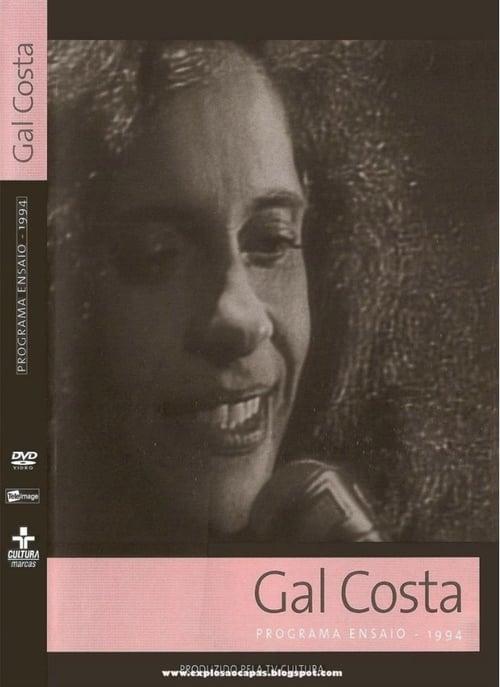
Gal Costa: Programa Ensaio
2005
On this DVD, recorded in 1994, the Bahian singer, an MPB diva, gives a long interview where she talks about her career, the Tropicalismo movement, and her musical partners and composers over more than 35 years in the business. Gal performs great hits, accompanied by Luiz Brazil (acoustic guitar), Jacques Morelenbaum (cello) and Marçal (percussion).
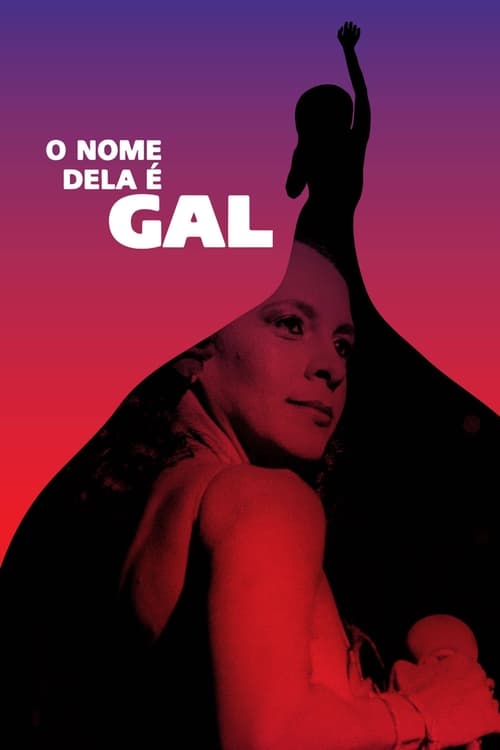
O Nome Dela é Gal
2017
A four-part biography on the life of the Brazilian singer Gal Costa, from her humble beginning singing in the streets of Salvador, where she became friends with many artists who would be other great names in Brazilian music in the following decades to her 50th career anniversary in 2015.

Meu Nome é Gal
2023
Film about the Bahian singer dives into the moment when shy Gracinha becomes Gal Costa, during the violent, innovative and mind-blowing years that helped shape Brazil's greatest singer.
Books
Analyses
Gal Costa – Wikipedia
Wikipedia, the free encyclopaedia
Gal Costa – The 100 Greatest Albums of Brazilian Music
Marcus Preto · Rolling Stone Brasil
João Gilberto's disciple, who had sung softly on the album shared with Caetano Veloso two years earlier, unleashed her voice on her solo debut and became Tropicália's most important female figure.
'Gal Costa': A Landmark Album Of Brazilian Tropicalia
udiscovermusic.com
Gal Costa's 1969 self-titled album remains a paragon of Tropicalia music and a landmark of Brazilian pop. This review explains why.
Gal Costa "1969" 1969 | Rising Storm Review
therisingstorm.net
This is an insane album that is more experimental than the Beatles' psychedelic work while each song still retains a catchy pop flavor. This self-titled album was Gal Costa's second effort and is commonly referred to as Cinema Olympia or 1969.
Gal Costa - Julian Cope presents Head Heritage
headheritage.co.uk
This song, along with eleven others, is included in her 1969 self-titled debut album. Now I'm going to find it difficult to stay neutral and objective, as I consider "Gal Costa" not only the best of Tropicalia's recorded output and one of the all-time peaks of Brazilian music, but also one of the best pop albums released anywhere, anytime.